
Haldex coupling slippage is defined as the failure of the wet multi-plate clutch pack to generate sufficient clamping force, resulting in inadequate torque transfer to the rear axle and a loss of effective all-wheel-drive traction. The industry term for this condition is clutch pack slip, and it sits at the heart of most Haldex AWD system complaints. The clutch pack, hydraulic pump, coupling oil, and filter screen are the four components most directly involved. When any one of them degrades, the coupling cannot build the pressure needed to lock the rear axle into drive. Catching the problem early saves you from a far more expensive repair.
What is Haldex coupling slippage and what causes it?
Haldex coupling slippage occurs when the clutch pack fails to compress properly, most often because of contaminated oil, a blocked filter screen, or a worn pump. Slippage signs include excessive front-wheel spin, persistent understeer, and a thumping sensation when the clutch suddenly grabs. Each of these symptoms points to the same root problem: the coupling is not transferring enough torque to the rear wheels.
Clutch pack wear and friction plate degradation
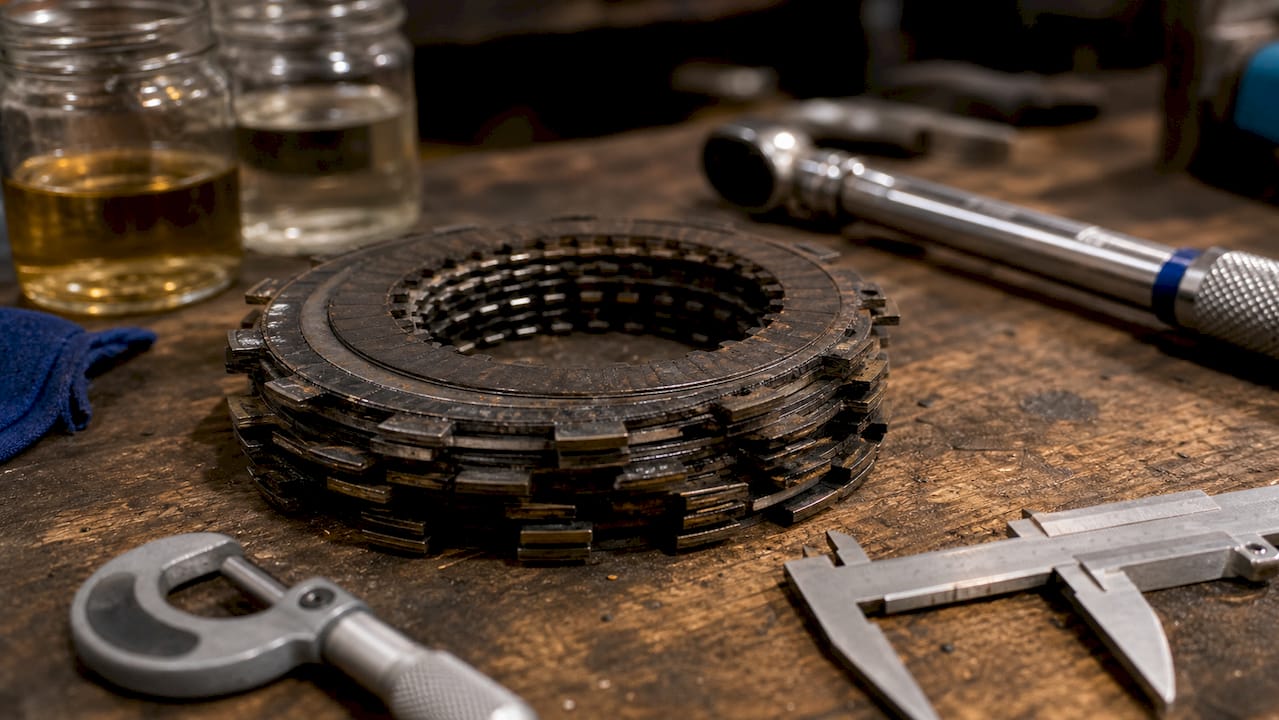
The clutch pack is a stack of alternating friction and steel plates. Over time, the friction material wears thin and loses its ability to grip under hydraulic load. Worn plates reduce the effective clamping area, which means the coupling slips even when oil pressure is adequate. Replacing the clutch pack is the only fix once the friction material is gone.
Oil contamination and hydraulic pressure loss
Degraded or contaminated coupling oil is the single most common cause of slippage. Neglected Haldex servicing accelerates clutch wear and leads to filter clogging, which starves the pump of clean fluid and reduces the pressure it can generate. Dirty oil also carries abrasive particles that score the pump internals and clutch plates simultaneously. The result is a system that degrades faster the longer the service is delayed.
Pump failure and filter screen clogging
The electric pump is responsible for building the hydraulic pressure that compresses the clutch pack. A worn or failing pump cannot reach the pressures needed for full engagement, and a clogged filter screen restricts the oil flow the pump depends on. Both faults produce the same outcome: insufficient clutch pressure and measurable slippage. Cleaning or replacing the filter screen at every service interval is the cheapest way to protect the pump.
Internal leaks and heat-related faults
Internal seal failure causes pressure to bleed away before it reaches the clutch pack. Intermittent AWD loss after 10–15 minutes of driving is a classic sign of heat-sensitive faults, where seals or pump components expand under temperature and lose their ability to hold pressure. This pattern is easy to miss because the car feels normal when cold. If your AWD drops out on a warm motorway run but works fine on a cold start, internal wear is the likely cause.
Pro Tip: Check your Haldex oil condition at every annual service. Dark, metallic-smelling fluid is a reliable early warning of clutch plate wear before any fault code appears.
How do you identify and diagnose Haldex slippage symptoms?
Diagnosing Haldex slippage requires combining driving feel, live diagnostic data, and a structured test procedure. Dashboard warning lights often do not illuminate until the pump has failed completely, so tactile and performance cues are the first line of detection. Relying on a warning light alone means you will miss the majority of early-stage faults.
Common symptoms to watch for
- Excessive front-wheel spin on loose surfaces such as gravel or wet grass, with little or no rear drive.
- Persistent understeer in corners where the car pushes wide rather than rotating through the bend.
- A clunk or thump on initial acceleration, caused by the clutch suddenly grabbing after a period of slip.
- AWD dropout after warm-up, where the system works on a cold start but fades after 10–15 minutes of driving.
- No improvement in traction despite the vehicle being listed as all-wheel drive.
Using diagnostic tools to confirm slippage
A diagnostic scan tool connected to the Haldex control module gives you live pressure readings and fault codes. Clutch pressure during normal driving should rise between 5 and 25 bar under load. Readings that stay flat or fail to climb under acceleration confirm that the pump or clutch circuit is not performing correctly. Fault codes alone are not enough. A code-free system can still slip if pressure readings are consistently low.
| Symptom | Likely cause | Diagnostic check |
|---|---|---|
| Front-wheel spin on loose surface | Clutch pack not engaging | Live pressure reading under load |
| AWD dropout after warm-up | Heat-sensitive seal or pump wear | Pressure trend over a 20-minute drive |
| Clunk on acceleration | Delayed clutch engagement | Pump response time in live data |
| Persistent understeer | Low rear torque transfer | Wheel speed sensor comparison |
Pro Tip: Perform a Haldex fault diagnosis on a warm engine after a 15-minute drive. Cold tests mask heat-sensitive faults and give a false impression that the system is healthy.
Distinguishing Haldex slippage from tyre or ABS faults is also critical. Worn tyres and a faulty ABS sensor can mimic AWD loss. Confirm tyre condition and check wheel speed sensor readings before attributing the fault to the coupling itself.
How do Haldex generations differ in slippage behaviour?
The generation of your Haldex unit determines how it builds clutch pressure and how it responds to slip. Generation I and II units are reactive, meaning they require a measurable front-to-rear wheel speed difference before hydraulic pressure begins to build. By definition, the rear wheels must already be slipping before the system responds. This reactive design makes early-generation units more susceptible to noticeable slippage during the engagement delay.
| Generation | Engagement type | Slippage risk | Key characteristic |
|---|---|---|---|
| Gen I and II | Reactive | Higher | Requires wheel slip to build pressure |
| Gen III | Semi-proactive | Moderate | Faster pressure response than Gen I/II |
| Gen IV and V | Proactive | Lower | Pre-tensions clutch before slip occurs |
Generation III introduced faster pressure build-up, reducing the engagement lag. Generation IV and V units use electronic control modules that pre-tension the clutch pack before any slip occurs, effectively preventing the condition rather than reacting to it. The practical implication is straightforward: owners of older Audi, VW, Skoda, and SEAT vehicles with Gen I or II units should service the coupling more frequently, because the reactive design places greater mechanical demand on the clutch pack and pump at every engagement event.
Electronic control module quality also matters. A degraded or incorrectly calibrated module on any generation can send incorrect pressure commands, causing the clutch to under-engage even when the hardware is in good condition. This is why pump calibration after any repair is not optional.
How to maintain and repair a Haldex coupling to prevent slippage
Preventive maintenance is the most cost-effective way to avoid clutch slip. The following steps cover routine upkeep and the repair sequence for a coupling that is already showing signs of slippage.
- Change the coupling oil and filter on schedule. Use OEM BorgWarner oil specified for your generation. Incorrect or degraded fluid is the fastest route to clutch wear.
- Clean or replace the pump filter screen at every oil change. A blocked screen restricts flow and accelerates pump wear. This takes minutes and costs very little.
- Inspect and replace worn clutch packs and seals. If live data shows consistently low pressure despite a clean filter and good oil, the clutch pack or internal seals need replacement.
- Perform the ‘Pump Basic Setting’ calibration after every repair or fluid change. Without this reset, the control module retains old parameters and inconsistent AWD engagement can persist even after a successful hardware repair.
- Conduct a post-repair test drive with live data monitoring. Confirm that clutch pressure rises correctly between 5 and 25 bar under load before returning the vehicle to normal use.
- Inspect the coupling on any pre-owned vehicle purchase. Service history gaps are common, and a coupling with unknown history may already have degraded oil and a partially clogged filter.
Pro Tip: After completing a Haldex service kit installation, always run the ‘Pump Basic Setting’ procedure with a compatible scan tool. Skipping this step is the most common reason slippage persists after an otherwise correct repair.
A failed pump or faulty control module can cause AWD loss without any clutch pack wear at all. Accurate diagnosis before ordering parts saves both money and time. Replacing a clutch pack when the real fault is a wiring issue to the control module solves nothing.
Key takeaways
Haldex coupling slippage is a hydraulic pressure failure caused by clutch wear, contaminated oil, a blocked filter, or a degraded pump, and it requires both accurate diagnosis and correct calibration to fix properly.
| Point | Details |
|---|---|
| Slippage definition | The clutch pack fails to compress, preventing effective torque transfer to the rear axle. |
| Primary causes | Contaminated oil, blocked filter screen, worn clutch plates, and internal seal failure are the main culprits. |
| Symptom recognition | Front-wheel spin, AWD dropout after warm-up, and clunks on acceleration are the clearest early signs. |
| Generation matters | Gen I and II units are reactive and more prone to engagement delay than Gen IV and V proactive systems. |
| Calibration is mandatory | Running ‘Pump Basic Setting’ after any repair or fluid change is required for correct pressure regulation. |
What I have learned diagnosing Haldex slippage over the years
The most persistent mistake I see is owners waiting for a warning light before acting. The Haldex system is not designed to alert you early. Warning lights often appear only after total pump failure, by which point the repair bill has multiplied several times over. The real diagnostic window is in the driving feel, and most owners have already experienced the symptoms for months before they seek help.
The second mistake is assuming that a code-free scan means a healthy system. I have seen couplings with zero fault codes and live pressure readings that never climb above 3 bar under full load. The clutch was slipping on every corner. A scan tool that only reads codes misses this entirely. You need live data, and you need to read it on a warm, loaded system.
My honest advice for anyone buying a used Audi, VW, Skoda, SEAT, Ford, or Land Rover with a Haldex-based AWD system: treat the coupling service as day-one maintenance regardless of what the seller tells you. A fresh oil and filter change costs a fraction of a clutch pack replacement. The owners who avoid expensive repairs are almost always the ones who service on schedule rather than waiting for symptoms to force their hand.
— Mindaugas
Haldexparts: quality service parts for your coupling
Keeping your Haldex coupling in good health starts with using the right parts. Haldexparts stocks OEM-grade Haldex service kits covering Audi, VW, Skoda, SEAT, Ford, Land Rover, and more, with each kit containing the correct oil, filter, and seals for your specific generation.
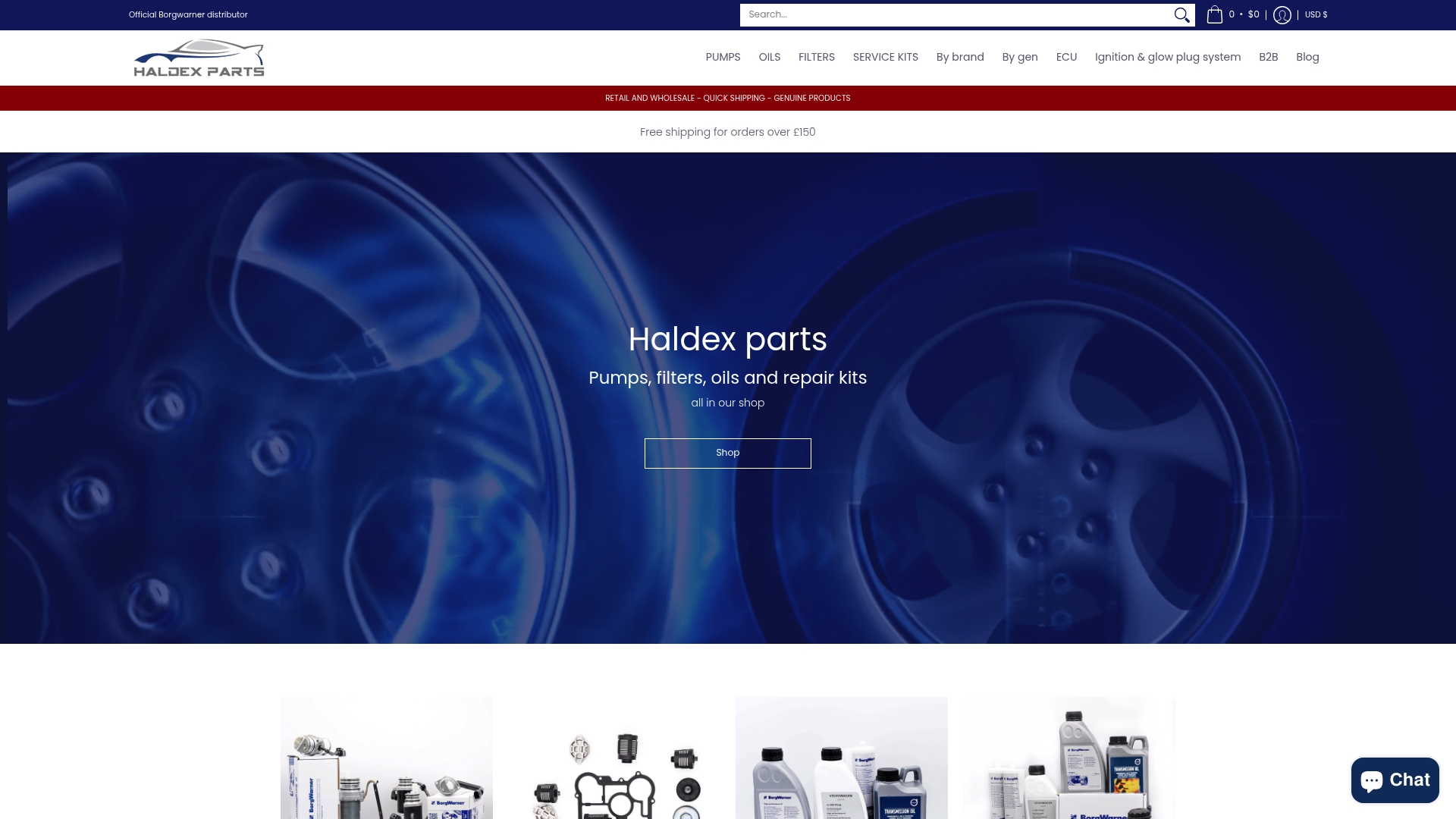
Whether you need a complete service kit, a replacement AWD pump, or generation-specific BorgWarner oil, Haldexparts carries the components to get your AWD system performing correctly. Orders over £150 qualify for free shipping, and the product listings include generation compatibility details so you order the right part first time. If you are unsure which kit fits your vehicle, the Haldexparts team can point you in the right direction.
FAQ
What is Haldex coupling slippage?
Haldex coupling slippage is the failure of the wet multi-plate clutch pack to build sufficient hydraulic pressure, preventing effective torque transfer to the rear axle. The result is reduced or absent all-wheel-drive traction.
What are the main signs of Haldex slippage?
The clearest signs are excessive front-wheel spin on loose surfaces, persistent understeer, a clunk on acceleration, and AWD dropout after 10–15 minutes of warm driving.
How do I confirm Haldex slippage with diagnostics?
Connect a scan tool to the Haldex control module and check live clutch pressure under load. Pressure should rise between 5 and 25 bar; readings that stay flat confirm engagement failure.
Does a Haldex warning light always appear with slippage?
No. Warning lights frequently appear only after total pump failure. Tactile symptoms and live pressure data are more reliable early indicators than fault codes or dashboard alerts.
Is ‘Pump Basic Setting’ calibration always needed after a repair?
Yes. After any fluid change or hardware repair, performing the ‘Pump Basic Setting’ procedure with a diagnostic scan tool resets the control module parameters and restores correct clutch pressure regulation.