
Haldex oil is defined as a dual-function fluid that acts as both a hydraulic medium and a lubricant inside the AWD coupling. Understanding why Haldex oil degrades is the foundation of keeping your all-wheel-drive system working correctly. The oil picks up contamination from clutch friction debris and metallic wear particles over time, which strips away its ability to build hydraulic pressure and lubricate moving parts. Once that capacity is lost, the Haldex coupling cannot engage the rear axle reliably, and the consequences range from uneven traction to full pump failure.
Why does Haldex oil degrade inside the coupling?
Haldex oil degrades primarily because the coupling it lives in generates its own contamination. Every time the clutch pack engages, friction material sheds microscopic debris directly into the fluid. That debris does not stay suspended harmlessly. It accumulates, thickens the oil, and begins to behave more like sludge than hydraulic fluid.
The contamination process works through two distinct pathways. The first is mechanical wear. As the clutch plates cycle through engagement and release, they shed both friction material and metallic particles. The second is chemical breakdown. Heat from repeated clutch engagement accelerates oxidation of the base oil, reducing its viscosity and film strength. Both processes happen simultaneously, which is why oil contamination builds faster than most owners expect.
The impact of heat on Haldex oil is particularly significant. High temperatures thin the oil, reduce its ability to carry hydraulic load, and speed up the breakdown of any additives designed to protect seals and metal surfaces. Vehicles used for towing, track days, or repeated low-speed manoeuvring in tight car parks generate more heat cycles than standard road use. That accelerates degradation well ahead of any mileage-based service interval.
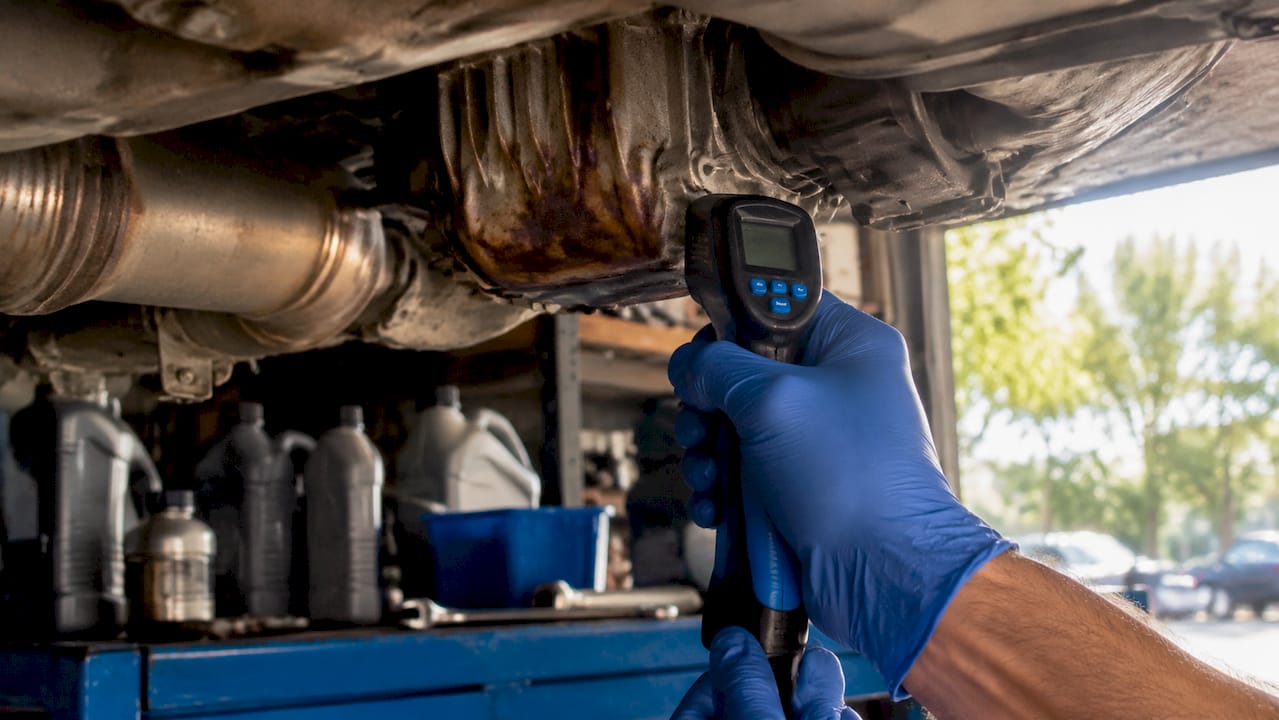
Contamination also restricts the physical flow of oil through the system. The pump draws fluid through a screen or filter before pressurising it. As debris accumulates, that screen becomes partially blocked. Restricted flow means the pump works harder to maintain pressure, generating more heat, which in turn degrades the oil further. It is a self-reinforcing cycle.
Key contamination sources at a glance:
- Clutch friction material shed during normal engagement cycles
- Metallic particles from clutch plate and piston wear
- Rubber debris from piston bore seal degradation
- Oxidation products from heat-stressed base oil
- External moisture ingress in poorly sealed units
How does degraded Haldex oil affect AWD performance?
Degraded oil does not announce itself with an immediate failure. The consequences build gradually, which is precisely what makes them dangerous to ignore.
-
Reduced hydraulic pressure. The pump relies on clean, correctly viscous oil to generate the pressure needed to engage the clutch pack. Contaminated oil reduces hydraulic pressure control, meaning the rear axle receives inconsistent or insufficient drive. The car may still move, but AWD engagement becomes unreliable.
-
Clutch plate sticking. Fine clutch debris accumulates in oil causing sludge that coats the clutch plates. Plates that should release cleanly begin to drag, creating judder, vibration, or a grinding sensation during low-speed cornering. This is one of the earliest physical symptoms owners notice.
-
Hydraulic leaks from seal wear. Clutch-pack wear sheds friction debris that turns fluid into sludge, causing hydraulic leaks from piston bore seal wear. Even if the pump is functioning correctly, a leaking piston bore cannot hold pressure, so clutch engagement fails regardless.
-
Pump overwork and electrical damage. Blocked pickup screens restrict oil flow, forcing the pump motor to draw more current. Contamination overworks the pump and can cause electrical or mechanical damage. Pump failure is one of the most expensive outcomes of neglected oil.
-
Fault codes and warning lights. The Haldex controller monitors pump speed, pressure, and current draw. When degraded oil causes any of these parameters to fall outside tolerance, the system logs fault codes. In some cases, a dashboard AWD warning light appears. In others, the fault is stored silently and only retrieved with a scan tool.
-
Long-term structural damage. Seals, pistons, and internal bores all suffer accelerated wear when the oil loses its lubricating film. Replacing these components requires significant labour and, in severe cases, full unit replacement.
The financial argument for prevention is straightforward. A scheduled oil and filter change costs a fraction of a pump replacement or clutch pack rebuild.
How to identify and diagnose Haldex oil degradation
Early diagnosis prevents the progression from degraded oil to mechanical damage. The challenge is that many Haldex faults present subtly before they become obvious.
Common signs to watch for:
- Poor grip during low-speed cornering or on loose surfaces
- Inconsistent AWD engagement, particularly in cold conditions
- Vibration or judder when pulling away from a standstill
- AWD warning light on the dashboard
- Stored fault codes with no visible warning light
- Unusual noise from the rear of the vehicle during cornering
Visual oil inspection is the most direct diagnostic step. Remove the Haldex oil drain plug and observe the fluid. Clean oil is amber or light golden in colour. Degraded oil turns dark brown or black. Haldex oil turns black because metallic and friction debris suspends in the base fluid, absorbing light and indicating significant contamination. If the oil is black and carries visible particles, the filter or screen will almost certainly be restricted as well.
A scan tool is the next step. Connecting a compatible diagnostic tool allows retrieval of Haldex-specific fault codes and, critically, the ability to run a pump basic setting. This function primes the hydraulic circuit and confirms whether the pump is building pressure correctly after a service.
Correct diagnosis depends on identifying whether the root cause is contamination, mechanical wear, an electrical fault, or simply overdue maintenance. Not every fault requires unit replacement. An oil change alone may restore function if the pump and clutch pack are still serviceable.
Pro Tip: If fault codes return within a short period after an oil change, the pump screen is likely still partially blocked or the clutch pack has sustained mechanical wear. An oil change alone will not fix a mechanically damaged unit.
Best maintenance practices to prevent Haldex oil degradation
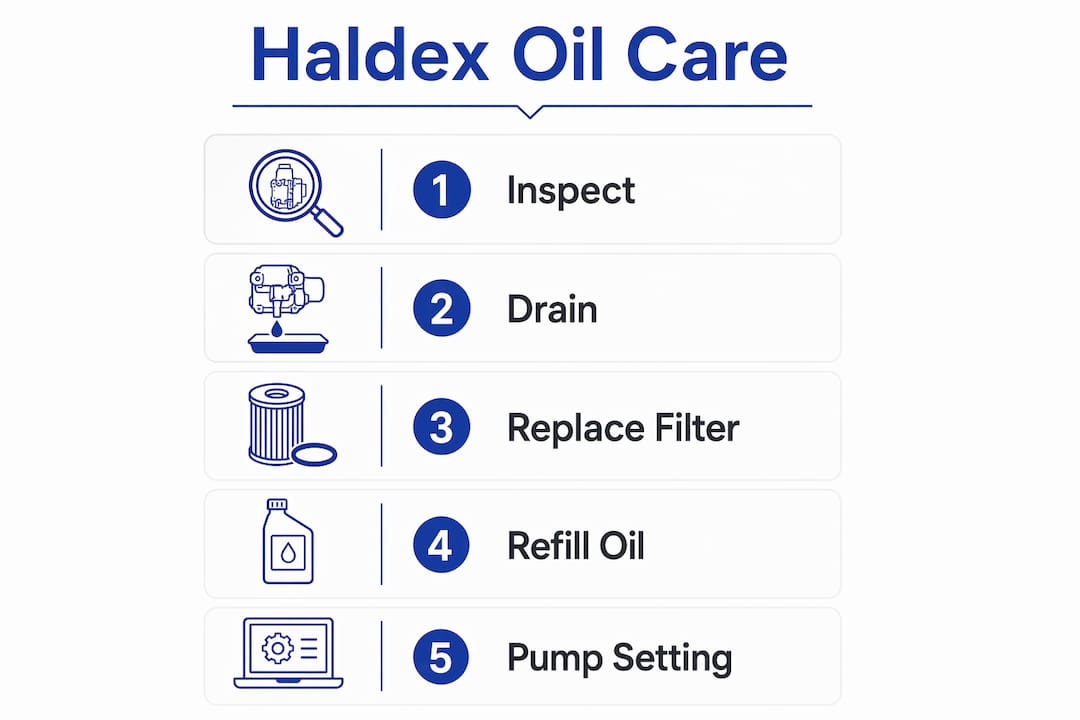
Prevention is always cheaper than repair. The core of any maintenance strategy is scheduled oil and filter changes at the correct interval for your specific Haldex generation.
| Maintenance action | Why it matters |
|---|---|
| Scheduled oil changes | Removes accumulated debris before it restricts pump flow |
| OEM-specified oil only | Incorrect viscosity damages seals and reduces hydraulic performance |
| Filter or screen replacement | Prevents restricted flow that overworks the pump |
| Pump basic setting after service | Restores correct hydraulic pressure calibration post-fill |
| Correct oil fill volume | Overfilling or underfilling both impair pressure control |
Using only OEM-specified Haldex oils is non-negotiable. Aftermarket fluids with incorrect viscosity or additive packages can attack seals, alter clutch friction behaviour, and accelerate the very degradation you are trying to prevent. BorgWarner, which manufactures the Haldex coupling, specifies particular fluid grades for each generation. Using the wrong grade voids any protection the service provides.
Driving style and conditions accelerate wear and contamination, but neglect remains the primary cause of premature degradation. Towing, repeated tight-radius manoeuvring, and track use all generate additional heat cycles. Owners who use their vehicles in these conditions should shorten their service intervals accordingly.
After every oil service, a scan tool pump basic setting is mandatory. Air trapped in the hydraulic circuit after a drain and refill prevents the pump from building full pressure. The basic setting procedure purges air and recalibrates the system. Skipping this step is one of the most common DIY errors, and it leaves the system operating below its designed pressure even with fresh oil.
Pro Tip: Always check the Haldex oil fill volume against the specification for your generation. Overfilling creates excess pressure on seals. Underfilling starves the pump. Both cause damage that a correct oil change would have prevented.
How do Haldex generations differ in oil degradation risk?
Service procedures vary by Haldex generation due to differences in filtration design and pump accessibility. Getting the procedure wrong for your generation risks leaving contamination in the system even after a full oil change.
| Haldex generation | Filtration type | Key service difference |
|---|---|---|
| 1st generation | Replaceable external filter | Filter replacement is straightforward; pump screen also requires cleaning |
| 2nd and 3rd generation | Internal pump strainer | Pump removal required to access and clean the strainer properly |
| 4th and 5th generation | Internal strainer | Strainer accessible without full pump removal on most applications |
Early generations use a replaceable external filter, which makes routine servicing more accessible. Later generations rely on internal pump strainers that require partial or full pump removal to clean effectively. Mixing procedures between generations risks leaving contamination behind and producing poor pressure control even with fresh oil in the system.
Generation-specific oil specifications also matter. First-generation systems use G052175A1 fluid. Later generations use G060175A2 or equivalent BorgWarner-specified grades. Using a first-generation fluid in a fourth or fifth-generation system alters clutch friction behaviour and can cause judder or slipping under load. The Haldex AWD system design evolved significantly across generations, and the fluid specification evolved with it.
Key takeaways
Haldex oil degrades through contamination from clutch debris and heat, and only correct, generation-specific servicing with OEM fluids prevents the progression to pump failure and clutch damage.
| Point | Details |
|---|---|
| Dual-function fluid | Haldex oil acts as both hydraulic fluid and lubricant; losing either function impairs AWD. |
| Contamination is the primary cause | Clutch debris, metallic particles, and heat-driven oxidation degrade oil from the first use. |
| Symptoms appear late | By the time AWD faults are noticeable, pump flow restriction has often already occurred. |
| Generation-specific service is mandatory | Mixing procedures or fluids between generations leaves contamination and reduces pressure. |
| OEM oil and scan tool calibration | Using correct fluid and running pump basic setting after service are both non-negotiable steps. |
Why I think most owners underestimate what Haldex oil actually does
Most people treat Haldex oil like engine oil. They know it needs changing, but they do not fully appreciate that it is doing two completely different jobs at once. Engine oil lubricates. Haldex oil lubricates and builds hydraulic pressure to physically engage a clutch pack. That dual role means the consequences of degradation are not just wear. They are functional failure.
I have seen owners spend significant money on pump replacements that were entirely avoidable. In almost every case, the pump was not the original problem. Degraded oil blocked the pickup screen, the pump overworked itself trying to compensate, and the motor eventually failed. The oil change that should have happened at 30,000 miles did not happen until 70,000. By then, the damage was done.
The knowledge gap I encounter most often is around the pump basic setting. Owners who service their own Haldex units drain and refill the oil correctly, use the right fluid, and then drive away without running the calibration procedure. The system feels fine initially because the pump is still moving fluid. But without the basic setting, air remains in the circuit, pressure is inconsistent, and the clutch engages erratically. That erratic engagement accelerates clutch wear, which puts debris back into the fresh oil within a few thousand miles.
Treat Haldex maintenance as you would brake fluid service. It is not optional, it is not cosmetic, and the cost of skipping it is always higher than the cost of doing it correctly. The causes of Haldex failure are well documented, and nearly all of them trace back to neglected oil.
— Mindaugas
Haldexparts: OEM service kits for every generation
Keeping your Haldex system in good condition starts with using the correct parts for your specific generation and vehicle.
Haldexparts stocks generation-specific Haldex service kits that include OEM-grade oils, filters, and seals for Audi, VW, Ford, Land Rover, and other supported platforms. Every kit is matched to the correct Haldex generation, so you are not guessing about fluid compatibility or filter fitment. Orders over £150 qualify for free shipping, and the product listings include generation-specific fitment information to help you confirm the right kit before you order. Whether you are servicing a first-generation system or a fifth-generation unit, Haldexparts carries the components needed to do the job correctly.
FAQ
What causes Haldex oil to turn black?
Haldex oil turns black because metallic particles and clutch friction debris suspend in the base fluid over time. This discolouration indicates significant contamination and means the oil has lost much of its hydraulic and lubricating capacity.
How often should Haldex oil be changed?
Service intervals vary by generation and driving conditions, but most manufacturers recommend a change every 30,000–40,000 miles or every two to three years. Vehicles used for towing or track driving should be serviced more frequently.
Can I use any hydraulic oil in a Haldex system?
No. Only OEM-specified fluids should be used. Incorrect oils alter clutch friction behaviour, damage seals, and can accelerate the degradation they are meant to prevent.
Does an oil change fix all Haldex faults?
Not always. Not every Haldex fault requires unit replacement, but if the pump or clutch pack has sustained mechanical damage, an oil change alone will not restore full function. A scan tool diagnostic is needed to confirm the root cause before deciding on a repair approach.
What happens if I skip the pump basic setting after an oil change?
Air remains trapped in the hydraulic circuit, preventing the pump from building correct pressure. This causes inconsistent clutch engagement and accelerates wear on the clutch pack, putting fresh oil at risk of rapid contamination.