
Haldex component degradation is defined by a single root cause: friction material shed by the clutch pack contaminates the system oil, restricts hydraulic flow, and forces the pump to overwork until it fails. This process explains why haldex parts degrade over time across all generations, from the 1st-gen units found in early Audi TT Quattro and VW Golf 4Motion models through to the 5th-gen systems in current Volkswagen, Skoda, and SEAT vehicles. The degradation is gradual, often invisible in normal driving, and almost always preventable with the right maintenance schedule. Understanding the mechanism is the first step to stopping it.
Why haldex parts degrade over time: the core mechanism
The Haldex coupling transfers drive to the rear axle by engaging a multi-plate clutch pack under hydraulic pressure. Every engagement sheds microscopic friction material into the surrounding oil. This is normal and expected. The problem begins when that material accumulates faster than the oil can suspend and carry it away.
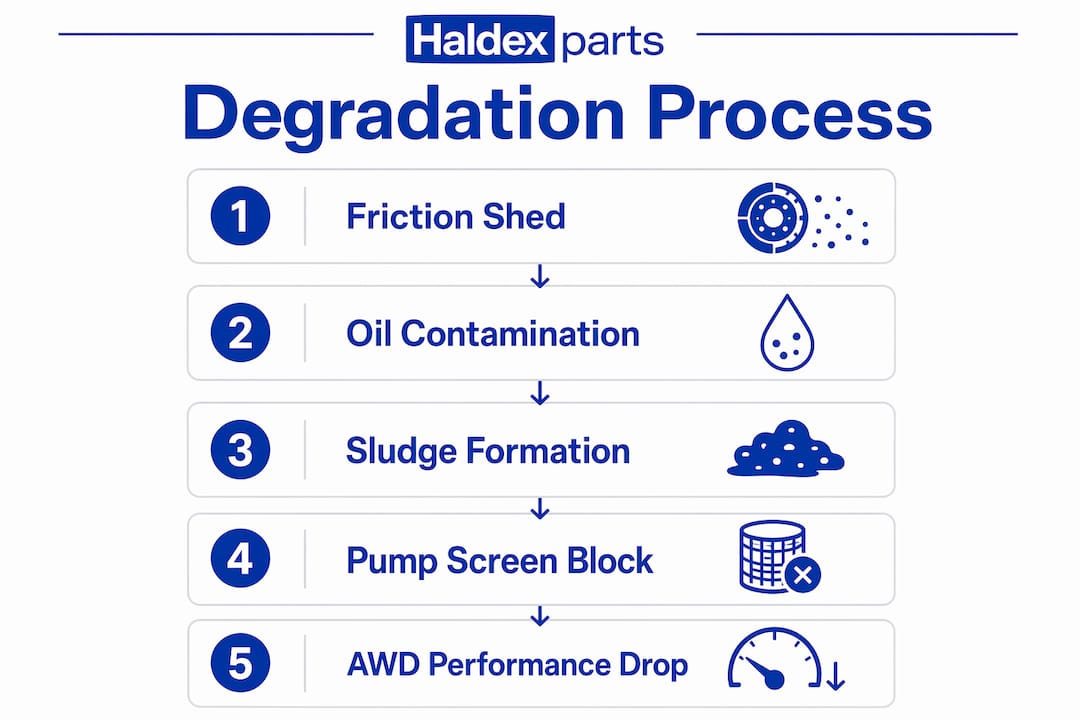
Oil deterioration reduces pump pressure generation and AWD engagement performance as the fluid becomes saturated with fine debris. The oil thickens, loses its lubricating properties, and begins forming a grey-brown sludge. That sludge migrates directly to the pump intake screen.
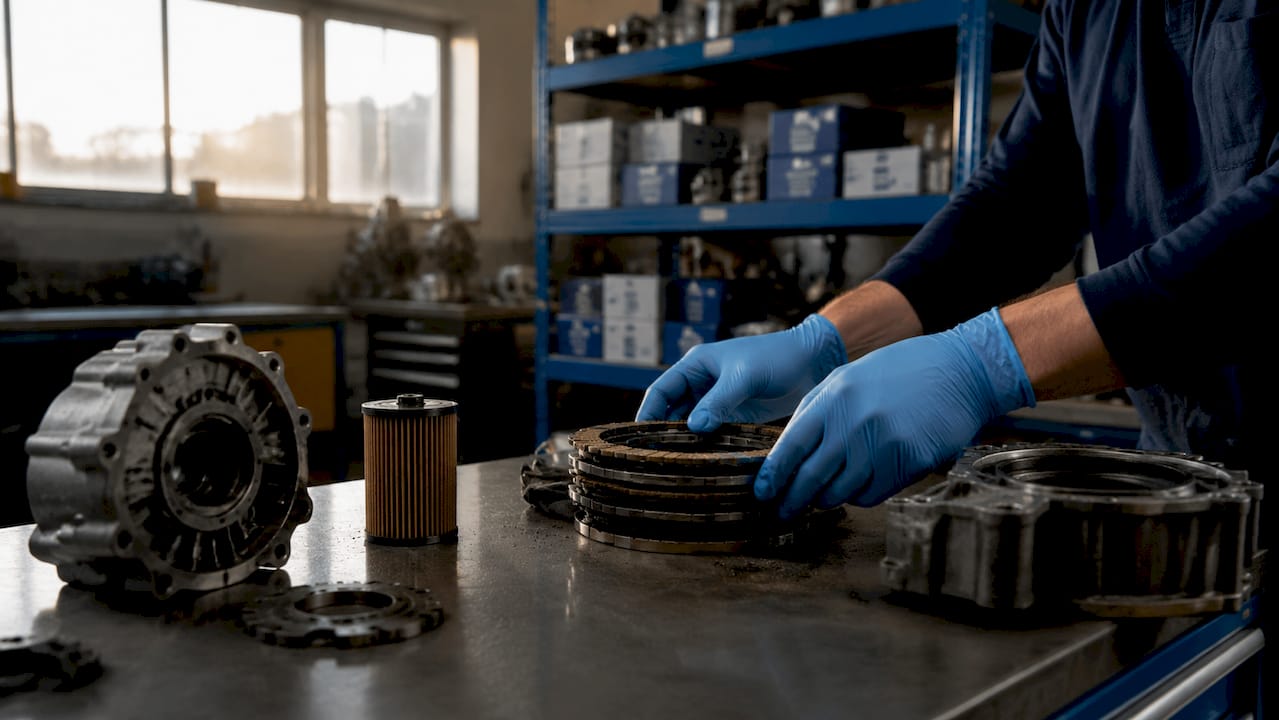
Once the screen is partially blocked, the pump must generate more effort to draw fluid through. The motor windings heat up, electrical resistance drops, and mechanical wear accelerates. Left unchecked, this chain of events ends in pump failure and a Haldex coupling that no longer engages the rear axle reliably.
Key stages in the contamination cycle:
- Clutch pack engages and sheds friction particles into the oil
- Particles accumulate, forming sludge in the oil volume
- Sludge restricts flow through the pump intake screen
- Pump motor works harder, generating excess heat
- Motor windings degrade, pressure output drops
- AWD engagement becomes inconsistent or fails entirely
Pro Tip: If your oil looks dark grey or has a metallic sheen when you drain it, the pump screen is almost certainly partially blocked. Clean the screen before refilling, not after.
Which driving conditions accelerate haldex system wear?
Not all Haldex systems degrade at the same rate. The driving environment and usage pattern determine how quickly friction material builds up in the oil.
-
Stop-start urban driving. Frequent low-speed manoeuvres cause repeated clutch engagement cycles. Each cycle deposits more material into the oil. A vehicle used daily in city traffic accumulates contamination significantly faster than one covering motorway miles.
-
Towing and heavy loads. Demanding conditions such as towing build contamination faster and increase failure risk. The clutch pack works harder under load, generating more heat and shedding more friction material per mile.
-
Wet and changeable climates. Frequent rain causes more AWD cycling, accelerating friction material suspension in the oil. A Golf R or Audi S3 used year-round in the UK or Scotland will see its Haldex oil degrade measurably faster than the same vehicle in a dry climate.
-
Performance and enthusiast driving. Track days, spirited cornering, and aggressive launches impose thermal and mechanical stress far beyond normal use. Tuned vehicles with modified torque outputs place even greater strain on the clutch pack.
-
Neglected maintenance under any of the above. The impact of driving conditions on Haldex is cumulative. Skipping a service interval under demanding conditions does not simply delay maintenance. It allows contamination to reach a level where the pump is already damaged before the next service occurs.
The practical takeaway is straightforward: the harder you use your AWD system, the shorter the effective service interval becomes.
How do haldex generations differ in failure points?
Understanding Haldex component degradation requires knowing which generation you are dealing with. Each generation has distinct filtration design, pump architecture, and common failure modes.
| Generation | Filtration Type | Common Failure Point | Service Priority |
|---|---|---|---|
| 1st Gen (Audi TT, Golf 4Motion) | Mesh screen only | Screen blockage, pump seizure | Screen cleaning at every service |
| 2nd/3rd Gen (various VAG) | Mesh screen | Pump motor wear, seal failure | Oil change + screen clean |
| 4th Gen (Golf R, Audi S3, Leon Cupra) | Cartridge filter + screen | Filter clogging, pump motor degradation | Filter replacement + screen clean |
| 5th Gen (current VAG, Porsche Macan) | Cartridge filter + screen | Electrical pump motor failure, software faults | Full kit service + calibration check |
The 4th and 5th generation units introduced cartridge-style oil filters, which trap contamination more effectively but require replacement rather than simple cleaning. Skipping filter replacement on these units is one of the most common causes of Haldex failure seen in independent workshops.
The 5th generation adds a software layer that creates a unique failure mode. A fault code 16671 persists when a new pump’s calibration does not match the control unit’s internal software tables. Replacing the pump without addressing the software mismatch results in the same fault code returning within days. This catches many owners and even some workshops off guard.
Pro Tip: On 4th and 5th gen units, always use an OEM-spec Haldex filter rather than a pattern part. Aftermarket filters with incorrect bypass pressure ratings can allow contaminated oil to bypass filtration entirely.
How does regular maintenance extend haldex parts lifespan?
Maintenance for Haldex components is the single most effective way to prevent the contamination cycle from reaching a destructive stage. The recommended interval for most VAG Haldex systems is every 3 years or 30,000–40,000 miles. That figure reflects the small oil volume and the high contamination load the system operates under.
A complete service covers four tasks:
- Oil drain and refill using the correct OEM-specification fluid for your generation
- Pump intake screen cleaning to remove accumulated sludge before fresh oil is introduced
- Filter cartridge replacement on 4th and 5th gen units
- Electrical pump motor resistance check using a multimeter
That last point deserves emphasis. Pump motor winding resistance should read 5–8 ohms on a healthy unit. A reading below 2 ohms indicates the motor is failing and requires replacement rather than cleaning. Catching this at service time costs far less than a full coupling replacement after a roadside failure.
Changing oil without cleaning the screen leaves the system vulnerable to recurring clogging and pressure faults. Fresh oil introduced into a contaminated circuit simply picks up the residual sludge and deposits it back onto the screen within a few thousand miles. The service is effectively wasted.
Using OEM-grade fluids matters equally. Haldex oils carry specific viscosity and additive profiles designed to suspend friction material without attacking clutch pack materials. Substituting a generic gear oil or an incorrect specification accelerates both clutch wear and seal degradation.
Numbered service sequence for a complete Haldex service:
- Drain old oil and capture it for condition assessment
- Remove and inspect the pump intake screen; clean with brake cleaner
- Replace the filter cartridge (4th and 5th gen)
- Test pump motor winding resistance with a multimeter
- Refill with the correct OEM-specification oil to the specified volume
- Run the system through several engagement cycles and check for fault codes
Are there signs of haldex issues you might be missing?
The absence of a warning light does not mean the system is healthy. Contamination builds silently, affecting pump performance before any fault code registers in the control unit. This is the most dangerous misconception about Haldex system health.
Several signs of Haldex issues are easy to overlook:
- Reduced traction in wet conditions. The rear axle engages less decisively, but the difference is subtle enough to attribute to road surface rather than system wear.
- A slight hesitation or shudder when pulling away on a slippery surface. This indicates the clutch pack is engaging inconsistently due to low hydraulic pressure.
- Oil that looks dark or metallic on the drain cloth. Healthy Haldex oil is amber or light gold. Dark grey fluid with visible particles signals advanced contamination.
- Fault codes that clear and return. Intermittent codes related to AWD engagement or pump pressure are a reliable early indicator of developing failure.
Buying a used AWD vehicle without a known service history is a specific risk. The previous owner may have driven hard in demanding conditions with no maintenance record. A proactive service on purchase is the only way to assess the true condition of the system. Tuning also introduces risk. Gearbox and clutch protection limits exist for a reason, and remapped vehicles that exceed factory torque thresholds place disproportionate stress on the Haldex clutch pack.
Replacing parts without first cleaning the contaminated circuit is a guaranteed route to repeat failure. New clutch plates installed into oil saturated with old friction material will begin shedding at an accelerated rate from the first engagement.
Key takeaways
Haldex parts degrade primarily because clutch friction material contaminates the system oil, blocks the pump screen, and forces the motor to failure before any warning light appears.
| Point | Details |
|---|---|
| Root cause is contamination | Clutch friction material suspends in oil, forms sludge, and blocks the pump intake screen. |
| Driving conditions matter | Stop-start traffic, towing, and wet climates accelerate contamination and shorten service intervals. |
| Generation affects failure mode | 5th-gen units add software calibration faults; 4th and 5th gen require cartridge filter replacement. |
| Screen cleaning is non-negotiable | Changing oil without cleaning the pump screen leaves residual sludge to contaminate fresh fluid. |
| Pump resistance testing saves money | A multimeter reading below 2 ohms identifies a failing pump before it causes full coupling failure. |
What years of haldex work actually taught me
Most owners I speak to assume that if the AWD light is off, the system is fine. That assumption has cost more than a few of them a complete coupling replacement. The reality is that Haldex degradation is almost entirely a maintenance story. The engineering is sound. The failure is almost always a skipped service or a partial one where the screen was never cleaned.
The UK climate makes this worse than owners realise. Wet roads from october through to april mean the system is cycling constantly, depositing friction material into the oil at a rate that makes a three-year service interval feel generous. I would argue that any vehicle used daily in British conditions, particularly in Scotland or Wales, should be serviced closer to 25,000 miles rather than 40,000.
The other pattern I see repeatedly is the used car purchase. Someone buys a Golf R or an Audi S3 with 60,000 miles and no service history, drives it for another year, and then wonders why the rear axle has stopped engaging. A multi-vehicle service plan at the point of purchase would have identified the issue before it became a repair bill. Treat Haldex servicing the same way you treat cambelt replacement. It is not optional maintenance. It is the difference between a system that lasts 150,000 miles and one that fails at 80,000.
— Mindaugas
Get the right parts for your haldex service
Knowing why your Haldex system degrades is only useful if you act on it with the correct components. Haldexparts stocks OEM-grade Haldex service kits covering oil, filters, pump screens, and seals for Audi, VW, Skoda, SEAT, Ford, Land Rover, and Volvo applications. Every kit is matched to your specific generation and vehicle model, removing the guesswork from parts selection.
Using OEM-specification parts protects your system from the accelerated wear that pattern parts introduce. Haldexparts offers free shipping on orders over £150 and fast UK delivery, so there is no reason to delay a service that protects a component worth hundreds of pounds to replace. Browse the full range at haldexparts.co.uk and find the exact kit your vehicle needs.
FAQ
What is the main cause of haldex system wear?
Friction material shed by the clutch pack accumulates in the system oil, forming sludge that blocks the pump intake screen and causes pump overload. This contamination cycle is the primary driver of Haldex component degradation across all generations.
How often should a haldex system be serviced?
The recommended interval for most VAG Haldex systems is every 3 years or 30,000–40,000 miles. Vehicles used in demanding conditions such as frequent towing or wet climates should be serviced more frequently.
Can i change the oil without cleaning the pump screen?
Changing oil without cleaning the pump screen leaves residual sludge in the circuit, which contaminates the fresh fluid within a few thousand miles. Screen cleaning is a required part of every complete Haldex service.
What does a haldex fault code 16671 mean?
Fault code 16671 on 5th-gen Haldex units indicates a software calibration mismatch between the pump and the control unit. Replacing the pump alone will not resolve this fault without addressing the calibration in the control unit software.
How do i know if my haldex pump motor is failing?
Test the pump motor winding resistance with a multimeter. A healthy motor reads 5–8 ohms. A reading below 2 ohms confirms the motor is failing and requires replacement rather than cleaning.