

Reducing Haldex repair turnaround time is defined as the measurable compression of the period between fault detection and vehicle return, achieved through diagnostic accuracy, parts availability, and process discipline. For Audi, VW, Volvo, and Land Rover workshops handling all-wheel-drive systems, this compression directly determines bay throughput and customer retention. The Haldex coupling, a hydraulically actuated multi-plate clutch managed by its own ECU, demands generation-specific knowledge to service efficiently. Shops that treat it as a generic drivetrain job consistently overrun their estimates. The strategies in this guide address that gap directly.
What prerequisites and tools are needed to reduce haldex repair turnaround time?
Fast Haldex repairs begin before the vehicle enters the bay. The single biggest source of delay is arriving at the job without the correct diagnostic hardware, generation-matched parts, or documented vehicle history.
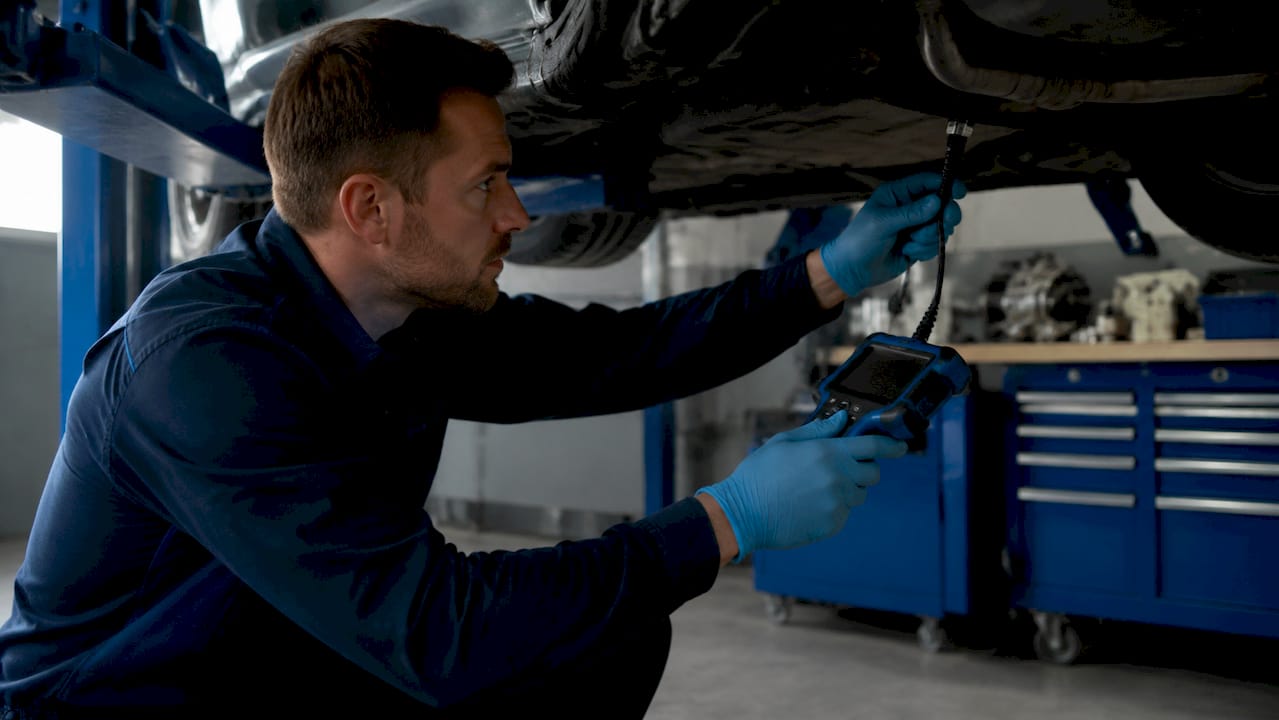
Diagnostic capability is non-negotiable. Haldex systems from generation 1 through 5 each carry distinct fault codes and pressure parameters. Generic OBD scanners miss ECU-level data. Tools such as VCDS (VAG-COM Diagnostic System), VIDA for Volvo, and IDS for Ford are the minimum standard for reading Haldex-specific fault trees. Without them, technicians waste time on visual inspection that a scan would resolve in minutes.
Parts availability is the second constraint. Regular Haldex servicing every 3 years or 20,000–40,000 miles prevents the kind of compound failures that turn a 90-minute fluid service into a full pump replacement. Workshops that stock generation-specific service kits, including pumps, oils, and filters, eliminate the procurement lag that kills turnaround. Precise selection of service kits tailored to Haldex generation and model significantly reduces diagnostic and repair uncertainty, accelerating workflow from the first minute.
Staff training and process mapping complete the picture. Every technician working on Haldex systems should hold a documented competency record covering fluid specifications, torque values, and ECU reset procedures. A written process map, even a single A4 laminated card per generation, cuts the time spent recalling steps mid-repair.
| Prerequisite | Why It Matters | Example |
|---|---|---|
| Generation-specific scanner | Reads ECU fault codes accurately | VCDS, VIDA, IDS |
| Matched service kit | Eliminates procurement delays | Pump, oil, filter per generation |
| Digital vehicle history | Removes diagnostic guesswork | Workshop management software |
| Trained technician | Reduces procedural errors | Documented competency records |
| Correct fluid specification | Prevents repeat failures | Generation-matched Haldex oil |
Pro Tip: Before booking a Haldex job, pull the vehicle’s service history and confirm which generation is fitted. A 60-second check at the point of booking saves 30 minutes of incorrect diagnosis in the bay.
How does workflow optimisation speed up haldex repairs?
Repair turnaround is influenced more by shop processes and information flow than by physical repair speed. A technician who can complete a pump swap in 45 minutes still loses two hours if parts are on back-order and the fault code printout is sitting in the office.
Automated diagnostics and fault reporting remove administrative lag at the front end. Workshops using digital job management platforms can timestamp fault detection, technician dispatch, parts checks, and repair confirmation in a single system. Integrating workflow software that captures each of these events provides the data needed to identify where time is actually lost. Facilities that measure and actively manage Mean Time to Repair (MTTR) reduce downtime by 40–60% within one year. That figure represents the difference between a workshop running at capacity and one perpetually behind schedule.
Real-time parts inventory checks are equally critical. Automated fleet work order management reduces vehicle off-road time by 25–40% by compressing the gap between fault detection and repair start. The same automation cuts administrative labour by 60–70%, with return on investment often achieved within 30–60 days. For a busy Haldex workshop, that means the system pays for itself before the quarter ends.
Mobile access to asset history shortens repair cycles further. Accurate asset history via mobile devices gives technicians immediate data at the vehicle rather than requiring a trip to the office terminal. Priority and queue management within the job management system prevents high-value or time-sensitive Haldex repairs from sitting behind lower-priority work.
Key workflow improvements that compress Haldex service time:
- Automated fault-to-job creation with timestamping
- Live inventory alerts when generation-specific parts fall below minimum stock
- Mobile technician access to vehicle history and fault data
- Priority flagging for Haldex ECU faults requiring specialist handling
- Pre-populated job cards with generation-specific torque and fluid specifications
Pro Tip: Map your current Haldex repair process from the moment the vehicle arrives to the moment it leaves. Mark every point where a technician waits for information, parts, or approval. Those waiting points are your turnaround problem, not the repair itself.
Which repair techniques optimise haldex component turnaround?
Precise diagnosis is the foundation of quick Haldex repairs. Early diagnosis prevents complex repairs and avoids the guesswork that turns straightforward jobs into multi-day investigations. Catching a failing pump at the fluid service stage costs a fraction of the time and money required once the unit has seized.
System cleaning before pump replacement
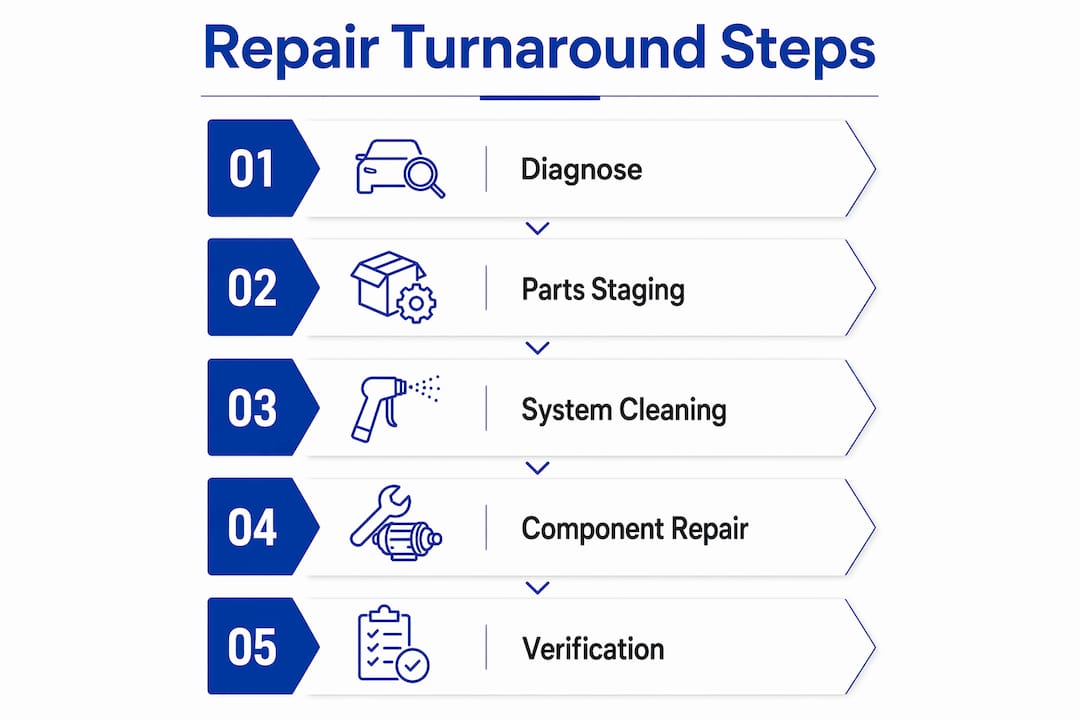
Replacing a Haldex pump without flushing contamination risks premature failure and repeat repair work. Thorough cleaning of the strainer and the entire hydraulic circuit is mandatory before fitting a new pump. Skipping this step is the single most common cause of repeat Haldex failures in general workshops. The vehicle returns within weeks, the warranty claim is disputed, and the bay time is lost twice.
Fluid specification and generation matching
Correct fluid selection is not optional. Each Haldex generation carries a distinct oil specification, and using the wrong grade degrades clutch pack performance within thousands of miles. Specialist workshops using correct generation-specific fluids offer repairs with improved reliability and turnaround speed compared to generic service centres. Stocking the right Haldex-compatible filters alongside matched oils removes the last-minute substitution that causes delays.
ECU repair versus new unit sourcing
ECU faults are the area where turnaround time varies most dramatically between workshops. Specialist ECU repair services compress module rebuild turnaround to 2–3 working days. Sourcing a new OEM ECU through a main dealer typically takes 5–10 working days and costs significantly more. For workshops handling VW, Audi, Seat, or Škoda Haldex systems, a relationship with a specialist ECU repair centre is a direct turnaround advantage.
| Approach | Typical Turnaround | Cost Level | Reliability |
|---|---|---|---|
| DIY with generic parts | 4–8 hours plus delays | Low upfront | Variable |
| General workshop | 1–3 days | Mid-range | Moderate |
| Specialist with OEM kits | 90 minutes to 4 hours | Competitive | High |
| Specialist ECU repair | 2–3 working days | Cost-effective | High |
Pro Tip: Establish a standing account with a specialist ECU repair centre before you need one. Negotiating terms during a live repair, with a customer waiting, costs you time and leverage.
How to verify repair quality and prevent delays at handover?
Post-repair verification is where many workshops lose time they have already saved. Skipping a structured check produces repeat visits that inflate turnaround figures and damage workshop reputation.
Follow this sequence before returning any Haldex-serviced vehicle:
- Clear all fault codes using the generation-appropriate diagnostic tool.
- Perform a static pressure test to confirm pump output meets specification.
- Conduct a dynamic engagement test: drive the vehicle through a low-speed turn sequence to confirm clutch pack activation.
- Complete a road test of at least 5 miles including acceleration and cornering loads.
- Re-scan for fault codes after the road test to confirm no new codes have been generated.
- Check fluid level and inspect for leaks at the pump housing and filter connections.
- Document all readings and test results in the vehicle’s digital job record.
Fault code clearing combined with system retesting and test driving confirms repair success and prevents rework delays. Effective verification reduces repeat visits and the associated turnaround extensions that follow.
Common issues to watch for during the verification phase:
- Persistent engagement hesitation indicating incomplete strainer cleaning
- Residual fault codes pointing to an ECU reset that did not complete
- Fluid seepage at the filter housing suggesting incorrect torque on reassembly
- Unusual coupling noise under load, which the Haldex coupling noise troubleshooting guide addresses in detail
- Pressure readings below specification after pump replacement, indicating contamination was not fully cleared
A structured handover checklist, completed and signed by the technician, creates accountability and gives the service adviser confidence when returning the vehicle to the customer.
Key takeaways
Reducing Haldex repair turnaround time requires generation-specific preparation, integrated workflow management, and structured post-repair verification to eliminate the delays that accumulate between fault detection and vehicle return.
| Point | Details |
|---|---|
| Prepare before the vehicle arrives | Confirm Haldex generation and stock matched parts before the job begins. |
| Manage MTTR actively | Workshops tracking Mean Time to Repair reduce downtime by 40–60% within a year. |
| Flush before fitting new parts | Always clean the strainer and hydraulic circuit before installing a replacement pump. |
| Use specialist ECU repair | Specialist module rebuilds take 2–3 days versus 5–10 days for new OEM units. |
| Verify before handover | A structured seven-step check prevents repeat visits and protects workshop reputation. |
Where speed and thoroughness actually meet
I have watched workshops chase turnaround time by cutting corners on the verification stage, and it always costs them more time in the end. The repeat visit, the disputed warranty claim, the customer who tells three colleagues about the experience. None of that shows up in the daily job count, but all of it shows up in the monthly figures.
The insight that changed how I think about Haldex efficiency is this: the repair itself is rarely the bottleneck. The bottleneck is almost always the 20 minutes spent hunting for the correct fluid specification, or the hour waiting for a parts confirmation that should have been automated. Shops that invest in digital workflow tools and pre-stocked generation-specific kits consistently outperform shops with faster technicians but slower processes.
Early scheduling is underrated. A Haldex service booked at the 20,000-mile mark is a 90-minute job. The same vehicle arriving with a seized pump and contaminated fluid is a two-day job with a parts wait built in. Communicating that reality to customers at the point of sale, not when the vehicle is already on the ramp, is one of the most practical things a workshop owner can do to protect their turnaround figures.
Training matters more than tooling beyond a certain point. A technician who understands why the strainer must be cleaned, not just that it must be cleaned, makes better decisions under time pressure. That understanding comes from structured training, not from a laminated card on the wall.
— Mindaugas
Get the right parts before the vehicle arrives
Haldexparts stocks OEM-grade service kits, pumps, oils, and filters for every Haldex generation, covering Audi, VW, Volvo, Ford, and Land Rover applications. Orders over £150 qualify for free shipping, which makes pre-stocking generation-specific kits a straightforward decision for any busy workshop.
Browse the full range of Haldex service kits to find generation-matched kits that arrive ready to fit, with no substitutions and no procurement delays. For ECU faults, the Haldex ECU control units section covers replacement and repair options across multiple platforms. If you need the complete package, the OEM parts range includes pumps, oils, and filters with full compatibility data so you order correctly the first time.
FAQ
How long should a standard haldex service take?
A standard Haldex fluid and filter service takes 60–90 minutes when the correct generation-specific kit is pre-staged and the technician is familiar with the procedure. Complex repairs involving pump replacement or ECU faults extend this to 3–8 hours depending on parts availability.
What is the fastest way to resolve a haldex ECU fault?
Using a specialist ECU repair service compresses module rebuild turnaround to 2–3 working days, compared to 5–10 days when sourcing a new OEM unit through a main dealer.
Why do haldex repairs sometimes fail shortly after completion?
The most common cause is fitting a new pump without flushing contamination from the strainer and hydraulic circuit. The residual debris damages the new pump within weeks, producing a repeat failure that is often mistaken for a parts defect.
How often should haldex systems be serviced to avoid complex repairs?
Haldex systems should be serviced every 3 years or 20,000–40,000 miles to prevent fluid degradation and filter blockage from escalating into pump or clutch pack failure.
Does workflow software genuinely reduce haldex repair time?
Yes. Facilities that actively manage Mean Time to Repair using integrated workflow tools reduce downtime by 40–60% within 12 months, primarily by eliminating the administrative delays between fault detection and repair start.