
Multi-vehicle Haldex service planning is the centralised, usage-driven scheduling of maintenance across fleets or collections of vehicles equipped with Haldex all-wheel-drive coupling systems. Vehicles from Volkswagen, Audi, Skoda, Seat, Volvo, and Saab all rely on Haldex units that demand generation-specific servicing involving fluid changes, filter replacement or strainer cleaning, pump inspection, and diagnostic scanning. The critical distinction between manufacturer-recommended intervals and specialist best practice is where most fleet operators and enthusiasts lose money. Getting this right across multiple vehicles requires more than a calendar reminder.
1. Multi-vehicle Haldex service planning: the core criteria
The most consequential decision in Haldex service scheduling is whether to use fixed calendar intervals or usage-driven triggers. Manufacturer guidance typically extends to 3 years or 60,000 km, but specialists consistently recommend 2 years or 20,000 to 30,000 miles to prevent oil pump contamination and maintain AWD responsiveness. For a mixed fleet, applying the manufacturer interval uniformly is a false economy.
Usage profile is the primary variable. Urban stop-start driving, regular towing, track days, and spirited performance use all degrade Haldex fluid faster than steady motorway miles. Vehicles with heavier thermal and mechanical stress profiles require earlier service cycles, which means a Golf R used daily in city traffic needs a shorter interval than a Volvo XC60 covering long-distance motorway routes.
Environmental factors compound this further. Salt-heavy winter roads, extreme temperature swings, and off-road terrain all accelerate wear on clutch packs and fluid quality. A static calendar schedule cannot account for these variables across a diverse fleet.
Key criteria to assess for each vehicle in your fleet:
- Haldex generation (1st through 5th, each with distinct service requirements)
- Annual mileage and usage type (urban, motorway, towing, performance)
- Climate and terrain (coastal, highland, urban, mixed)
- Service history completeness (especially for used or recently acquired vehicles)
- OEM versus aftermarket parts history (affects baseline condition assessment)
Pro Tip: When onboarding a used vehicle into your maintenance programme, treat its Haldex service history as unknown and perform a full service regardless of the stated mileage since last service. Contaminated fluid and a blocked strainer leave no visible external signs.
2. How Haldex generation affects component requirements
The single most important compatibility factor in multi-vehicle maintenance planning is Haldex generation. Generation 1 through 4 units require filter replacement during each service; Generation 5 units use a pump strainer that must be removed and cleaned rather than replaced. Confusing these two procedures is one of the most common and costly errors in mixed-fleet servicing.
Fluid specifications also differ by generation. Using an incorrect fluid type risks clutch slipping and pump damage, and OEM fluids and filter kits differ by generation in ways that aftermarket catalogues do not always make clear. The table below summarises the critical service differences across generations.
| Haldex generation | Filter type | Fluid specification | Key service task |
|---|---|---|---|
| Gen 1 | Replaceable filter | Gen 1 specific fluid | Filter replacement, fluid drain and refill |
| Gen 2 | Replaceable filter | Gen 2 specific fluid | Filter replacement, fluid drain and refill |
| Gen 3 | Replaceable filter | Gen 3 specific fluid | Filter replacement, fluid drain and refill |
| Gen 4 | Replaceable filter (e.g. OEM filter kit) | G 055 175 A2 fluid | Filter replacement, fluid drain and refill |
| Gen 5 | Pump strainer (clean only) | Gen 5 specific fluid | Strainer removal, cleaning, fluid drain and refill |
The internal oil pump strainer is the most frequently overlooked component in official maintenance guides, particularly for Gen 5 units. Clutch wear debris accumulates on the strainer mesh, restricting oil flow, increasing pump load, and eventually causing overheating and pump failure. A fresh oil change without strainer cleaning on a Gen 5 unit provides false reassurance.
Neglecting the pump strainer or using wrong fluid types leads directly to premature pump failure and complete loss of all-wheel drive. For a fleet operator, this means an unplanned repair bill that dwarfs the cost of a correctly executed service.
Pro Tip: Label each vehicle’s Haldex generation on its service record and cross-reference it against your parts order before every service. A Gen 4 filter ordered for a Gen 5 Tiguan is a mistake that costs time and potentially the pump.
3. Scheduling strategies for mixed Haldex fleets
Effective multi-vehicle maintenance planning requires separating Haldex service records from general drivetrain or differential maintenance. Accurate maintenance tracking demands Haldex services are recorded distinctly from other drivetrain services, since fluid specifications, failure modes, and service parts differ substantially. A single spreadsheet mixing Haldex and rear differential entries creates dangerous ambiguity.
Fleets using a uniform Haldex service schedule for varied vehicle usage risk 4.8 times higher repair costs due to unplanned failures. This figure underlines why dynamic, usage-based scheduling is not optional for professional fleet operations. It is the baseline standard.
A practical scheduling workflow for a mixed fleet:
- Audit every vehicle’s Haldex generation and service history before building any schedule. Assign each vehicle a generation code and last-service mileage.
- Segment vehicles by usage intensity. Group high-stress vehicles (urban, towing, performance) on a 20,000-mile cycle and lower-stress vehicles on a 25,000 to 30,000-mile cycle.
- Set mileage windows of 5,000 miles around each target interval. This allows scheduling flexibility without letting any vehicle run significantly overdue.
- Use telematics or mileage logs to trigger service alerts per vehicle rather than relying on calendar dates. Telematics-driven scheduling achieves lower repair costs and optimised downtime by aligning maintenance to actual mechanical wear.
- Record each Haldex service separately with generation, fluid batch, filter or strainer status, and any diagnostic fault codes noted.
- Review the schedule quarterly and adjust intervals based on any symptom reports, diagnostic feedback, or changes in vehicle usage patterns.
- Pre-order parts in advance for the next scheduled service window. This eliminates delays caused by sourcing issues and allows bulk ordering to reduce per-unit cost.
Spreadsheets and static schedules fail to prevent Haldex failures compared to telematics-driven, dynamic planning based on actual vehicle use. For smaller collections of vehicles where telematics is not fitted, a mileage-log spreadsheet updated at each fuel fill is a workable substitute, provided it is reviewed consistently.
4. Cost considerations and budgeting for multi-vehicle servicing
Professional Haldex servicing costs between £300 and £400 per vehicle for a complete service including fluid drain, filter replacement or strainer cleaning, pump inspection, and diagnostic scanning. This figure represents the cost of doing the job correctly. Skipping steps to reduce cost is where most expensive failures originate.
Generation 5 units typically cost more to service than earlier generations due to the additional labour involved in pump strainer removal and the higher specification fluid required. Dealer pricing often exceeds independent specialist rates for identical work, with service costs varying by generation and location but generally starting around £300 at independent specialists.
| Haldex generation | Estimated service cost (independent) | Key cost drivers |
|---|---|---|
| Gen 1 to Gen 3 | £280 to £340 | Fluid, filter, labour |
| Gen 4 | £300 to £360 | OEM filter kit, fluid, diagnostic scan |
| Gen 5 | £340 to £420 | Strainer labour, fluid specification, pump inspection |
DIY servicing is viable for experienced technicians with the correct tools, but partial servicing carries real risk. Changing fluid without cleaning the strainer on a Gen 5 unit, or using a non-OEM filter on a Gen 4, creates a false sense of completion. The cost saving on parts is negligible against the cost of a pump replacement, which typically runs to several hundred pounds in parts alone before labour.
Proactive, correctly intervalled servicing across a fleet of five vehicles at £350 per service totals £1,750 per cycle. A single pump failure on one vehicle, requiring pump replacement and diagnostic work, can cost more than the entire fleet’s scheduled service budget. The economics of correct servicing are not ambiguous.
Key takeaways
Effective multi-vehicle Haldex service planning requires generation-specific procedures, usage-driven intervals, and separate record-keeping to prevent costly failures across a mixed fleet.
| Point | Details |
|---|---|
| Generation determines procedure | Gen 1 to 4 need filter replacement; Gen 5 requires pump strainer cleaning. Never interchange these steps. |
| Usage drives interval, not the calendar | High-stress vehicles need servicing at 20,000 miles; lower-stress vehicles at up to 30,000 miles. |
| Separate Haldex records from other drivetrain services | Distinct records prevent mismatched fluids and missed steps across a mixed fleet. |
| Proactive servicing costs far less than reactive repair | A full fleet service cycle costs less than a single pump replacement on one vehicle. |
| Telematics or mileage logs replace static schedules | Dynamic triggers aligned to actual wear reduce unplanned failures and optimise downtime. |
Why I think most Haldex service plans fail before they start
The most common failure I see in multi-vehicle Haldex maintenance is not negligence. It is the assumption that a single service interval applies to every vehicle in the fleet. A Volkswagen Tiguan covering 15,000 urban miles per year and a Skoda Octavia Scout doing 25,000 mixed motorway miles are not the same service problem, even if they share the same Haldex generation.
The second failure is treating the oil change as the entire service. Many enthusiasts underestimate the importance of cleaning the pump strainer or replacing filters, and this omission causes most post-service AWD faults despite fresh oil. I have seen Gen 5 units fail within 8,000 miles of a fluid-only service because the strainer was never touched. The oil was clean. The pump was not.
My recommendation for anyone managing more than two Haldex-equipped vehicles is to invest in a generation-specific service checklist for each vehicle and review it before every parts order. Technician training on the differences between generations is not a luxury. It is the difference between a £350 service and a £900 repair.
The manufacturer-recommended intervals are designed around warranty cost management, not optimal system longevity. Specialists who work on these systems daily consistently advise shorter cycles for any vehicle under real-world stress. That advice is worth following.
— Mindaugas
Source OEM Haldex parts for your entire fleet
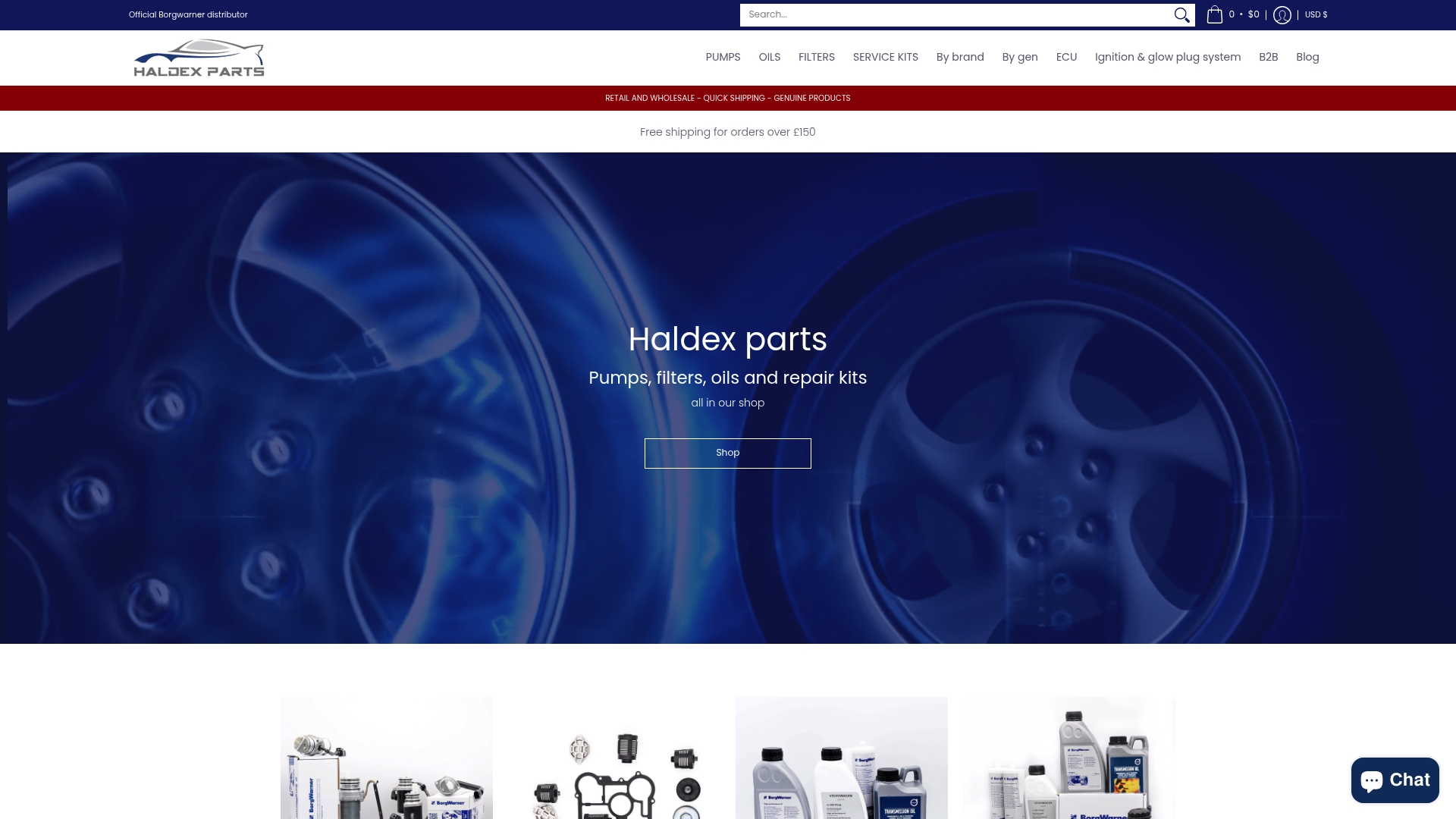
Haldexparts stocks OEM-grade service kits for every Haldex generation, covering Audi, Volkswagen, Skoda, Seat, Volvo, and Saab. Whether you are servicing a Gen 4 Tiguan or a Gen 5 Volvo AWD system, the correct fluid, filter, and pump components are available in one place. Haldexparts offers free shipping on orders over £150, which makes bulk ordering for a multi-vehicle service cycle genuinely cost-effective. Visit Haldexparts to browse the full range of OEM Haldex oils, filters, and pumps, and match every part to your specific vehicle generation before your next service window.
FAQ
What is the correct Haldex service interval for a mixed fleet?
Specialist best practice recommends 2 years or 20,000 to 30,000 miles for most vehicles, with shorter cycles for high-stress usage such as urban driving or towing. Manufacturer intervals of 3 years or 60,000 km are designed for warranty cost management rather than optimal system longevity.
Does Gen 5 Haldex service differ from earlier generations?
Yes. Gen 5 units use a pump strainer that must be removed and cleaned rather than a replaceable filter. Performing a fluid change without cleaning the strainer on a Gen 5 unit leaves the primary cause of pump failure unaddressed.
How should Haldex service records be kept for multiple vehicles?
Haldex services must be recorded separately from other drivetrain maintenance, noting generation, fluid specification, filter or strainer status, and any diagnostic fault codes. Mixing Haldex records with general differential entries creates ambiguity that leads to missed steps.
What are the risks of using incorrect fluid or skipping the strainer clean?
Incorrect fluid or a blocked strainer restricts oil flow, increases pump load, causes overheating, and leads to premature pump failure and complete loss of AWD function. The repair cost consistently exceeds the cost of several correctly executed service cycles.
Is a fleet maintenance programme worth implementing for Haldex vehicles?
A structured fleet maintenance programme with usage-based triggers reduces unplanned failures and aligns service to actual mechanical wear rather than arbitrary dates. For any fleet running more than two Haldex-equipped vehicles, dynamic scheduling based on mileage logs or telematics is the most cost-effective approach available.