
Your VIN will usually narrow down the Haldex generation fitted to a VAG Group or Volvo vehicle, but it rarely gives a definitive answer on its own. The fastest reliable workflow is: decode the VIN (fourth character for model year, chassis/platform code), cross-reference against a generation compatibility table, then confirm with the controller or pump part number from ETKA or a VCDS module read. If those steps still leave doubt, a photograph of the unit and a quick query to a specialist supplier closes it.
Here is what you need before ordering any parts:
- VIN fourth character maps to model year (e.g. C = 2012, D = 2013, E = 2014 per the VIN year decoding table)
- Chassis/platform code (e.g. 1J, 1K, 5N, 8J) confirms the model family and narrows generation
- Controller part-number prefix (0AY, 0CQ, 02D, 0BR) from ETKA or VCDS Advanced ID confirms generation
- Physical inspection of the Haldex unit (filter presence, pump shape, connector type) as a final check
- Haldexparts compatibility listings and service kits as the UK ordering reference
Key takeaways
Confirming Haldex generation before ordering parts requires VIN decoding, a part-number cross-check, and a physical or VCDS verification for any vehicle in the 2012–2016 build window.
Table of Contents
- How to read your VIN for Haldex system identification
- Step-by-step: how to check Haldex fitment from VIN to confirmed generation
- Haldex generations 1–5: quick reference for UK vehicles
- Controller and pump part numbers that confirm Haldex generation
- Visual cues that tell you which Haldex unit is fitted
- Which parts are generation-specific and what a UK service involves
- What to do when a VIN lookup does not give a clear Haldex generation
- Why the VIN-first workflow is more reliable than most technicians expect
- Get the right Haldex service kit with VIN verification from Haldexparts
- Sources
How to read your VIN for Haldex system identification
Not every VIN character matters for Haldex fitment. The useful ones are the fourth character (model year), the seventh character (body/restraint variant on some platforms), and the chassis or platform code embedded in the broader model designation.
Fourth character: model year
Haldex Service’s VIN decoding guidance maps the fourth VIN character to model year as follows: 1 = 2001, 2 = 2002, through to 9 = 2009, then A = 2010, B = 2011, C = 2012, D = 2013, E = 2014, F = 2015, G = 2016, H = 2017, J = 2018, K = 2019. That single character places the vehicle in a generation window immediately.
Chassis/platform codes to look for
- 1J (Golf Mk4, Bora, Octavia Mk1) — Gen 1
- 1K (Golf Mk5/Mk6, Octavia Mk2, A3 8P) — Gen 2 or Gen 3
- 5N (Tiguan Mk1) — Gen 4
- 8J / 8P (TT Mk2, A3 8P) — Gen 3 or Gen 4 depending on build date
- 5F / KL (Seat Leon Mk3/Mk4, A3 8V) — Gen 4 or Gen 5
- AD / AU (Volvo XC60, XC90 post-2015) — Gen 5
Why model year plus chassis usually works for VAG brands is straightforward: BorgWarner (the manufacturer behind Haldex-branded couplings) introduced each generation with a specific platform generation. The complication arises in build-date overlap windows, particularly 2012–2016, where Gen 4 and Gen 5 units were fitted to the same model range depending on production week.
Pro Tip: Write down the full 17-character VIN before you start. The fourth character alone is not enough; you need the platform code from your V5C or a VIN decoder to confirm the chassis family before you look up generation tables.
Step-by-step: how to check Haldex fitment from VIN to confirmed generation
Follow these steps in order. Each one either confirms the generation or tells you to move to the next.
-
Record the full VIN and note the fourth character. Run it through a VIN decoder or check the V5C registration document for the model platform. Note the chassis code (e.g. 5N for Tiguan Mk1).
-
Cross-reference the chassis code against a generation table. Use the Haldexparts or the Haldex Service ETKA part-number tables to match chassis + model year to a generation. For many vehicles this step alone is sufficient.
-
If the build window is ambiguous (particularly 2012–2016), read the AWD module via VCDS. Connect VCDS, navigate to Module 22 (AWD), and open Advanced Identification. Record the ECU part number and hardware number. ECS Tuning’s identification guide confirms that for 2012+ vehicles VIN alone may not be decisive, and a VCDS module read is the most reliable next step.
-
Physically inspect the Haldex unit. Crawl under the rear of the vehicle and locate the coupling on the rear axle. Check for a filter housing (Gen 1–4 have a filter; Gen 5 does not use a serviceable filter element in the same way), note the pump shape and connector orientation, and look for a stamped or printed part number on the controller housing.
-
Photograph the unit and submit to a specialist supplier. If the part number is partially obscured or you are still uncertain, photograph the controller flange, the pump screen, and any visible part numbers, then send those images with your VIN to a supplier for confirmation before ordering.
Pro Tip: When using VCDS, the “Advanced ID” screen in Module 22 shows both the hardware number and the software/dataset number. Screenshot both. The hardware number prefix (0AY, 0CQ, etc.) is what identifies the generation; the software number confirms the calibration variant.
Haldex generations 1–5: quick reference for UK vehicles
Each generation introduced hardware changes that make parts non-interchangeable. Knowing which generation is fitted is not optional before ordering a service kit.
Forbes Automotive notes that vehicles built after roughly 2016 are more likely to carry Gen 5, but cautions that the list is not exhaustive and verification remains necessary. That caveat matters most for the 2013–2016 overlap window.
Gen 1 specifics worth knowing: Specialist module pages list Gen 1 vehicle compatibility using rear-axle codes alongside model names, covering VW Group vehicles including the A3/S3 8L, TT Mk1, Golf Mk4 4Motion/R32, Sharan 4Motion, Seat Alhambra, and Škoda Octavia Mk1.
Common exceptions and overlap points:
- Golf Mk5 R32 (1K platform) can carry Gen 2 or Gen 3 depending on build date
- Audi TT Mk2 (8J) spans Gen 3 and Gen 4 across its production run
- Volvo XC60 first generation straddles Gen 4 and Gen 5 around the 2014–2015 model year
- Some Seat Leon Mk3 (5F) early builds carry Gen 4 before Gen 5 was introduced
Pro Tip: For Volvo applications, the platform code alone is less reliable than for VAG. Always cross-reference the build year against a VE Haldex controller compatibility table that lists model, platform, year, and assigned generation side by side.
Controller and pump part numbers that confirm Haldex generation
Part-number prefixes from ETKA or a VCDS Advanced ID read are the most reliable single indicator of generation. Here is how to interpret them.
Prefix guide:
- 02D — Gen 1 (e.g. 02D 900 554 B, common on Golf Mk4 4Motion and Octavia Mk1)
- 0AY — Gen 3 and Gen 4 (e.g. 0AY 907 554 E for Gen 4; suffix letters distinguish variants)
- 0BR — Gen 3 on some Audi platforms
- 0CQ — Gen 5 (e.g. 0CQ 598 305 for the Gen 5 seal and pump kit)
Haldex Service’s ETKA ECU part-number tables cross-reference these prefixes against model and chassis ranges, which is the most authoritative way to verify a module read against a known vehicle.
Community scan data shows that 0AY-907-554E and 0AY-907-554J both appear in Gen 4 Advanced ID reports, while 0CQ labels appear consistently in Gen 5 reads. There is some overlap in transitional models, so the prefix alone is a strong indicator rather than an absolute confirmation.
How to find the part number without VCDS:
- Check the controller housing directly: the number is usually printed or stamped on a label on the top or side of the controller box
- Search the part number against the 02D525557 pump buyer’s guide for cross-reference examples
- Use ETKA (the VAG electronic parts catalogue) with the full VIN to pull the fitted AWD module part number
Pro Tip: The revision suffix letter at the end of a part number (e.g. the E or J in 0AY-907-554E/J) indicates a hardware or software revision, not a different generation. Ordering a kit for the wrong revision can mean incompatible seals or pump geometry. Always match the full part number, not just the prefix, when ordering a pump or seal kit.
Visual cues that tell you which Haldex unit is fitted
A five-minute look under the car often confirms what the VIN suggested. The Haldex coupling sits at the rear axle differential on all common VAG and Volvo platforms.
Where to look:
- Crawl under the rear of the vehicle and locate the rear differential/coupling assembly
- The controller (ECU box) is bolted to the top or side of the coupling housing
- The pump is integrated into or mounted adjacent to the coupling
What to look for by generation:
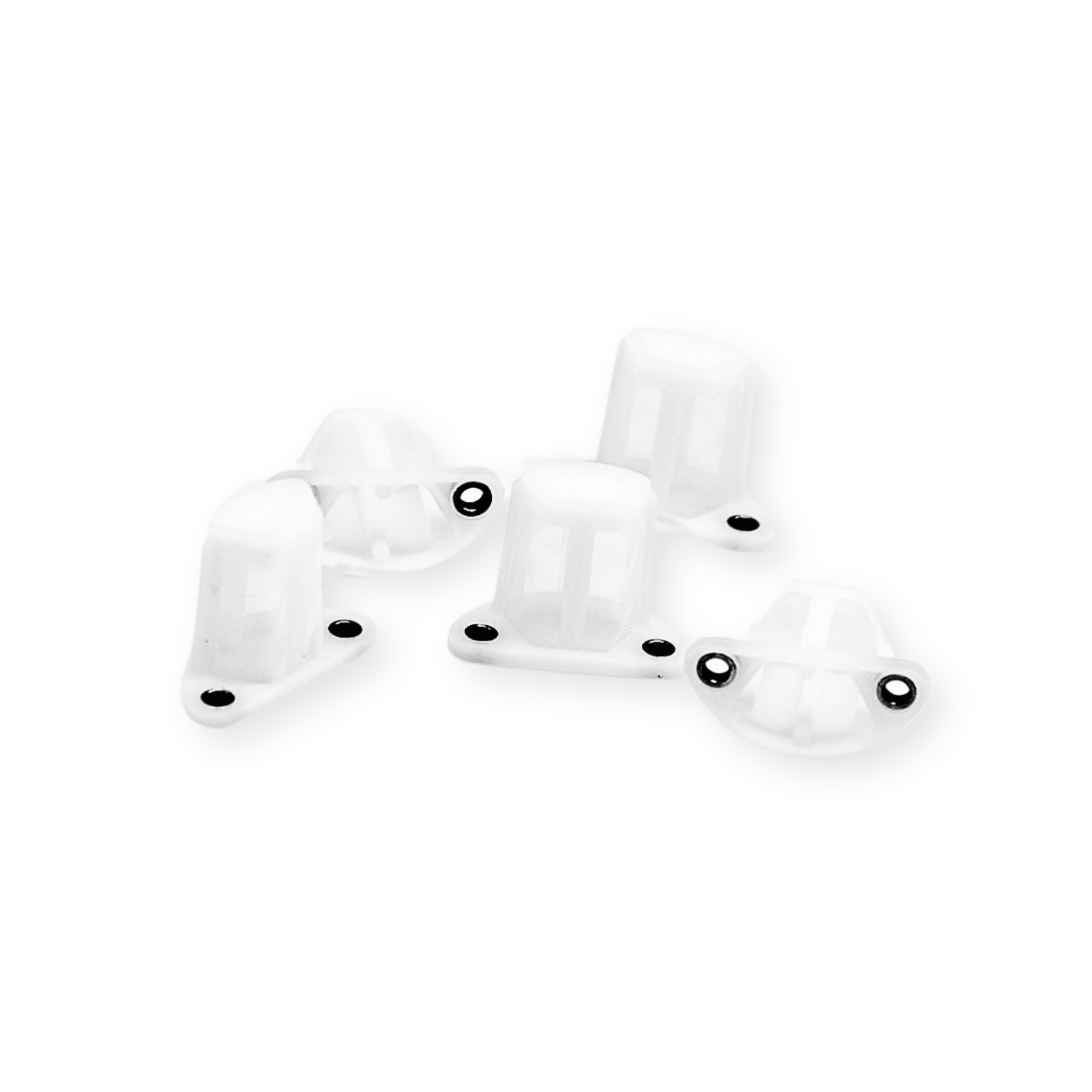
- Filter housing present (a cylindrical or cartridge-style housing): Gen 1 through Gen 4 all have a serviceable oil filter; Gen 5 does not use the same external filter arrangement
- Controller case shape: Gen 1 and Gen 2 use a more compact, squarish controller; Gen 4 and Gen 5 have a larger rectangular controller with a different connector layout
- Pump screen: visible on Gen 1–3 as a mesh screen on the pump inlet; Gen 4 and Gen 5 have a revised pump body
- Connector type and pin count: Gen 5 connectors differ visibly from Gen 3/4 connectors; if you have a reference image, the connector shape alone can confirm generation
Photograph checklist for supplier confirmation:
- Full shot of the coupling assembly from below, showing the controller and pump together
- Close-up of the controller label (part number must be legible)
- Close-up of the pump body and any visible screen or filter housing
- VCDS screenshot of Module 22 Advanced ID if available
Pro Tip: Use a phone torch and a mirror on a stick to read the controller label without removing anything. Most part numbers are on the top face of the controller, which faces upward toward the vehicle floor. A clear photo of that label sent to a specialist supplier is usually enough for a definitive confirmation.
Which parts are generation-specific and what a UK service involves
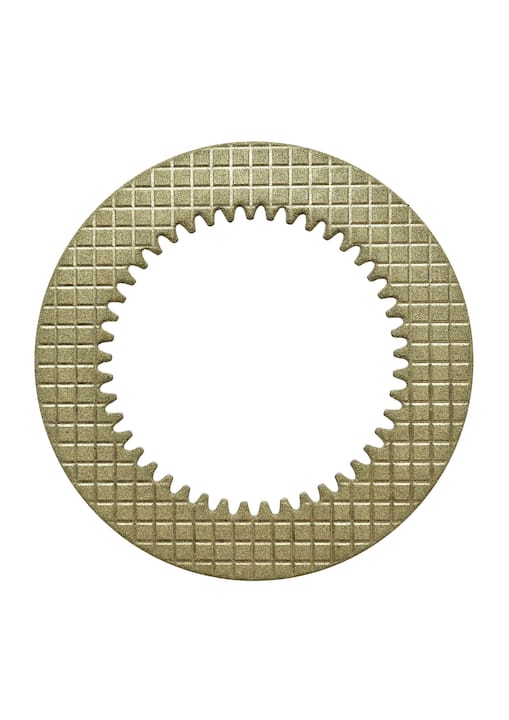
Ordering the wrong kit is the most common and most avoidable mistake in Haldex servicing. These parts are generation-specific and cannot be substituted across generations.
Generation-specific parts:
- Pump motor: each generation uses a different pump geometry and electrical specification
- Filter element: present in Gen 1–4; the correct filter part number differs per generation
- Seal kits: O-ring dimensions and materials differ between generations; a Gen 4 seal kit will not seat correctly in a Gen 5 pump
- Oil specification: Gen 1 uses G052175A1 (275ml); Gen 4 uses G055175A2; Gen 5 uses G055175A2 or the equivalent 0CQ-spec oil
Parts that are broadly interchangeable (with caution): some electrical connectors and mounting hardware are shared across adjacent generations, but never assume interchangeability for fluid-path components.
Haldexparts organises its service kits by brand and generation, which reduces the risk of ordering the wrong kit. For workshops managing multiple vehicles, the multi-vehicle Haldex service planning guide covers how to batch orders efficiently.
UK practical notes:
- A standard Haldex oil and filter service typically takes 45–90 minutes for a competent technician, depending on access
- Free shipping applies on orders over £150 from Haldexparts
- Generation-specific Haldex oils and filters are stocked for same-day despatch on most common generations
Pro Tip: For Volvo XC60 and XC90 owners, the Volvo coupling oil and filter kit uses Volvo-specific part numbers (31325173 for the filter, 31367940 for the oil). Do not substitute VAG-spec oil into a Volvo coupling.
What to do when a VIN lookup does not give a clear Haldex generation
Some vehicles genuinely sit in an ambiguous build window. Here is the escalation path.
- Step 1: Read Module 22 with VCDS. The hardware number in Advanced ID is the most reliable single data point. Generation 4 troubleshooting guidance confirms that VCDS output tests and module reads are the standard diagnostic approach; note that bench testing a pump outside the vehicle can damage it quickly, so avoid that route.
- Step 2: Photograph the unit. Follow the photograph checklist above and send images with the VIN to a specialist supplier. Most ambiguous cases resolve at this step.
- Step 3: Contact the vehicle’s supplying dealer with the VIN. A dealer with access to the manufacturer’s build records can confirm the fitted AWD module part number from the original build specification.
- Step 4: Check the VE Haldex controller compatibility table for model-by-model fitment data including platform, year, and assigned generation.
- Step 5: If in doubt, book a workshop diagnostic. A VCDS scan takes under 30 minutes at most independent VAG specialists and costs £30–£60 in most UK regions. That is cheaper than returning a wrong-generation service kit.
For Škoda Octavia owners also maintaining other consumables, Škoda Octavia wiper blades are available from GWC Wipers as a separate service item.
Why the VIN-first workflow is more reliable than most technicians expect
The instinct to skip straight to a physical inspection is understandable, but the VIN-first approach saves time in the majority of cases. For most VAG Group vehicles outside the 2012–2016 overlap window, chassis code plus model year gives a definitive generation match without touching the car. The physical check then becomes a confirmation step rather than the primary identification method.
What specialists actually do with genuinely ambiguous vehicles is a three-point check: VCDS Advanced ID for the hardware number, a photograph of the controller label, and a cross-reference against ETKA part-number tables. That combination has a near-zero error rate. The mistake most people make is treating the VIN year alone as sufficient, without checking the chassis platform code. A 2014 Audi A3 (8V platform) and a 2014 Golf Mk6 (1K platform) are both 2014 vehicles but carry different Haldex generations. The year is a filter, not an answer.
The other underappreciated point: revision suffix letters on part numbers matter for seal kits and pump geometry. Ordering a kit matched to the prefix but not the full part number is a common source of returns. Suppliers who map VIN to service kit at the point of order, rather than leaving that matching to the buyer, reduce that error significantly.
Get the right Haldex service kit with VIN verification from Haldexparts
OEM-grade Haldex service kits, matched to your exact generation, are available directly from Haldexparts with free UK delivery on orders over £150. The difference from a generic parts search is that every kit in the service kits collection is listed by generation and vehicle platform, so you are not left guessing whether the filter or seal kit fits your specific build.
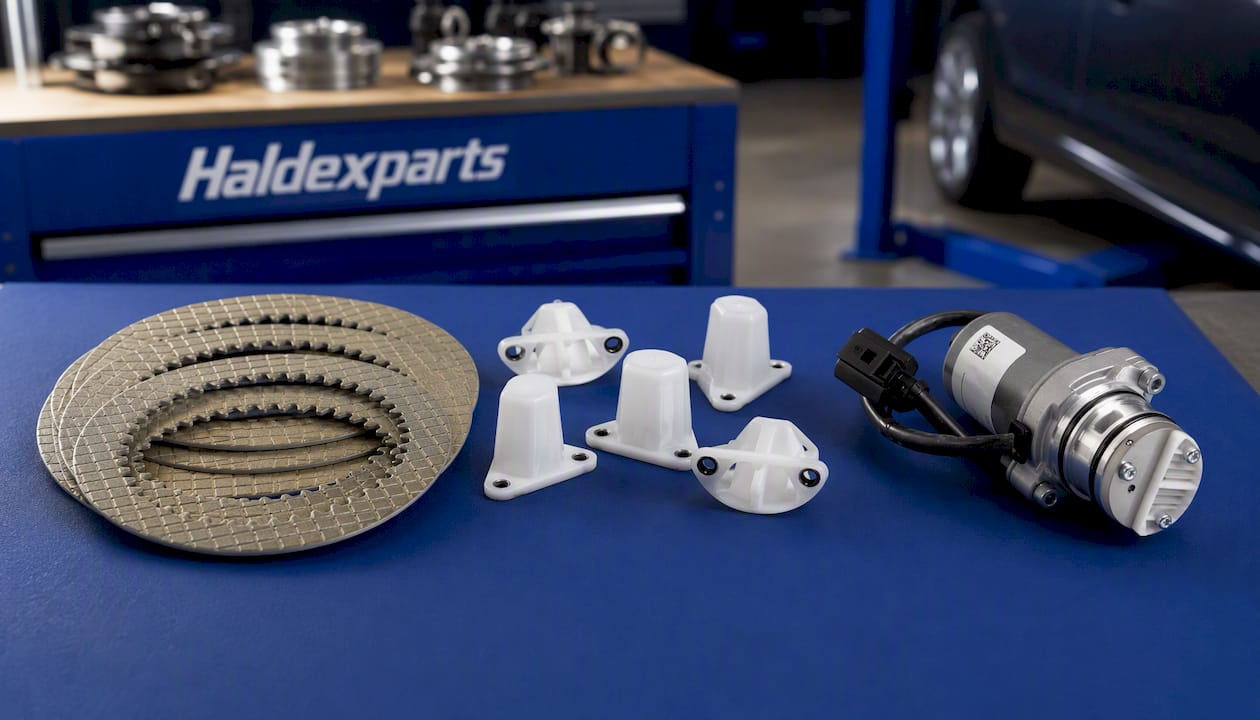
If your VIN check leaves any doubt, send your VIN and a photograph of the controller label to the Haldexparts team for a part-number cross-check before you order. Generation-specific pump motors and VAG Haldex filters are stocked for the most common UK platforms, with same-day despatch on most orders. Browse the full service kits range and confirm your generation in one step.
Sources
- Haldex Module Gen1 02D900554B Old Seal Type - vd Veer Engineering
- Haldex Versions and Compatibility – Forbes Automotive
- How To Identify and Service Your VW or Audi Haldex AWD System – ECS Tuning
- Guide To Generation 4 Haldex Troubleshooting - Auto Fault Finder