
A Haldex compatible vehicle is one fitted with the Haldex all-wheel-drive system, an on-demand AWD technology that dynamically engages the rear axle from a front-wheel-drive base. The system is used across Volkswagen Group, Volvo, and Land Rover vehicles, and it transfers up to 100% torque to the rear axle when slip is detected. Understanding what makes a vehicle Haldex compatible matters most when you are buying parts, planning maintenance, or tuning for performance. The system has evolved through five distinct generations, and each generation uses different components that are not interchangeable. Getting this wrong is expensive.
How does the Haldex all-wheel-drive system work?
The Haldex AWD system operates from a front-wheel-drive base. Under normal conditions, the car drives on the front wheels only, which keeps fuel consumption low. The moment the system detects wheel slip, it engages the rear axle in fractions of a second, distributing torque where it is needed.
The key distinction in how Haldex works lies between reactive and proactive generations:
- Generation 1 and 2 (reactive): The system waits for slip to occur before engaging. There is roughly a quarter-turn wheel delay before the rear axle receives torque. This works, but it is not instant.
- Generation 3, 4, and 5 (proactive): The system uses electronic pre-tensioning to anticipate slip before it happens. Response time drops dramatically, and handling becomes more predictable.
- Generation 4 specifics: A feeder pump activates the clutch electronically, removing the need for a mechanical pump and improving integration with the vehicle’s control systems.
- Generation 5 specifics: BorgWarner’s electro-hydraulic clutch actuator design reduces mechanical complexity further, making the system lighter and easier to maintain.
The default torque split sits at approximately 90% front and 10% rear during normal driving. That bias keeps the system efficient. When conditions change, the split adjusts automatically without any driver input.
Pro Tip: If you drive a proactive generation vehicle (Gen 3 or later), your AWD system is already working before you feel the car slip. Do not assume the system is inactive just because the road feels dry.
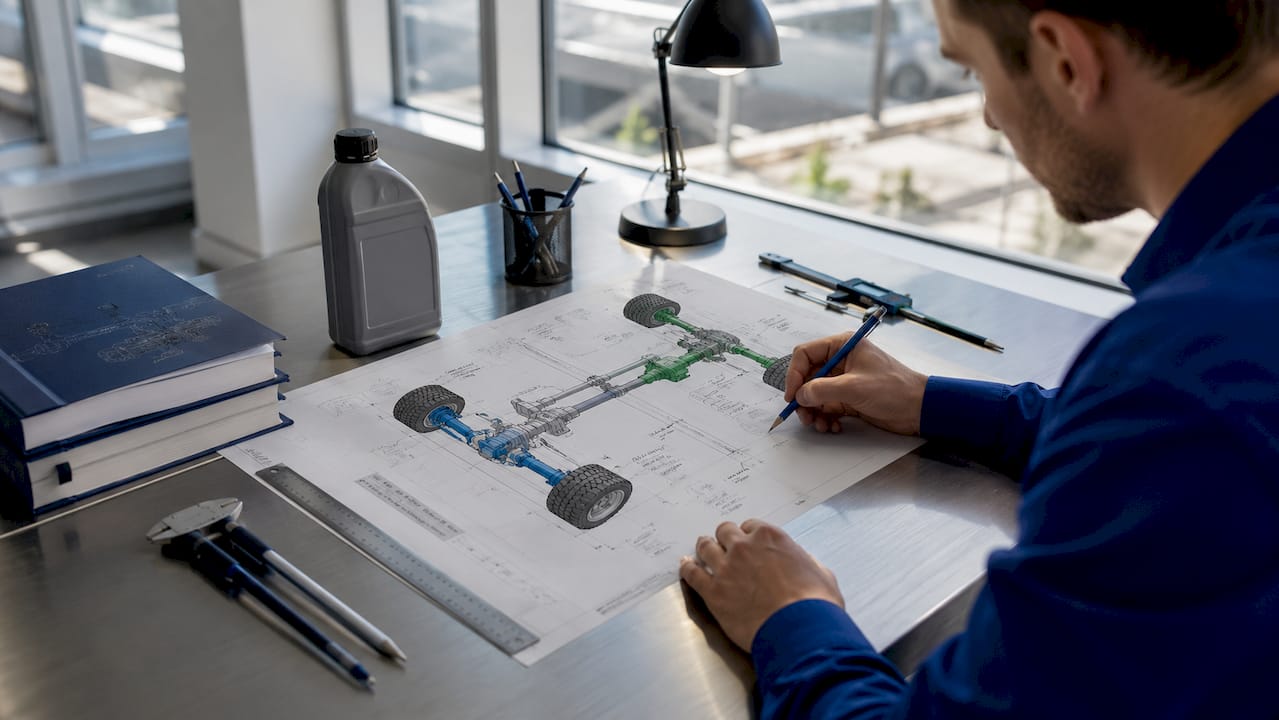
The practical benefit is real. Haldex allowed widespread AWD adoption across hatchbacks, saloons, and SUVs without requiring manufacturers to redesign their front-drive platforms from scratch. That is why you find the same core technology in a VW Golf R and a Volvo XC60.
Which vehicle brands and models use Haldex AWD?
The Haldex compatible vehicle brands list covers a wider range than most owners realise. The system appears across performance cars, family SUVs, and off-road vehicles. The brands most commonly associated with Haldex AWD are:
- Volkswagen Group: Volkswagen, Audi, Škoda, and SEAT all use Haldex across multiple platforms. The VW Golf R, Audi S3, Audi TT Quattro, Škoda Octavia vRS 4x4, and SEAT León Cupra 4Drive are well-known examples.
- Volvo: Models including the V50, XC60, and V70 use Haldex, spanning multiple generations depending on model year.
- Land Rover: The Freelander 2 is the most widely recognised Land Rover fitted with a Haldex unit. Owners researching Land Rover Defender maintenance will find Haldex knowledge directly relevant to their servicing decisions.
Generation compatibility varies significantly by model year and platform. The table below summarises the five generations with representative vehicles and approximate production periods.
| Generation | System type | Example vehicles | Approximate years |
|---|---|---|---|
| Gen 1 | Reactive | Audi TT Quattro (8N), VW Golf 4Motion | 1998–2002 |
| Gen 2 | Reactive (improved) | Audi A3 Quattro, VW Bora 4Motion | 2002–2007 |
| Gen 3 | Proactive | Audi S3 (8P), Škoda Octavia 4x4 | 2004–2012 |
| Gen 4 | Proactive (feeder pump) | VW Golf R (Mk6), Audi TT RS | 2008–2014 |
| Gen 5 | Proactive (electro-hydraulic) | VW Golf R (Mk7/Mk8), Volvo XC60, Audi S3 (8V) | 2012–present |
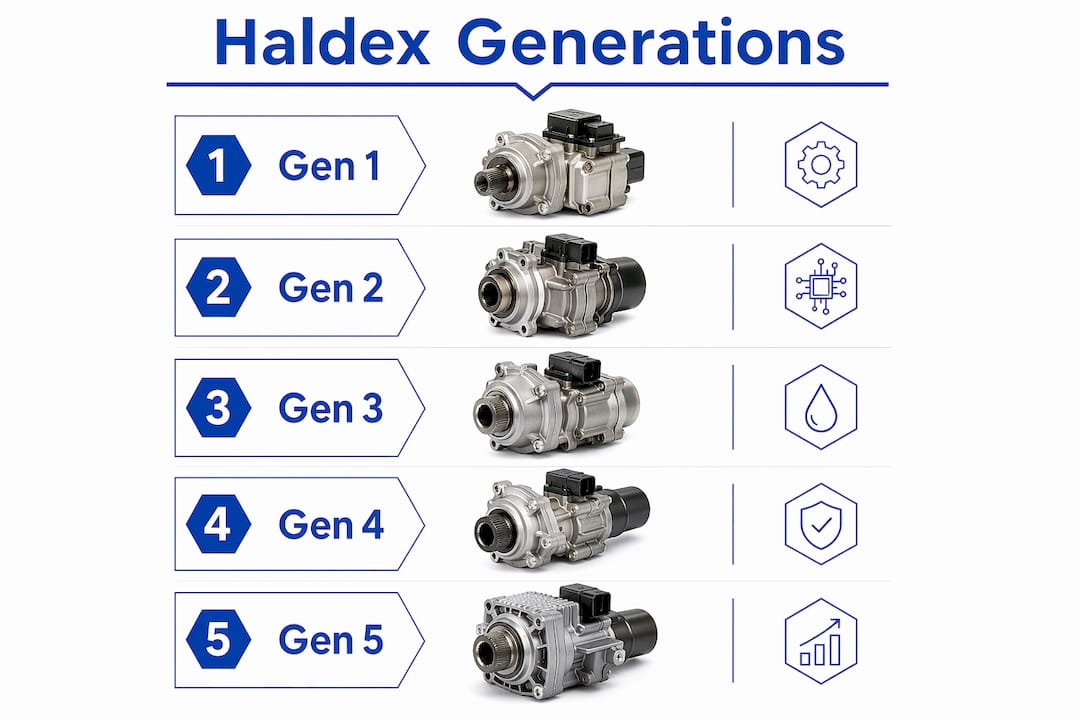
The Audi TT Quattro (8N) from 1998 to 2006 uses Gen 1 hardware specifically. That matters because a Gen 5 pump will not fit, and a Gen 1 oil specification differs from the fluid used in later units. Knowing your generation is not optional. It is the starting point for every maintenance decision.
Each generation’s control unit, pump, and clutch are specific and not interchangeable. Fitting the wrong part does not just fail to work. It can damage the drivetrain electronics and create faults that are costly to diagnose and repair.
How do you identify your Haldex generation?
Identifying your Haldex generation correctly is the single most important step before ordering any parts or booking a service. The process is straightforward when you know what to look for.
- Check your vehicle production year and model platform. The table above gives a reliable starting point. A Mk7 Golf R built after 2012 runs Gen 5. A Mk4 Golf 4Motion built before 2002 runs Gen 1.
- Locate the control unit part number. The control unit sits near the rear differential. Its part number is the definitive identifier. Cross-referencing part numbers against a generation compatibility chart removes all ambiguity.
- Use a diagnostic tool. A compatible OBD-II reader or specialist Haldex diagnostic software can read the control unit directly and confirm the generation. This is the method repair facilities rely on.
- Consult a generation-specific parts catalogue. Haldexparts lists components by vehicle make, model, year, and generation, which makes cross-referencing straightforward even for DIY owners.
- Do not rely on the badge alone. A car badged “Quattro” or “4Motion” tells you AWD is fitted. It does not tell you which generation of Haldex is installed.
Pro Tip: If you have bought a used vehicle and the service history is incomplete, pull the control unit part number before ordering anything. Sellers and previous owners frequently misidentify the generation, and the cost of fitting the wrong pump or oil is far higher than the cost of checking first.
Understanding the distinction between reactive and proactive Haldex generations also informs your expectations for system responsiveness and vehicle dynamics. A Gen 1 car will feel noticeably different in slippery conditions compared with a Gen 5 car, even if both are technically Haldex compatible vehicles.
What maintenance does a Haldex compatible vehicle need?
Haldex AWD systems require generation-specific servicing. Using the wrong oil or the wrong pump parts is one of the most common causes of system failure. The maintenance requirements differ between generations, but the core principles apply across all of them.
Common causes of Haldex failure include:
- Neglected oil changes. The Haldex unit uses a dedicated fluid that degrades over time. Contaminated or low fluid causes clutch wear and pump damage. The BorgWarner 850ml original high performance oil covers 2nd through 5th generation systems and is the correct specification for most modern Haldex vehicles.
- Worn pump components. The pump nose is a known wear point, particularly in 5th generation systems. A 5th Gen pump nose replacement restores correct pressure and prevents clutch slip under load.
- Faulty electrical connections. Corroded or damaged connector plugs disrupt the control unit’s ability to engage the clutch. An AWD pump connector plug set addresses this directly for Gen 2 through Gen 5 vehicles.
- Ignoring warning signs. Symptoms of a failing Haldex unit include AWD warning lights, vibration under load, and reduced traction in wet conditions. Catching these early prevents drivetrain damage.
For a thorough breakdown of fault patterns, the Haldex fault diagnosis guide covers the diagnostic process in detail. Owners who want to understand why components wear should read the Haldex parts degradation guide, which explains the mechanical and chemical processes behind common failures.
Service intervals vary by manufacturer, but most Haldex units benefit from an oil change every 40,000–60,000 miles or every three to four years, whichever comes first. Generation-specific intervals may differ, so always confirm against your vehicle’s service documentation.
What are the performance implications of owning a Haldex vehicle?
Haldex AWD changes how a car feels to drive in ways that go beyond simple traction. The system adds grip without adding the weight and mechanical complexity of a permanent four-wheel-drive setup. That trade-off suits most drivers well.
“Proactive Haldex generations provide safer, more predictable AWD engagement. The electronic pre-tensioning means the rear axle is already partially loaded before slip occurs, which makes the car feel planted rather than reactive. Drivers who have only experienced Gen 1 or Gen 2 systems often describe Gen 5 as a fundamentally different car.”
In everyday driving, the front-drive bias keeps fuel consumption close to a standard front-wheel-drive equivalent. The rear axle only draws power when the system demands it. That efficiency is a genuine advantage over permanent AWD systems, which run all four wheels continuously regardless of conditions.
In performance driving, proactive systems improve handling in changing conditions by reducing the delay between slip detection and rear axle engagement. A VW Golf R on a wet roundabout benefits from this in a way that a Gen 1 system simply cannot match. Drivers in regions with variable weather, such as the UK, Scandinavia, or central Europe, gain the most from this responsiveness.
Aftermarket tuning is possible on Haldex systems, particularly through third-party controllers that adjust the clutch engagement map. These modifications can make the system more aggressive in distributing torque to the rear, which suits track use. However, tuning requires generation-specific hardware and correct baseline maintenance. A poorly serviced Haldex unit will not respond well to increased clutch demand.
Key takeaways
A Haldex compatible vehicle uses an on-demand AWD system that requires generation-specific parts and servicing to function correctly and avoid costly drivetrain damage.
| Point | Details |
|---|---|
| Definition of compatibility | A Haldex compatible vehicle integrates the Haldex AWD unit, engaging the rear axle on demand from a front-drive base. |
| Generation matters | Five generations exist, each with unique parts; mixing components between generations causes system failure. |
| Identification method | Cross-reference the control unit part number against a generation chart before ordering any parts or oil. |
| Maintenance essentials | Use generation-correct oil and replace worn pump and connector components at recommended intervals. |
| Performance benefit | Proactive Gen 3 to Gen 5 systems deliver faster, more predictable AWD engagement than earlier reactive units. |
Why I think most Haldex owners underestimate the generation question
I have seen the same mistake repeated more times than I can count. An owner buys a used Audi or Volkswagen, knows it has Haldex, and orders a service kit based on the model name alone. The kit arrives, the oil specification is wrong, and the pump does not fit. The car goes back together with the wrong parts, and six months later the AWD warning light appears.
The generation question is not a technicality. It is the foundation of every maintenance decision you make on a Haldex drivetrain vehicle. The five generations are not minor revisions. They represent fundamentally different hardware architectures. A Gen 1 system is mechanically reactive and relatively simple. A Gen 5 system is electronically managed and far more capable, but it demands exact parts to function.
My honest recommendation is this: before you touch the Haldex unit on any car, pull the control unit part number and confirm the generation. Do not trust the badge, the previous owner, or the model year alone. The Haldex AWD system guide is a good starting point if you want to build that knowledge from scratch.
The balance of efficiency and performance that Haldex offers is genuinely impressive. A well-maintained Gen 5 system in a Golf R or Audi S3 delivers AWD capability with fuel economy close to a front-drive car. That is a strong combination. But it only holds up when the system is serviced correctly, with the right parts, at the right intervals.
— Mindaugas
Haldexparts: generation-specific parts for every Haldex vehicle
Haldexparts stocks OEM-grade components for every Haldex generation, from Gen 1 through Gen 5, covering Audi, VW, Škoda, SEAT, Volvo, Land Rover, and more. Every product listing includes generation and vehicle compatibility details, so you can confirm the right fit before you buy. Orders over £150 qualify for free shipping, and the catalogue is built specifically for both DIY owners and professional technicians who need accurate parts quickly.
For fluid servicing, the BorgWarner 850ml Haldex oil covers 2nd through 5th generation systems and meets the G060175A2 specification. For pump repairs, the 5th Gen pump nose set and the AWD pump connector plug set are available with full compatibility information. Haldexparts makes it straightforward to find the correct part for your specific vehicle and generation without guesswork.
FAQ
What is a Haldex compatible vehicle?
A Haldex compatible vehicle is one fitted with the Haldex on-demand AWD system, which engages the rear axle electronically from a front-wheel-drive base. Volkswagen Group, Volvo, and Land Rover are the primary manufacturers using this technology.
Which car brands use Haldex AWD?
Volkswagen, Audi, Škoda, SEAT, Volvo, and Land Rover all produce Haldex system vehicles. Specific models include the VW Golf R, Audi S3, Volvo XC60, and Land Rover Freelander 2.
How many Haldex generations are there?
There are five Haldex generations. Generations 1 and 2 are reactive systems; generations 3, 4, and 5 are proactive systems with electronic pre-tensioning for faster AWD engagement.
Can I use the same parts across different Haldex generations?
No. Each generation uses specific control units, pumps, and clutch components that are not interchangeable. Fitting the wrong generation parts can damage the drivetrain electronics and cause system failure.
How do I know which Haldex generation my car has?
Check the control unit part number near the rear differential and cross-reference it against a generation compatibility chart. Vehicle production year and platform code provide a useful starting point, but the part number is the definitive confirmation.