
An Audi AWD service parts list is the definitive reference for maintaining Quattro drivetrains, covering everything from Haldex fluid and filters to Torsen differential oil and CV joint boots. Quattro systems split into two fundamentally different architectures: the electronically controlled Haldex coupling used in transverse-engined models, and the mechanical Torsen centre differential found in longitudinal-engined vehicles. Treating both systems identically causes premature failure, because each demands different fluids, different service intervals, and different replacement parts. Getting your parts list right before you start any service is the single most effective way to protect a drivetrain that can cost thousands to rebuild.
1. What are the key service parts for Haldex AWD systems in Audi vehicles?
The Haldex coupling is the heart of AWD in transverse-engined Audi models such as the TT Quattro, A3 Quattro, and Q3. It uses a hydraulic pump and clutch pack to distribute torque to the rear axle on demand. Haldex systems require fluid replacement every 20,000 to 30,000 miles, with additional filter or strainer service depending on the generation. Skipping this interval accelerates wear on the pump and clutch packs, which are among the most expensive components in the system.
The core parts you need for a Haldex service vary by generation:
- Haldex fluid: Proprietary hydraulic oil formulated for BorgWarner Haldex couplings. Using the wrong grade risks clutch slippage and seal degradation.
- Coupling filter (Gen 1–4): A replaceable filter element that captures metallic particles from clutch pack wear. This is a mandatory replacement at every service.
- Pump strainer (Gen 5): Gen 5 units replace the traditional filter with a cleanable strainer. Pump strainer cleaning is as critical as the fluid change itself, because debris accumulation restricts hydraulic flow and causes pump failure.
- Pump oil seals: The seals around the hydraulic pump degrade over time. An AWD pump oil seal kit is a low-cost item that prevents costly fluid leaks.
- Pressure sensor: The Haldex pressure sensor monitors hydraulic engagement. A faulty sensor causes the system to default to front-wheel drive only.
- Solenoid valve: Controls fluid pressure to the clutch pack. Wear or contamination causes erratic torque distribution.
- Coupling filter kit (BorgWarner): For Gen 4 units, a BorgWarner coupling filter kit provides a complete replacement solution including the filter and associated seals.
Pro Tip: Always use a VIN-based lookup tool before ordering Haldex parts. Audi revised fluid specifications and filter designs across production runs, and the wrong part can cause clutch damage within a single service interval.
2. Which essential service parts does the Torsen-based Audi Quattro system require?
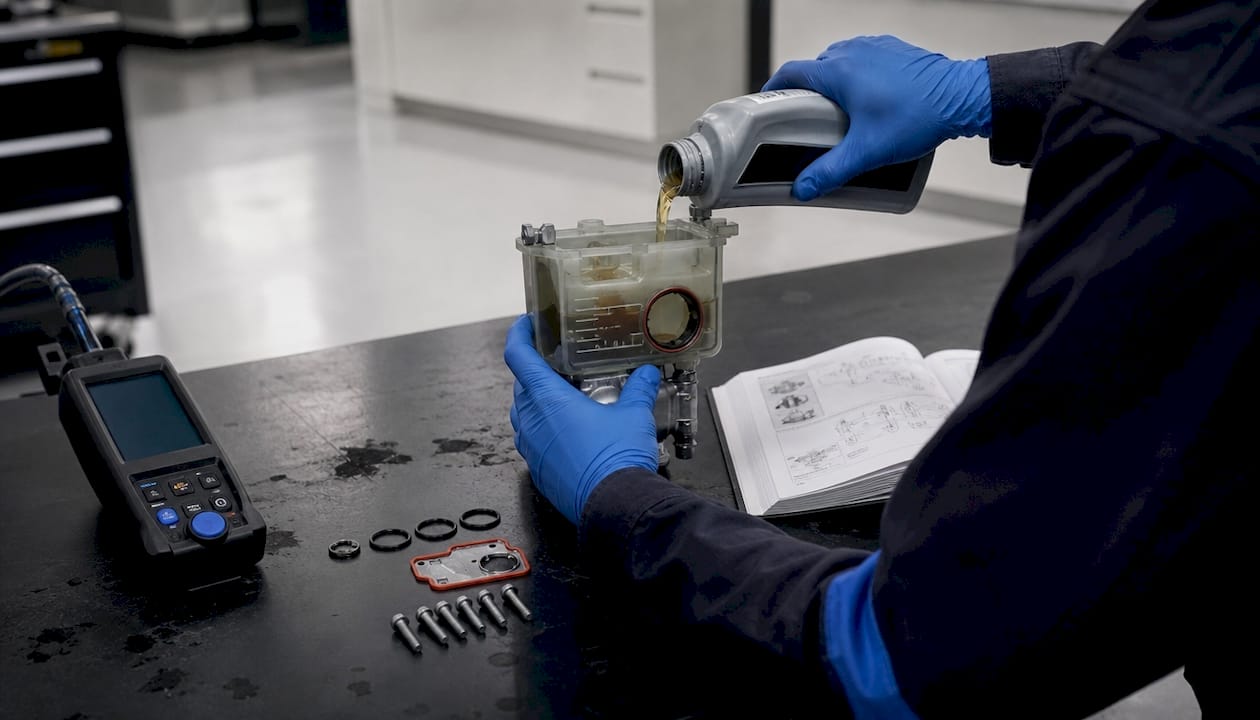
The Torsen centre differential is a purely mechanical device. It requires no electronic control unit and no hydraulic fluid of its own. However, it does rely on the correct gear oil to function without wear. Torsen-based Quattro systems require rear differential fluid inspection and replacement approximately every 40,000 miles, though this interval shortens in demanding conditions such as towing or track use.
The Torsen AWD service parts list centres on fluids and seals:
- Centre differential fluid: Audi specifies a particular gear oil grade for the Torsen unit. Using a non-approved fluid alters the worm gear friction characteristics and reduces torque-biasing performance.
- Rear differential fluid: The rear differential in Torsen-equipped models shares a separate sump. Approved differential fluids are critical for both the centre and rear units.
- Transfer case fluid: Longitudinal Quattro models use a transfer case to route drive to the rear axle. The fluid here degrades from heat and requires periodic replacement.
- Differential output shaft seals: These seals prevent fluid loss at the point where the driveshaft exits the differential casing. Leaking seals contaminate brake components and cause differential failure.
- Propshaft centre bearing: The propshaft on longitudinal Quattro models uses a rubber-mounted centre bearing. This bearing cracks with age and causes vibration at motorway speeds.
- CV joint boots: Cracked boots allow grease to escape and water to enter, destroying the joint rapidly. Routine inspection of CV joint boots is a standard part of every Torsen service.
Fluid specification adherence is non-negotiable with Torsen systems. The worm gear design is sensitive to viscosity, and a generic gear oil will not provide the correct friction modifier balance.
3. What are the common maintenance parts for Audi AWD drivetrain components?
Beyond the Haldex coupling and Torsen differential, a complete Audi AWD maintenance parts list must include the wider drivetrain. These components transmit power from the gearbox to all four wheels, and their condition directly affects how well the AWD system performs.
| Component | Function | Service action |
|---|---|---|
| CV joints | Transfer drive torque through steering and suspension angles | Inspect at every service; replace if worn or noisy |
| Axle boots | Protect CV joints from contamination | Replace immediately if cracked or split |
| Driveshaft | Connects gearbox to rear differential | Inspect for play and vibration; replace worn UJs |
| Wheel speed sensors | Feed ABS and AWD control unit with speed data | Clean at every service; replace if fault codes appear |
| Drivetrain seals | Prevent fluid loss at axle and differential interfaces | Replace at fluid service or if leaking |
| Rear differential mounts | Locate the rear differential under load | Inspect for cracking; replace if soft or collapsed |
Wheel speed sensors are the most frequently overlooked item on any Audi AWD parts list. Quattro-specific fault codes cannot be read with generic OBD-II scanners, so a dedicated diagnostic tool is required to identify sensor faults accurately. A failed wheel speed sensor causes the AWD control unit to misread axle slip, resulting in incorrect torque distribution and unnecessary clutch pack engagement.
Drivetrain seals deserve equal attention. A weeping axle seal costs under £20 to replace. Left unchecked, the same leak contaminates the differential fluid, leading to a rebuild that can exceed £1,500.
4. How to select and source the right Audi AWD service parts for your Quattro system
Sourcing the correct Audi all-wheel drive components requires more than searching by model name. Audi frequently revised part numbers, fluid specifications, and component designs within the same model year. Using a VIN-based lookup tool is the only reliable method for matching parts to your exact vehicle build. This avoids the most common and costly mistake: fitting an incompatible fluid or filter that damages the clutch pack within weeks.
Key principles for sourcing Audi AWD repair kit components:
- Match by VIN, not by model name. Two A3 Quattros built in the same year can use different Haldex generations depending on their gearbox specification.
- Understand OEM versus OE-equivalent parts. OEM parts carry the Audi part number and are manufactured to the original specification. OE-equivalent parts meet the same technical standard but are supplied by the original component manufacturer, often at a lower price. Independent shops can service Audi AWD systems without voiding warranties under the Magnuson-Moss Warranty Act, provided they use OE-spec parts and follow prescribed intervals.
- Check fluid specifications carefully. Haldex fluid is not interchangeable between generations. Gen 4 and Gen 5 units use different formulations, and mixing them causes seal swelling and clutch contamination.
- Use a specialist supplier. A supplier focused on Haldex and Quattro components will stock generation-specific kits and provide accurate fitment guidance. A complete Gen 4 pump and filter kit from a specialist includes the pump, filter, and correct oil in a single order, eliminating the risk of missing a component.
- Keep a separate AWD service record. Separate AWD maintenance schedules prevent the common mistake of assuming the AWD system was serviced during a routine oil change. The two services use different fluids and have different failure modes.
Pro Tip: When ordering Haldex fluid, always cross-reference the fluid approval code printed on the coupling housing. This code overrides any generic recommendation and confirms the exact specification required for your unit.
For a broader understanding of fluid change intervals across all drivetrain components, a structured maintenance guide helps you plan each service without missing a critical item.
Understanding the Haldex AWD system in detail before ordering parts also helps you identify which generation you have, which directly determines your parts list.
Key takeaways
A correct Audi AWD service parts list, matched to your specific Quattro variant and generation, is the most effective way to prevent expensive drivetrain failure and maintain reliable all-wheel drive performance.
| Point | Details |
|---|---|
| Match parts to your generation | Haldex Gen 1–5 and Torsen systems each require different fluids, filters, and seals. |
| Service Haldex every 20,000–30,000 miles | Fluid, filter or strainer, and pump seals must all be addressed at each interval. |
| Torsen service centres on fluid and seals | Rear differential and transfer case fluid replacement every 40,000 miles is the priority. |
| Use VIN-based lookup for every order | Model name alone is insufficient; VIN lookup prevents incompatible part fitment. |
| Do not overlook drivetrain peripherals | Wheel speed sensors, CV boots, and axle seals protect the wider AWD system from failure. |
Why I keep a dedicated AWD service log for every Quattro I work on
The single biggest mistake I see Audi owners make is treating the AWD service as an afterthought. They book an oil change, the workshop ticks the service box, and the Haldex coupling goes another 30,000 miles without a fluid change. By the time the clutch pack starts slipping, the repair bill is four figures.
What I have found works is maintaining a completely separate log for the AWD system. It sits alongside the standard service history but tracks only the coupling fluid, filter, differential oil, and seal inspections. This makes it immediately obvious when the AWD service is due, regardless of when the last engine oil change happened.
The diagnostic side is equally important. Generic OBD-II readers miss Quattro-specific fault codes entirely. Investing in, or paying a specialist to use, Audi-compatible diagnostic equipment is not optional if you want to catch a failing pressure sensor or solenoid before it causes clutch damage. I have seen owners spend £800 on a new Haldex unit when a £45 sensor replacement would have resolved the fault entirely.
My honest advice: build your Audi AWD parts list before you need it, not after something fails. Know your generation, know your fluid specification, and keep the parts on hand. The cost of prevention is a fraction of the cost of repair.
— Mindaugas
Haldexparts: your source for Audi AWD service kits
Haldexparts stocks generation-specific service kits for Audi Haldex and Quattro systems, covering fluids, filters, pump components, seals, and complete repair kits. Every product listing includes fitment guidance to help you confirm compatibility before you order.
For Haldex Gen 4 systems, the BorgWarner Gen 4 pump kit bundles the replacement pump, filter, and approved oil into a single order. If seals are your priority, the pump oil seal kit provides OEM-spec seals at a competitive price. Orders over £150 qualify for free shipping, making it straightforward to stock up on everything your AWD service requires in one go.
FAQ
What fluid does a Haldex Audi AWD system use?
Haldex-equipped Audi models require a proprietary hydraulic fluid specific to the BorgWarner Haldex coupling generation fitted. Gen 4 and Gen 5 units use different formulations, so always confirm the correct specification using your VIN before ordering.
How often should I service my Audi Quattro AWD system?
Haldex systems require fluid and filter service every 20,000 to 30,000 miles. Torsen-based Quattro systems require rear differential fluid replacement approximately every 40,000 miles, with shorter intervals under demanding driving conditions.
Can I service my Audi AWD system at an independent garage?
Yes. Independent garages can service Audi AWD systems without voiding your warranty, provided they use OE-specification parts and follow Audi-prescribed service intervals, as protected under the Magnuson-Moss Warranty Act.
What happens if I skip the Haldex service?
Neglecting the Haldex service interval accelerates wear on the pump and clutch packs. Debris accumulates in the fluid, restricts hydraulic flow, and causes the coupling to fail, often requiring a full unit replacement costing several hundred pounds.
Do I need a specialist diagnostic tool for Audi AWD faults?
Yes. Quattro-specific fault codes are not accessible with standard OBD-II scanners. A dedicated diagnostic tool capable of reading Quattro sensor data and engagement pressure metrics is required for accurate AWD fault diagnosis.