

Budget a moderate amount for DIY parts only, a larger and varying amount at an independent garage, and a higher amount at a main dealer, pump gauze cleaning pushing every band higher. Most competent DIYers save the most money doing the oil and filter themselves; anyone with a seized fastener, a warranty to protect, or no way to remove the pump should book a specialist instead.
TL;DR:
- Labour cost is the main factor causing price variation, with independent garages charging less than main dealers, especially for pump gauze cleaning.
- Pump gauze cleaning can significantly increase the service time by 45 to 90 minutes, which most quotes often omit or underestimate.
- If a diagnostic scan detects unrelated faults or faults during service, the repair cost can rise sharply beyond the initial estimate.
- Performing DIY oil and filter changes can save money if you have the right tools and avoid skipping crucial steps like pump gauze inspection.
- Using correctly specified OEM-grade parts and obtaining a detailed, fixed-price quote including pump gauze cleaning are key to preventing unexpected costs.
Table of Contents
- How much does a Haldex service cost across the different routes?
- What does a Haldex service actually involve?
- What pushes the price up or down?
- Is DIY worth it, or should you book a garage?
- How often does a Haldex system need servicing, and what happens if you skip it?
- How to work out your own estimate before calling a garage
- Which parts remove the guesswork from a Haldex service?
- Does professional servicing matter for your warranty?
- What should you look for in a workshop that services Haldex systems?
- What other costs might show up on the invoice?
- When does it actually pay to spend more?
- Where to buy the right Haldex parts and kits
- Sources
How much does a Haldex service cost across the different routes?
The spread between routes is bigger than most owners expect, and it mostly comes down to labour, not parts. A specialist workshop breakdown shows that a full professional job typically runs several times the cost of buying the parts alone, because the pump removal and gauze clean eat the labour hours, not the oil bottle.
Rough bands you can work with:
- DIY, parts only: a modest cost for oil, filter (where fitted), and drain/fill hardware.
- Independent garage, oil and filter only: a moderate labour cost, roughly up to 1 hour.
- Independent garage, full service with pump gauze clean: higher labour cost, typically 1.5 to 2.5 hours.
- Main dealer: generally the highest cost, often with a higher hourly rate and a standard fluid rather than a matched OEM-grade spec.
Generation-specific pricing examples from specialist providers show older Generation 1 and 2 units sitting toward the lower end, since there’s no filter to swap, while Generation 4 and 5 systems with cartridge filters and tighter access push totals up.
Preventative service is cheap compared to what it prevents. A specialist AWD workshop notes that a routine oil and pump-screen service is modest set against the cost of a failed coupling or pump, which on some vehicles runs into four figures once parts and diagnostic labour are added.
Forum threads and workshop invoices posted online show wildly different totals for what sounds like the same job, sometimes double for near-identical cars. That variance is the reason to ask for a written, itemised quote rather than a phone-quoted “ballpark” figure, covered in more detail further down.
What does a Haldex service actually involve?
Every generation shares the same core job: drain the old fluid, refill with the correct specification oil, and check the system for obvious faults. What differs is how much extra work sits around that core, and that extra work is what separates a £100 invoice from a £250 one.
- Warm the system and drain the oil through the drain plug, typically 15 to 20 minutes including a short drive to circulate fluid before draining.
- Remove and inspect (or replace) the filter, where the generation has one. Generation 4 and later units generally use a replaceable cartridge filter; earlier Generation 1 to 3 pumps rely on an internal gauze screen instead.
- Clean the pump gauze, which on some generations means dropping the pump or removing it entirely, typically another 45 to 90 minutes depending on access.
- Refill to the correct level and torque the fill plug, then run a road test to confirm engagement.
- Run a diagnostic scan to clear any stored faults and confirm the coupling is engaging correctly. NHTSA technical service bulletins outline the kind of diagnostic and fault-finding steps workshops should be following on AWD systems.
The pump removal step is the one quoted prices most often skip mentioning. If a garage quotes you an “oil and filter change” with no reference to gauze cleaning, ask directly whether it’s included, because on higher-mileage cars it’s often the step that actually prevents a failure.
What pushes the price up or down?
Two identical-looking Haldex services can cost £100 apart, and it’s rarely the fluid causing the gap. It’s almost always one of four things: labour rate, part quality, access, or an unplanned fault.
- Labour rate. Independent garages typically charge less per hour than main dealers, and the hours involved (0.5 to 2.5 depending on whether pump cleaning is needed) get multiplied by that rate.
- OEM-grade versus generic aftermarket parts. A correctly specified oil and filter costs more upfront but avoids the risk of using the wrong viscosity or a filter that doesn’t seal properly, which can cause a repeat visit.
- Accessibility. Some vehicles need an exhaust section or heat shield removed to reach the pump, and seized fasteners on an older car can add 30 to 60 minutes that no quote accounted for.
- Diagnostic scans turning up faults. If the scan flags a coupling fault or wiring issue, what started as a service becomes a repair, with its own separate parts and labour bill.
Pro Tip: Ask the garage to confirm, in writing, whether their quote includes pump gauze cleaning and a post-service diagnostic scan. Those two items are the most common reason a “quick oil change” invoice comes in higher than expected.
Is DIY worth it, or should you book a garage?
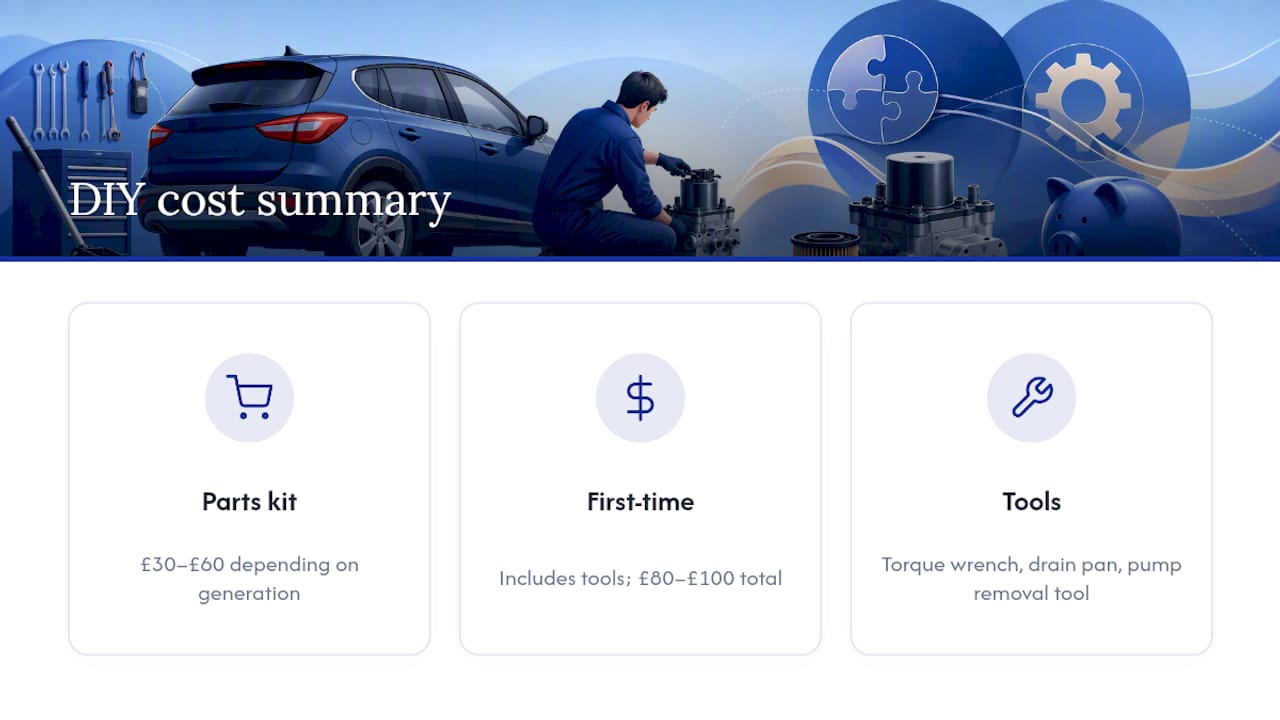
A DIY oil and filter change genuinely is one of the cheaper jobs on an AWD car, provided you have the right tools and the patience to do it properly. The parts kit itself typically costs £30 to £60 depending on generation, but factor in a torque wrench, a drain pan, and possibly a pump removal tool if your car needs the gauze cleaned, and first-time DIY spend can climb toward £80 to £100 once tools are included.
The most common DIY mistakes are underfilling the pump housing (leaving an airlock that mimics a failing coupling) and skipping the gauze clean entirely because it “looked fine” through the drain hole. Neither is expensive to avoid, both are expensive to ignore.
DIY isn’t the right call if the car is still under manufacturer warranty, if the pump needs full removal and you lack a lift, or if you suspect the pump has already failed rather than just needing a clean. In those cases, a specialist workshop with Haldex-specific experience is worth the extra spend. Whichever route you choose, keep the receipt for parts and a note of the mileage and date, since that record is what you’ll need if a dealer later asks for service history.
How often does a Haldex system need servicing, and what happens if you skip it?
Manufacturers have historically marketed some Haldex units as “lifetime fill”, but most independent specialists and the publisher’s own generation guide recommend a service every 20,000 to 40,000 miles depending on generation, tighter if the car sees regular towing, track use, or slippery-condition driving.
Watch for these warning signs:
- Delayed or jerky AWD engagement, especially pulling away from a standstill.
- A whining or grinding noise from the rear differential area.
- Reduced traction in wet or snowy conditions that wasn’t there before.
- A stored fault code relating to coupling pressure or pump performance.
Skipping service lets contaminated fluid and a clogged pump gauze reduce oil flow, which starves the coupling of pressure and, over time, leads to pump failure. A £150 to £250 preventative service is consistently cheaper than the four-figure bill for a replacement pump and coupling assembly.
How to work out your own estimate before calling a garage
You don’t need a workshop account to build a fair estimate. A short worksheet, and a few pointed questions, gets you close enough to spot an inflated quote immediately.
- Identify your Haldex generation from your service history, forum reference, or by checking part numbers against a generation-specific parts catalogue. This tells you whether you have a replaceable filter or a gauze screen, which changes the labour time.
- Price the parts using current listings for oil, filter, and hardware, and note the total.
- Add expected labour, typically 0.5 hours for oil-only, 1.5 to 2.5 hours if pump cleaning is included, multiplied by the shop’s hourly rate.
- Call the garage and ask four questions: Is this a fixed price? Does it include pump gauze cleaning? What oil and filter spec will you use? Does the work come with any warranty?
- Compare the total against your own worksheet figure. A quote more than 30% to 40% above your estimate deserves a follow-up question before you book.
Worked example: Generation 4 parts at a moderate parts cost, plus 2 hours labour at a typical hourly rate, lands close to a mid-range total, a useful benchmark against whatever the garage quotes you.
Which parts remove the guesswork from a Haldex service?
Buying the wrong pump part or a mismatched filter is the single fastest way to turn a routine service into a second invoice. Matching the exact SKU to your generation avoids that entirely.
- AWD Pump Nose Replacement Tips for 1st and 2nd Generation Haldex Pumps fix the worn pump nose fitting common on early-generation units without needing a full pump replacement.
- Haldex Oil Pump, Generation 5, 0D4906271A for Audi R8 covers full pump replacement where cleaning alone won’t restore pressure on later Audi applications.
- Haldex Oil Pump, Generation 5, 9P1906271 for Porsche is the equivalent Generation 5 pump for Porsche models sharing the same platform architecture.
Haldexparts’s service-interval guide by generation helps you confirm which of the above actually applies to your car before you spend anything. Kits sold as complete sets, rather than individual bottles and gaskets bought separately, tend to work out cheaper overall and remove the risk of forgetting a seal or drain-plug washer that then means a second parts order and a delayed job.
Does professional servicing matter for your warranty?
Manufacturer warranties on new and near-new vehicles typically require servicing “in line with the manufacturer’s schedule” using parts of at least original specification, and Haldex components fall under that same clause even though they’re rarely mentioned by name. Using an unqualified independent garage doesn’t automatically void a warranty under most manufacturer terms, but using the wrong fluid spec, skipping a required interval, or failing to keep a paper trail can give a dealer grounds to reject a related claim.
If your car is still under its original warranty period, the safest approach is either a main dealer or an independent garage that explicitly states it uses OEM-grade parts and follows the manufacturer’s documented interval. Keep the invoice, the parts used (make a note of the exact product code), and the mileage at service, since that’s what a warranty department will ask for if the AWD system develops a fault later.
Once the car is out of its manufacturer warranty, the requirement loosens considerably. At that point, the priority shifts from “protecting a claim” to “protecting the system itself”, and a competent independent specialist or a careful DIY job using correctly specified parts serves that goal just as well. The one exception worth flagging: if you’ve bought an aftermarket extended warranty, check its small print separately, because some of those policies have stricter servicing documentation requirements than the manufacturer’s own scheme did.
What should you look for in a workshop that services Haldex systems?
Not every “AWD specialist” sign on a garage door means genuine Haldex experience. Ask three things before booking: do they service Haldex systems specifically (rather than AWD generally), can they identify your generation from the part number rather than guessing from the model year, and do they include a post-service diagnostic scan as standard.
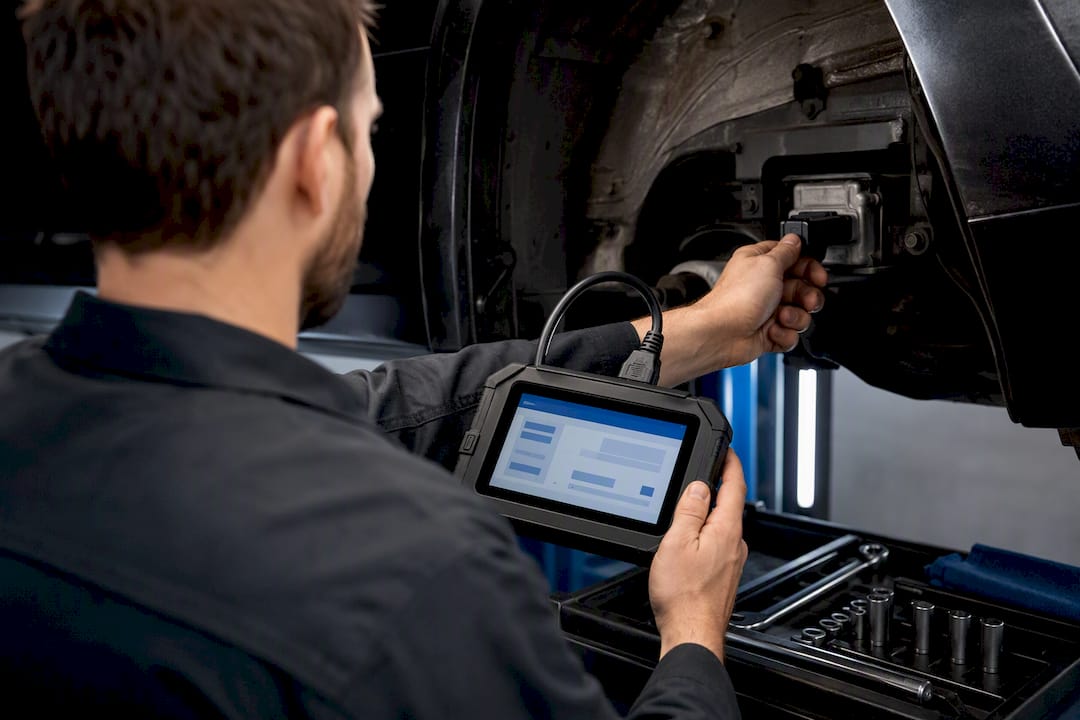
A garage that’s genuinely experienced with Haldex work will usually mention pump gauze cleaning unprompted, know that Generation 1 to 3 units don’t have a replaceable filter, and be able to quote a fixed price rather than an “up to” estimate. If a workshop hesitates on any of those points, that’s a signal to keep calling round. Franchised dealers have the advantage of manufacturer-trained technicians and guaranteed parts provenance, at the cost of a higher hourly rate. Independent specialists who focus on AWD and driveline work often match that technical depth for considerably less, provided you check reviews or ask how many Haldex jobs they handle in a typical month.
If the diagnostic scan turns up an unrelated fault, such as an airbag or restraint system code triggered during the same visit, a specialist service like Airbag Reset UK can handle the postal module reset without needing a full dealer visit, which keeps that side of the bill down too.
What other costs might show up on the invoice?
The oil and filter are rarely the whole story once a car goes up on a ramp. Diagnostic scan time is sometimes billed separately, typically 15 to 30 minutes of labour, though many garages fold it into the standard service charge rather than itemising it.
The bigger risk is what a scan or visual check turns up mid-job. A coupling that’s already showing wear, a wiring connector with corrosion, or a pump that’s clearly seized rather than just clogged, all turn a planned service into an unplanned repair with its own parts and labour cost on top. This is the scenario the NHTSA’s technical guidance is aimed at, giving technicians a structured way to diagnose faults rather than guessing.
Ask the garage upfront what happens if they find something beyond the standard service, specifically whether they’ll call you with a revised quote before proceeding or simply carry out the extra work and bill you afterwards. A shop that agrees to call first is the one you want. Also worth asking: whether their diagnostic equipment is Haldex-specific or a generic OBD scanner, since a generic tool can miss coupling-pressure faults that a proper system scan picks up immediately.
When does it actually pay to spend more?
Where you land on the DIY-to-dealer spectrum should follow what you’re planning to do with the car, not just what feels cheapest this month. Keeping the car long-term and racking up mileage justifies paying for pump gauze cleaning every time, even at the higher end of the independent-garage band, because that’s the step that actually prevents the expensive failure. Selling within a year or two changes the calculation: a documented, budget-conscious service with a proper invoice matters more to a buyer than which garage did it.
Regular DIYers who already own a torque wrench and a drain pan get the best value doing their own oil and filter changes every interval, provided they’re honest about whether they can access the pump gauze safely. If you can’t get underneath the car properly, don’t force it.
One negotiation tip worth using every time: ask for a fixed price in writing that names pump gauze cleaning explicitly, not just “Haldex service” as a line item. Vague wording is how a £150 quote becomes a £220 invoice.
— Mindaugas
Where to buy the right Haldex parts and kits
There’s no shortage of generic oil bottles and unbranded filters online, but matching the exact part to your Haldex generation is what actually keeps a service cost down, because the wrong spec means a repeat job later.
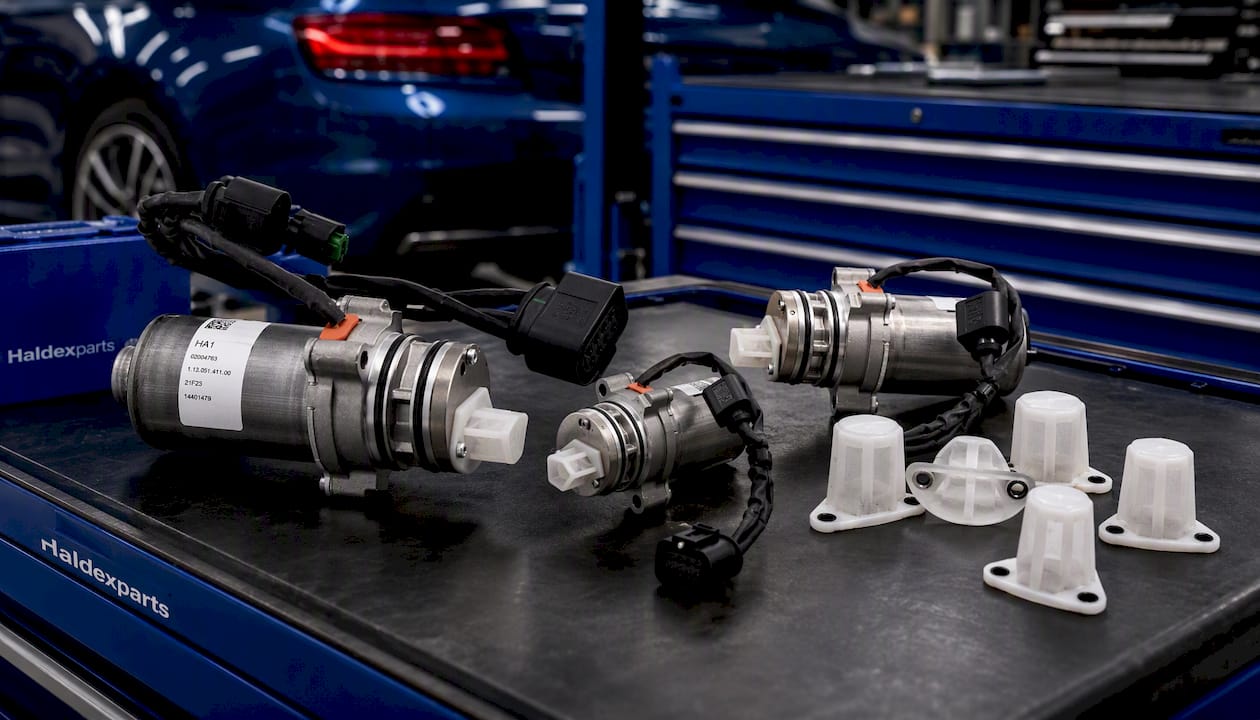
Haldexparts stocks OEM-grade kits built around the parts covered in this guide, including the pump nose replacement tips for 1st and 2nd generation units, the Generation 5 pump for Audi R8 applications, and the Generation 5 pump for Porsche models. Each listing states exactly which generation and application it fits, so you’re not guessing from a vague product title. Orders over £150 ship free, and the full catalogue of pumps, oils and filters lets you cross-check part numbers before you buy, cutting out the trial-and-error that adds cost to a DIY job or a workshop quote. If you’re building a full service kit rather than buying items separately, start there and check the fit against your car’s generation before you order.