

Service your Haldex every 20,000 to 30,000 miles or two years on Generation 1, 2 and 4 systems; Generation 5 systems require more frequent servicing, including pump removal and strainer cleaning rather than a simple drain and refill. If your coupling is overdue or showing symptoms, book a diagnostic scan before you assume oil alone will fix it.
TL;DR:
- Servicing Gen 1 and 2 Haldex systems every 20,000 miles or two years is sufficient, but Gen 5 requires more frequent maintenance every 10,000 miles or annually.
- Pump removal and strainer cleaning are mandatory on Gen 5 at every service, as the system has no external filter and the strainer clogs faster.
- Heavy use such as towing or track days shortens service intervals by half, making a 10,000-mile limit on Gen 5 and 20,000 miles on Gen 4 essential.
- Using the correct OEM-spec fluid is critical, with 275ml G052175A1 for Gen 1 and 850ml BorgWarner 2000884 for Gen 2-5, since generic gear oils lack necessary friction modifiers.
- Skipping the strainer clean during Gen 5 services risks pump failure, as residual clutch debris can starve the pump of clean oil and cause expensive damage.
Table of Contents
- How often should you service a Haldex system?
- What actually happens during a Haldex service?
- Which oils and part numbers suit each Haldex generation?
- How do you know your Haldex needs attention now?
- Should you DIY the service or book a workshop?
- A step-by-step checklist for the service bay
- Where this guidance comes from and how to verify it
- Where to buy the right oil and parts for your generation
- Conservative intervals win out for long-term ownership
- Sources
How often should you service a Haldex system?
There’s no single Haldex service interval that fits every car. The correct answer depends entirely on which generation of coupling sits behind your rear differential, and getting that wrong is the single biggest mistake owners make when they book a service or attempt one themselves.
The table below summarizes typical service intervals for each generation, based on general workshop practices and guidance. Exact mileage intervals vary by model and service conditions, but generally:
| Generation | Mileage interval | Time interval | Filter present? | Pump removal needed? |
|---|---|---|---|---|
| Gen 1 / Gen 2 | Approximately 20,000 miles | Around 2 years | No external filter | Only if strainer blocked |
| Gen 4 | 20,000 to 30,000 miles | 2 to 3 years | Yes, where fitted | Not routinely |
| Gen 5 | Approximately 10,000 miles | Approximately annually | No external filter | Yes, at every service |
Gen 4 couplings, fitted widely across VW and Audi model ranges, often follow a practical pattern of an initial service around 20,000 miles with a repeat around 40,000 miles, which lines up with the wider 20,000 to 30,000 mile window most VAG-platform vehicles use across multiple Haldex generations. Gen 5 is the outlier. It dropped the external filter entirely, so the pump strainer does the filtering job instead. That strainer clogs with clutch material far faster than a proper filter element would.
Towing, track days, and heavy short-journey use all shorten these intervals. If you’re pulling a trailer regularly or driving a performance-tuned car hard, halve the mileage figure rather than the time figure, since heat and load cycles wear Haldex fluid faster than distance alone. Conversely, a car that covers under 5,000 miles a year but sits outside through winter still needs the annual or biennial check. Moisture and oxidation don’t care how far you’ve driven.
Be sceptical of any dealer who tells you the fluid is “lifetime” and needs no attention. Haldex oil carries friction modifiers that break down under clutch-pack heat cycling, and the coupling’s internal clutches shed fine metal particulate into the fluid as they engage and disengage. A publisher guide on filter intervals by generation explains why that “lifetime” claim tends to surface on cars already past their original warranty window, which is precisely when a neglected coupling starts failing expensively.
What actually happens during a Haldex service?
A Haldex service isn’t one fixed job. It’s one of three distinct procedures, and which one your car needs depends on its generation and how long it’s been since the last change.
- Oil-only service. The pump drains the old fluid, a fresh charge goes in through the fill port, and the technician checks for leaks around the pump and coupling housing. No filter changes hands because none exists on this generation, or because the interval doesn’t call for it yet.
- Oil plus filter service. Everything from the oil-only job, plus removal and replacement of the external filter element where one is fitted (mainly Gen 4). This step matters because the filter traps clutch material that would otherwise recirculate through the pump and coupling, accelerating wear on both.
- Pump removal and strainer clean. The pump comes off the housing entirely, the internal strainer gets cleaned or replaced, the pump nose is inspected for scoring or wear, and everything goes back together before refilling. This is mandatory on Gen 5 at every service, because that generation has no other filtration stage.
Parts and tools differ sharply between these three jobs. An oil-only service needs little beyond the correct fluid, a drain pan, and a torque wrench for the fill and drain plugs. Step up to a filter change and you’re adding a new filter element and often a new sealing washer or O-ring. Pump removal is the demanding one:
- Correct Torx or hex bits for the pump retaining bolts
- A soft-faced mallet or puller if the pump nose has seized
- New sealing O-rings for the pump housing
- A clean parts tray to keep debris out of the strainer during reassembly
- The correct volume of fresh OEM-spec fluid for the refill
Skipping the strainer clean on a Gen 5 to save an hour of labour is the single most common shortcut that leads to premature pump failure, because fine clutch debris left circulating eventually starves the pump of clean oil, as explained in this guide on essential parts for mechanical maintenance.
Which oils and part numbers suit each Haldex generation?
Getting the fluid spec wrong is an easy mistake with expensive consequences, since Haldex clutch packs are calibrated to a specific friction profile that generic gear oil doesn’t replicate.
For 1st generation systems, the correct fluid is the BorgWarner OEM Haldex Oil G052175A1, supplied in a 275ml container. That smaller pack size matches the lower fill capacity of early Haldex units, and using the OEM-specified oil rather than a generic substitute keeps the clutch pack’s friction characteristics within the tolerances the coupling was designed around.
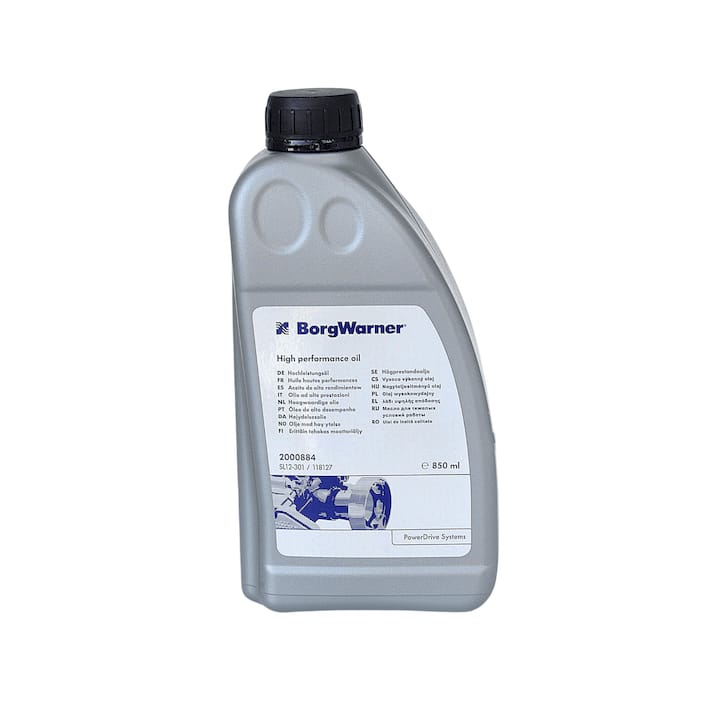
From 2nd generation through to 5th generation, the standard reference fluid is BorgWarner’s 850ml original high performance oil, part number 2000884 (G060175A2). That larger 850ml container reflects both the higher fill volume on later couplings and the fact that one bottle typically covers a full service with some margin for topping up during pump removal work, when a small amount of fluid inevitably spills during disassembly.
- Gen 1: G052175A1, 275ml, OEM BorgWarner spec
- Gen 2 to Gen 5: 2000884 / G060175A2, 850ml, OEM BorgWarner spec
- Aftermarket GL5 75W90: acceptable only as an emergency top-up between proper services, never as a full replacement fluid
- Avoid: any oil not explicitly rated for wet clutch-pack coupling use, since standard hypoid gear oils lack the friction modifiers Haldex clutches need
Pro Tip: Always buy slightly more oil than the stated fill capacity. A pump removal job loses a measurable amount of fluid to the strainer housing and hoses during disassembly, and running short mid-service means a rushed trip to source more before you can safely refill and bleed the system.
Aftermarket GL5 75W90 gear oils turn up regularly in forum advice as a cheaper substitute, and in a genuine emergency a small top-up won’t wreck anything. Treat it as a stopgap, not a service, because it lacks the specific additive package the wet clutch pack depends on for consistent engagement.
How do you know your Haldex needs attention now?
Watch for a handful of consistent warning signs before your next scheduled interval arrives, because a failing Haldex rarely announces itself with a single dramatic symptom.
- Delayed or hesitant AWD engagement, especially noticeable pulling away on a wet or gravel surface
- A whining or groaning noise from the rear differential area, particularly under acceleration
- Fault codes referencing clutch pressure or coupling command that won’t clear after a reset
- Persistent ABS or traction control warnings that trace back to inconsistent coupling behaviour rather than the wheel sensors themselves
An OBD2 scanner capable of reading the Haldex or all-wheel-drive control module (not just generic engine codes) will show live clutch pressure and command values. On a healthy system these track closely together during a test drive; a widening gap between commanded and actual pressure usually points to a worn pump, a blocked strainer, or degraded fluid losing its ability to build pressure quickly.
Visually, check underneath the coupling for oil staining around the pump housing seals, and note the mileage and date of the last known service if you can find paperwork. Report all three, fault codes, live-data readings, and any visible leakage, to whichever workshop does the diagnostic work. That combination lets a technician decide whether you need a routine service or something more involved before they even put the car on a ramp.
Should you DIY the service or book a workshop?
Parts costs for a full Haldex service, including oil, filter where applicable, and gaskets, typically run in the £150 to £250 range when you’re supplying your own components rather than paying a dealer’s parts markup. Labour is where the three service types diverge sharply.
- Oil-only service: roughly 1 to 2 hours of labour
- Oil plus filter service: roughly 2 to 3 hours
- Pump removal with strainer cleaning: roughly 3 to 4 hours or more, depending on how stuck the pump nose is
A competent home mechanic with the right sockets and a clean workspace can handle an oil-only or filter service without much drama. Pump removal is a different proposition. The pump nose can seize into the housing after years of heat cycling, and forcing it without the right technique risks damaging the housing itself, turning a routine service into an unplanned parts order.
Dealers offer the reassurance of manufacturer-approved procedures and warranty continuity, but they also charge the most and sometimes push the “lifetime fluid” line discussed earlier. Independent specialists who work on Haldex systems daily often have both the pump-removal tools and the experience to spot a seized nose before it becomes a broken housing, which makes them worth seeking out once your car is out of its original warranty period.
A step-by-step checklist for the service bay
Whether you’re handing this to a workshop or doing it yourself, working through the same sequence every time keeps mistakes out of the job.
- Confirm the generation stamped or coded on the pump housing before ordering any fluid or filter, since the wrong part number is the most common ordering error.
- Order the correct oil and filter ahead of time; don’t start the job with fluid still in the post.
- Inspect for existing leaks and pull fault codes before draining anything, so you have a baseline to compare against afterwards.
- Drain the old fluid into a clean container and check its colour and smell for signs of overheating or metal contamination.
- Remove the pump if the generation requires it, then clean the strainer and housing thoroughly, checking the pump nose for scoring.
- Torque all housing bolts and the pump retaining fasteners to the specified figures; overtightening cracks housings, undertightening causes leaks.
- Refill with the correct fluid volume, checking the fill level against the manufacturer’s specified amount rather than guessing.
- Clear fault codes and take a test drive on a mixed surface, watching for smooth AWD engagement and no return of prior warning lights.
Anyone attempting the pump removal step themselves should read a proper walkthrough first; a DIY pump replacement guide covers the sequence in more detail than a checklist alone can capture, particularly around freeing a seized pump nose without cracking the housing.
Where this guidance comes from and how to verify it
This guidance draws on generation-specific service data compiled by Mindaugas for Haldexparts, alongside workshop-sourced schedules for Gen 4 vehicles and manufacturer-documented specifications for Gen 5 pump servicing. Mindaugas has written extensively on Haldex maintenance on a specialized blog, covering everything from filter intervals to full pump replacement procedures, and those posts are worth cross-checking against your own vehicle’s documentation before committing to any parts order.
The three products referenced throughout, the 275ml G052175A1 oil for Gen 1, the 850ml BorgWarner 2000884 oil for Gen 2 through Gen 5, and the pump nose replacement tips for early pumps, are all listed with generation compatibility and pack sizes on their respective Haldexparts product pages. Always check the exact pump or coupling code stamped on your unit against the listed compatibility before ordering, since generation boundaries occasionally blur across facelift model years.
Where to buy the right oil and parts for your generation
Getting the fluid and pump parts right starts with knowing exactly which container and part number your generation calls for; specialized suppliers stock all relevant items covered in this guide.
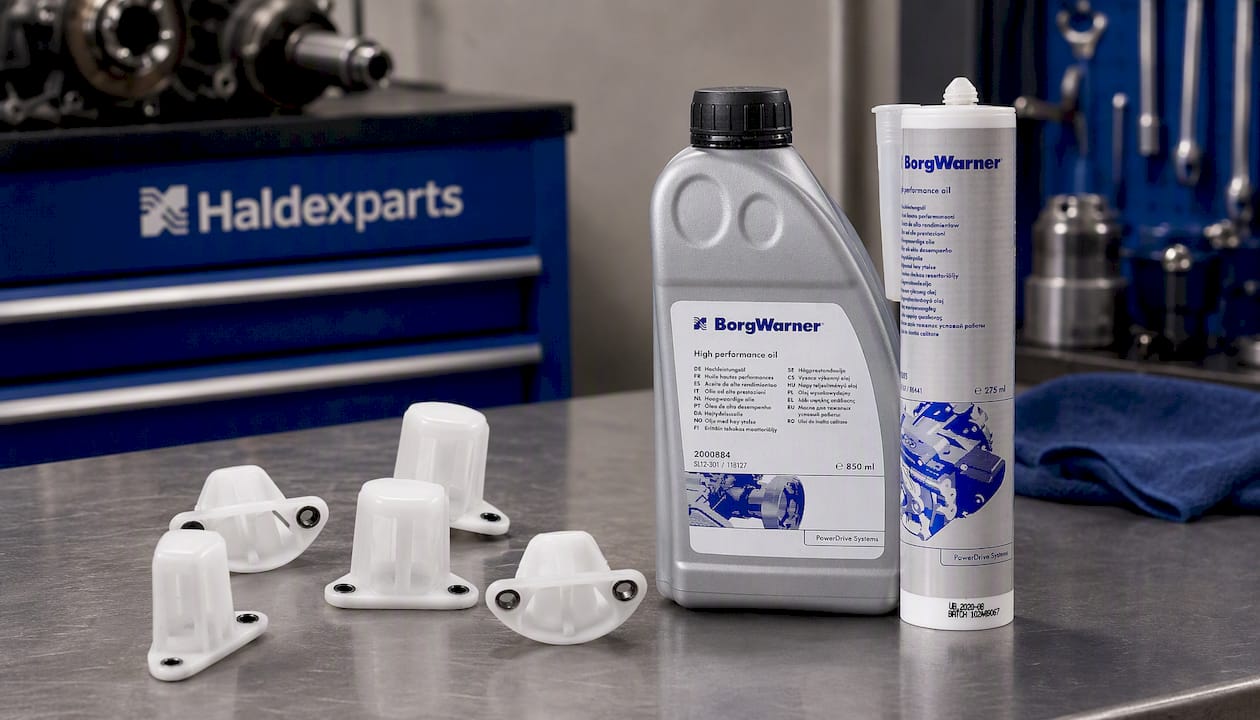
For 1st generation systems, the 275ml G052175A1 oil matches the smaller fill capacity of early couplings exactly, so there’s no guesswork over how much to order. For every generation from 2nd through 5th, the 850ml BorgWarner 2000884 oil covers a full service with enough margin for the fluid lost during a pump removal job. And if your Gen 1 or Gen 2 pump nose is showing wear or has seized during a previous service attempt, the pump nose replacement tips product addresses exactly that failure point without needing a full pump replacement.
OEM-grade parts matter here because a Haldex pump that fails from contaminated fluid or a worn nose is a far more expensive repair than the fluid itself ever costs. Using manufacturer-specification oil rather than an unspecified substitute protects both the pump and the clutch pack’s calibrated friction behaviour. Browse the full range of Haldex service kits to find a complete kit matched to your generation, or start from the Haldexparts homepage if you’re not yet sure which coupling your vehicle carries.
Conservative intervals win out for long-term ownership
If you’re keeping a car for the long haul, or you tow, track, or lean on the AWD system hard, book to the shorter end of every interval band in this guide. A Gen 5 owner who tows regularly should treat 10,000 miles as a firm ceiling, not a suggestion, and Gen 4 owners doing heavy motorway mileage are better served by the 20,000-mile mark than stretching to 30,000.
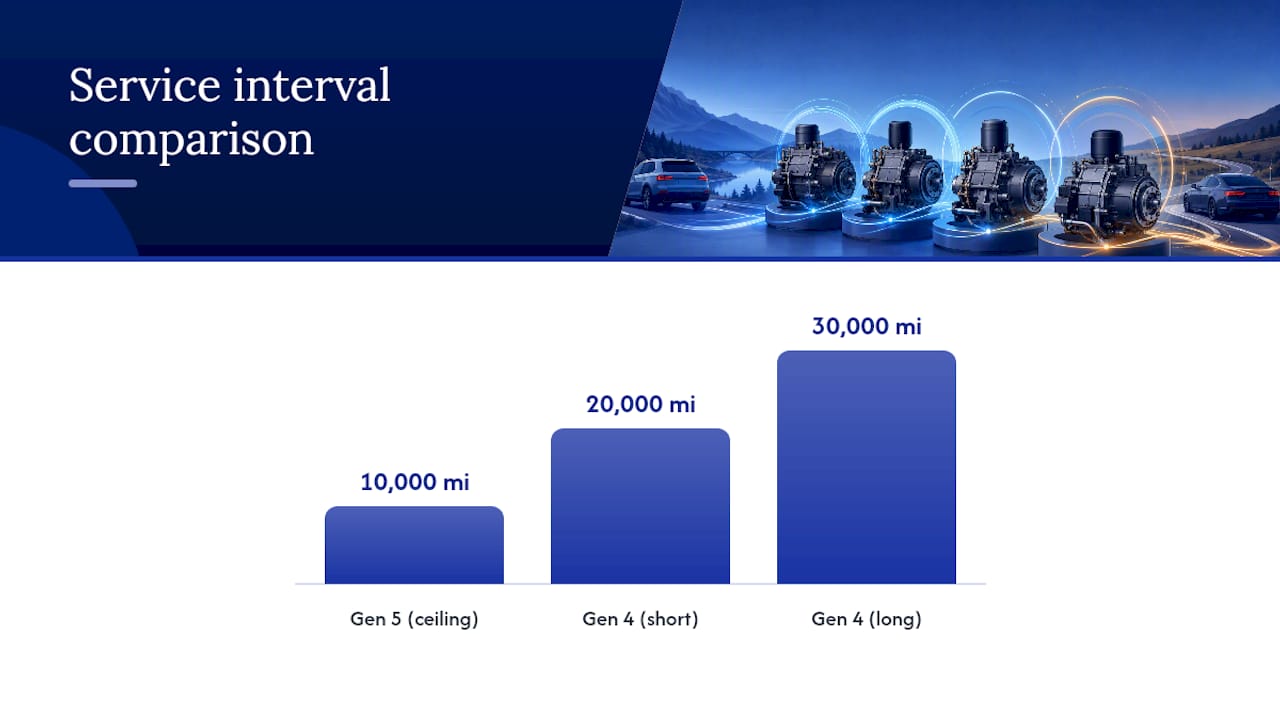
Low-mileage owners have a little more room to breathe. A car covering 4,000 miles a year can reasonably stretch a Gen 1 or Gen 4 service to the two-year point rather than chasing the mileage figure, since it simply won’t clock enough distance to stress the fluid the same way.
If you want one default to work from, service Gen 1, 2 and 4 systems every 20,000 miles or two years, and Gen 5 every 10,000 miles or annually with the pump strainer cleaned every time. That schedule errs slightly conservative everywhere, and a slightly early service has never damaged a Haldex coupling.
— Mindaugas
Sources
- Guide to Servicing VW and Audi Haldex AWD Systems – UroTuning
- How to service Haldex generation 4 — full guide | JCR Leeds