
An upgraded Haldex filter is the single most effective way to restore and improve oil flow through your AWD coupling, directly improving clutch engagement and protecting the pump from premature failure. The Haldex system, manufactured by BorgWarner, relies on hydraulic pressure to engage the rear axle clutch pack. When that pressure drops due to a blocked filter or clogged pump strainer, your AWD system becomes unreliable. Understanding how upgraded filter improves Haldex flow means understanding the whole hydraulic chain, from the filter mesh to the clutch plates. Gen 4 and Gen 5 Haldex units on vehicles like the Audi TT, VW Golf R, and Skoda Yeti are especially sensitive to this.
How does a clogged filter restrict haldex hydraulic flow?
Clogged filters and pump strainers restrict oil flow, reducing the pressure available for clutch engagement and causing pump motor overload and early failure. This is the core mechanical problem behind most Haldex faults that owners misdiagnose as electrical or software issues.
The Haldex pump draws oil through a strainer before pressurising it and sending it to the clutch pack. When clutch plates wear, they shed microscopic metallic debris into the oil. That debris accumulates in both the filter and the pump strainer over time. The result is a progressively narrowing passage for oil to travel through.
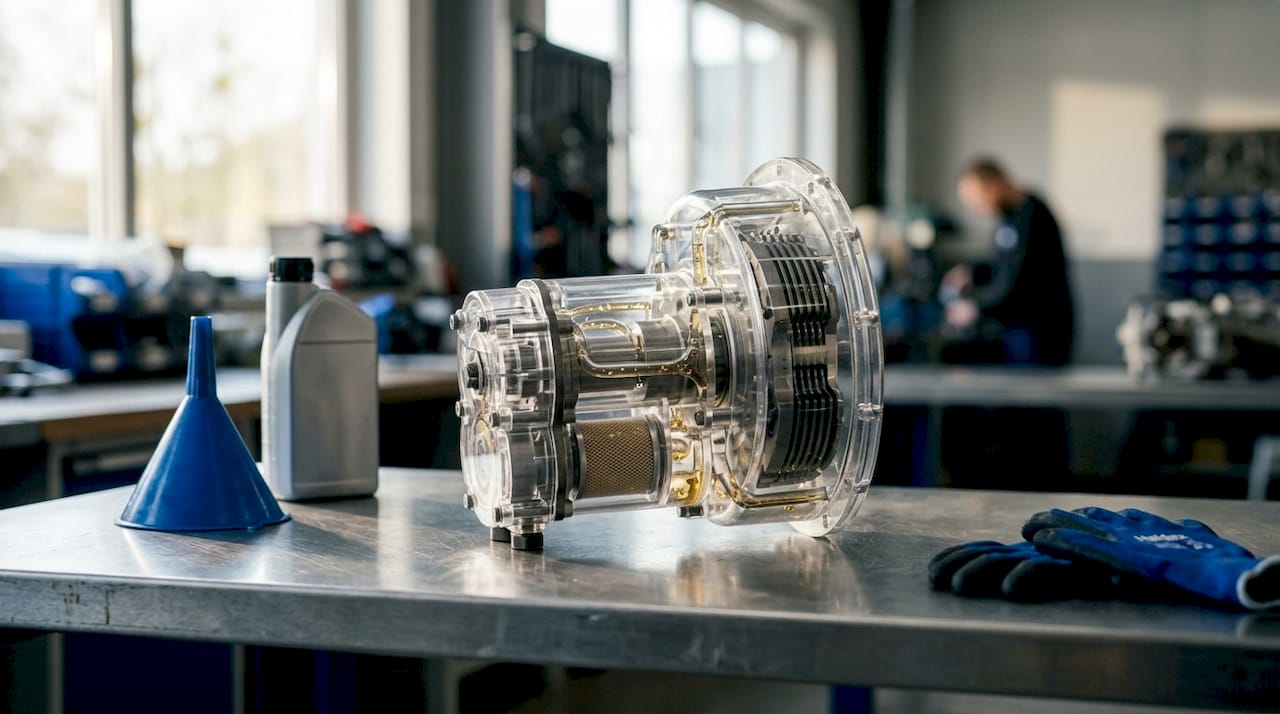
As flow drops, the pump motor works harder to compensate. Current draw increases, heat builds up inside the motor, and bearing wear accelerates. Many Haldex failures are flow-related rather than mechanical in origin. Owners replace pumps at significant cost when a filter change and strainer clean would have solved the problem entirely.
The consequences for AWD performance are equally serious. Reduced oil volume reaching the clutch pack means slower engagement, inconsistent torque transfer, and in severe cases, complete loss of rear axle drive. You may notice understeer on wet roads or a hesitation when pulling away on loose surfaces. These are not software faults. They are hydraulic faults caused by restricted flow.
Key failure indicators caused by flow restriction:
- Delayed or absent AWD engagement under load
- Haldex fault codes stored in the ECU despite no mechanical damage
- Pump motor running hot or drawing excessive current
- Noisy pump operation under acceleration
Pro Tip: If your Haldex pump has been replaced once already and faults have returned, clean the pump strainer before fitting the new unit. Pump screen cleaning is the single most important preventive step to avoid repeat pump failure.
Stock vs upgraded haldex filters: what is the difference?
OEM Haldex filters perform adequately when serviced on schedule, but aftermarket upgraded filters offer measurable advantages in flow rate, filtration consistency, and service life. The difference matters most on vehicles used for track days, towing, or spirited driving where the clutch pack generates more debris.
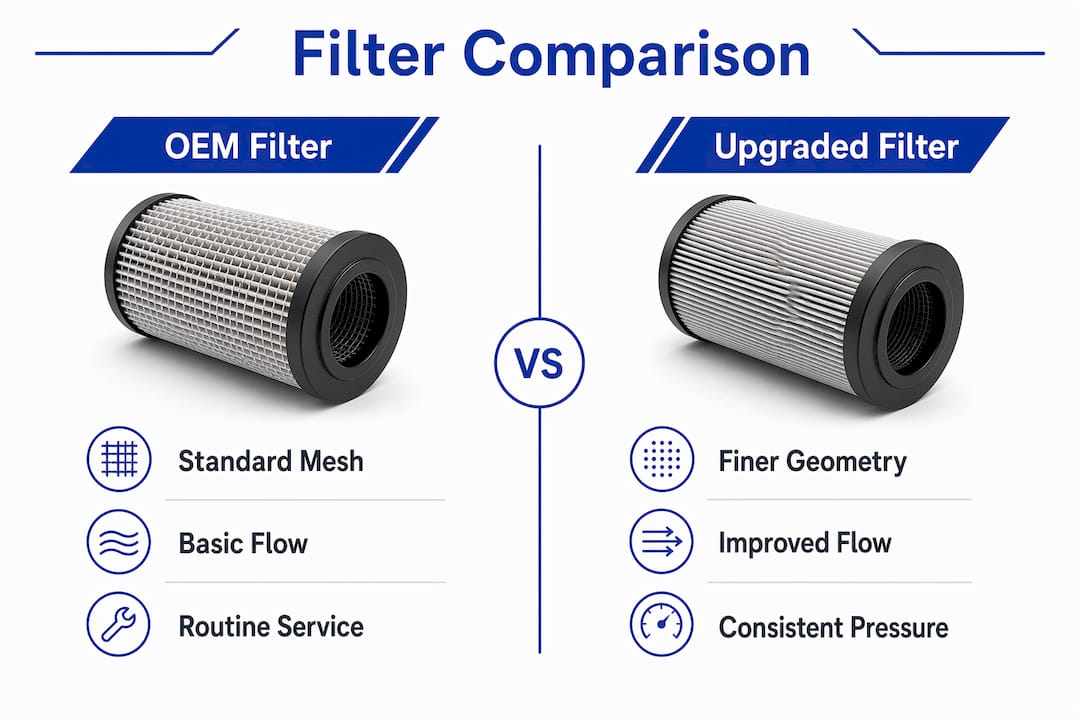
Standard OEM filters use a basic mesh design sized to catch larger particles. They do the job, but their flow characteristics are conservative. Under high demand, a partially loaded OEM filter creates a noticeable pressure drop across the filter element. Upgraded filters address this with finer yet more open mesh geometry, higher-quality materials, and improved housing seals that prevent bypass leakage.
Upgraded filters improve flow not just by removing restriction but also by helping the system maintain consistent hydraulic pressure under sustained demand. That consistency is what separates a confident AWD engagement from a hesitant one.
| Feature | OEM Filter | Upgraded Filter |
|---|---|---|
| Mesh quality | Standard | Higher-grade, finer geometry |
| Flow rate under load | Moderate | Improved, lower pressure drop |
| Debris capacity | Limited | Greater before restriction occurs |
| Housing seal integrity | Adequate | Enhanced, reduces bypass risk |
| Recommended change interval | 60,000 km | Per manufacturer guidance |
For Gen 4 systems, the BorgWarner filter kit paired with fresh oil is the benchmark service combination. Volvo AWD owners running older Gen 3 systems benefit from dedicated kits such as the Volvo AWD filter kit that match the specific housing dimensions and flow requirements of those units.
Pro Tip: Always replace the filter and the oil together. Changing fluid alone without addressing the filter leaves microscopic clutch debris in the system and does nothing to restore proper flow.
How to upgrade and maintain your haldex filter correctly
Correct filter replacement requires platform-specific knowledge. Gen 4 and Gen 5 Haldex units have different service procedures, and errors during the process can introduce air into the hydraulic circuit or damage the filter housing.
Step-by-step filter replacement for Gen 4 Haldex:
- Warm the vehicle to operating temperature, then allow it to cool until oil temperature is between 20°C and 40°C. Oil level adjustment must be performed within this temperature window for accurate filling.
- Place the vehicle on level ground and remove the undertray to access the Haldex unit.
- Remove the drain plug and drain the old oil fully. The drain plug torque on reassembly is 30 Nm.
- On Gen 4 units, the filter housing sits in a tight location. Use diagnostic pump cycling or a small extraction bolt to break the filter free without damaging the housing.
- Remove the old filter and inspect the pump strainer. Clean the strainer thoroughly with fresh Haldex oil or brake cleaner before reassembly.
- Fit the new filter and torque the filter housing to 5–6 Nm. Do not overtighten.
- Refill with the correct Haldex oil. The system holds approximately 0.85 litres, but a typical fluid change requires 0.7–0.75 litres due to residual oil in the circuit.
- Use VCDS, ODIS, or a compatible diagnostic tool to run the pump priming cycle. This purges air and sets the correct hydraulic pressure.
- Recheck the oil level after priming and top up if required.
Common pitfalls to avoid:
- Using the wrong oil grade. Gen 4 and Gen 5 units require specific BorgWarner-approved fluids.
- Skipping the pump priming cycle. Without it, the system may show engagement faults even with a fresh filter.
- Forgetting the strainer. A new filter with a blocked strainer still restricts flow at the pump inlet.
- Over-torquing the filter housing. At 5–6 Nm, the housing is fragile. Strip the thread and you face a far larger repair bill.
For platform-specific service intervals across multiple Haldex generations, Haldexparts provides detailed guidance covering Audi, VW, Skoda, Ford, and Land Rover applications.
Can filter upgrades work alongside hardware and software mods?
A filter upgrade delivers the best results when combined with complementary hardware and software changes. Improved oil flow creates the hydraulic foundation. Pressure spring upgrades and ECU tuning build on that foundation to extract greater AWD performance.
The APR Stage 2 spring for Gen 5 Haldex is the most widely used hardware upgrade in this category. It allows up to 30 Bar pressure, improving clutch engagement speed and torque transfer beyond what the stock spring permits. Without adequate oil flow from a clean, upgraded filter, that increased pressure demand simply overloads a partially blocked system. The filter upgrade and the spring upgrade are complementary, not interchangeable.
Benefits of combining filter upgrades with hardware and software mods:
- Faster rear axle engagement under hard acceleration, reducing wheelspin on front-biased AWD layouts
- More consistent torque split during cornering, improving stability and confidence
- Better response to ECU-based AWD maps that demand rapid pressure changes
- Reduced thermal stress on the pump motor because flow is no longer restricted
The caution here is balance. Running maximum spring pressure through a system with worn clutch plates or a marginal pump will accelerate wear rather than improve performance. Performance upgrades integrating hardware and improved filter flow enhance torque transfer without sacrificing reliability, but only when the base system is in good condition. Treat the filter upgrade as the prerequisite, not the afterthought.
For owners concerned about Haldex failure causes before committing to a performance build, that diagnostic context is worth reviewing first.
Key takeaways
An upgraded Haldex filter restores hydraulic flow, protects the pump from overload, and is the essential first step before any performance modification to the AWD system.
| Point | Details |
|---|---|
| Filter restriction causes failures | Clogged filters reduce clutch pressure and overload the pump motor, causing faults misdiagnosed as electrical. |
| Upgraded filters outperform OEM | Higher-grade mesh and improved housing seals maintain consistent pressure under sustained demand. |
| Strainer cleaning is non-negotiable | Replacing the filter without cleaning the pump strainer leaves debris at the pump inlet and repeats the problem. |
| Torque and temperature specs matter | Filter housing torque is 5–6 Nm; oil level must be set at 20–40°C with diagnostic pump priming. |
| Filter upgrades enable performance mods | Improved flow is the prerequisite for pressure spring upgrades like the APR Stage 2 to work safely. |
Why i think most haldex owners are servicing in the wrong order
The most common mistake I see is owners fitting a performance spring or flashing an AWD map before they have ever touched the filter. The logic seems reasonable: upgrade the hardware, get better AWD. But the hydraulic system does not care about your ECU map if the oil cannot flow freely.
I have seen Gen 4 units on Audi TTs and Golf Rs where the pump strainer was so loaded with clutch debris that the pump was drawing nearly double its rated current just to maintain idle pressure. The owners had no idea. The car drove fine in normal conditions. It was only under hard cornering or a standing start that the AWD hesitated. They blamed the tune. The problem was a £12 strainer that had never been cleaned.
The other thing worth saying plainly: different Haldex generations have genuinely different service needs. A Gen 5 service procedure on a Gen 4 unit will leave you with an incorrectly primed system and a fault code within days. Platform knowledge is not optional here. It is the difference between a successful DIY service and an expensive trip to a specialist to undo your work.
My honest recommendation is this: service the filter and strainer first, use the correct oil, prime the system properly with a diagnostic tool, and only then consider hardware or software upgrades. That sequence protects your investment and gives any performance modification the hydraulic foundation it needs to actually work.
— Mindaugas
Get the right haldex filter and service kit for your vehicle
If you are ready to improve your Haldex system’s oil flow, Haldexparts stocks everything you need in one place.
Haldexparts carries OEM-grade and trusted aftermarket Haldex oil filters for Gen 4 and Gen 5 systems across Audi, VW, Skoda, Ford, Volvo, and Land Rover applications. Every filter is matched to the correct generation and housing specification. For a complete service, the Haldex service kits bundle filters, approved oils, and seals so you have everything to hand before you start. Orders over £150 qualify for free shipping, and detailed product information helps you confirm the right part for your specific model before you buy.
FAQ
What does an upgraded haldex filter actually do?
An upgraded Haldex filter reduces oil flow restriction through the hydraulic circuit, allowing the pump to maintain consistent pressure to the clutch pack. This improves AWD engagement speed and reduces pump motor stress.
How often should the haldex filter be replaced?
A filter change every 60,000 km is the standard recommendation for generations with a serviceable filter. Vehicles used for track driving or towing may benefit from shorter intervals.
Can i change the haldex filter without a diagnostic tool?
You can remove and replace the filter without one, but you should not skip the pump priming cycle. Without diagnostic priming using VCDS or ODIS, air remains in the circuit and engagement faults are likely.
Does a filter upgrade fix haldex fault codes?
It resolves fault codes caused by low hydraulic pressure or pump overload due to flow restriction. Codes caused by electrical faults, sensor failures, or mechanical clutch wear require separate diagnosis.
Is the pump strainer the same as the filter?
No. The pump strainer sits at the pump inlet and catches larger debris before oil enters the pump. The filter sits downstream and handles finer particles. Both must be serviced together for a complete Haldex flow improvement.