
The Land Rover Haldex system is an electronically controlled, on-demand all-wheel-drive coupling that uses a wet multi-plate clutch to engage the rear axle when traction is needed. Developed and refined by BorgWarner, this system sits at the heart of Land Rover AWD technology in models such as the Freelander 2, Discovery Sport, and Range Rover Evoque. Unlike permanent four-wheel-drive systems, the Haldex coupling mechanism runs primarily as front-wheel drive under normal conditions, transferring torque rearward only when the electronics detect a need. Understanding what the Land Rover Haldex system does, and how it has evolved, is the difference between confident ownership and costly surprises.
How does the Land Rover Haldex system work?
The Haldex system operates through hydraulic pressure acting on a wet multi-plate clutch pack housed at the rear differential. Under normal driving, the front axle carries the majority of torque. The rear axle is effectively disconnected until the system calls for it.
The hydraulic clutch engagement works like this: an internal pump generates pressure, which forces the clutch plates together through an electronically controlled valve. When the input and output shafts rotate at the same speed, pumping action reduces to minimise clutch wear. When the front wheels begin to slip, the speed difference increases pump output, pressure rises, and the clutch engages to send torque rearward.
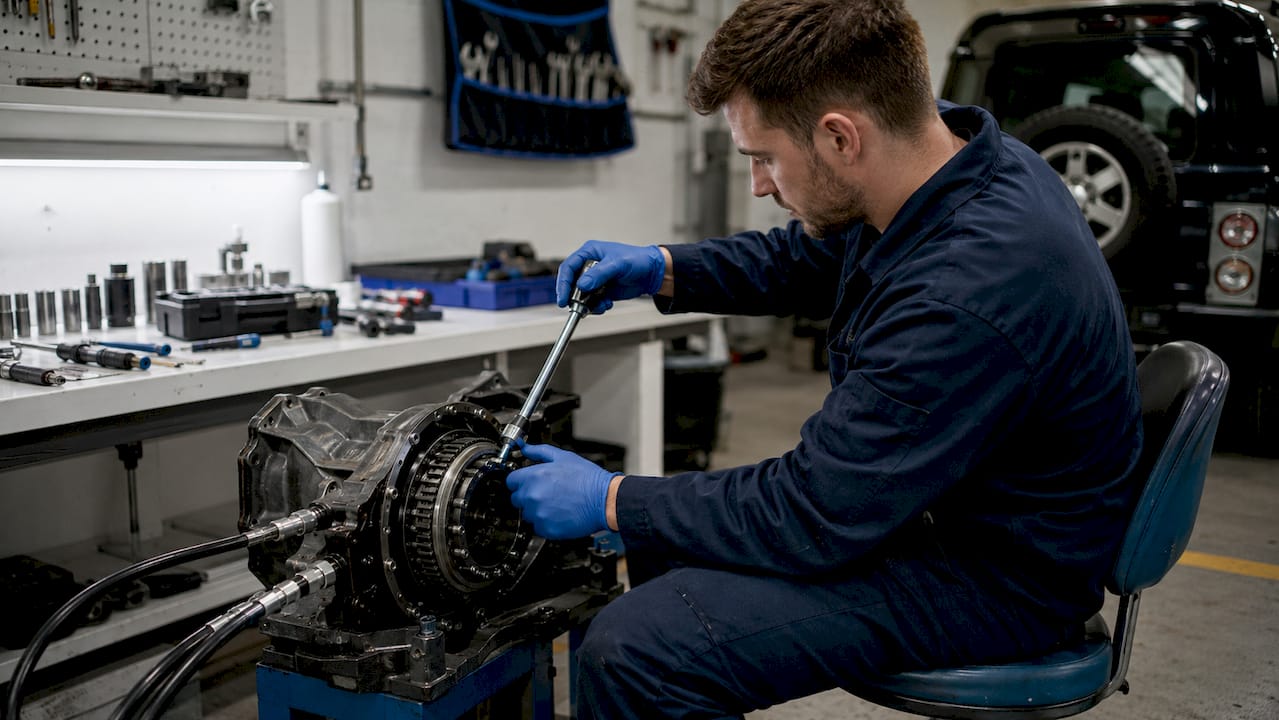
An electronic control module (ECM) governs the entire process. It reads wheel speed sensors, throttle position, steering angle, and lateral acceleration data. The ECM then adjusts the solenoid valve to control exactly how much hydraulic pressure reaches the clutch pack. This determines the torque split at any given moment.
Under normal conditions, the torque split is front-biased, typically around 90/10 front to rear. When the clutch is fully locked, the split can approach 50/50. The exact ratio varies by generation and how the vehicle manufacturer has calibrated the system.
- The wet multi-plate clutch transfers torque progressively, not in a sudden jolt.
- The ECM can modulate clutch engagement continuously, not just fully on or off.
- Hydraulic pressure is the direct mechanism; electronics control the valve that regulates it.
- Speed differential between front and rear axles is the primary trigger for engagement.
Pro Tip: If you notice a delay in traction response on a slippery surface, the issue is often low hydraulic pressure caused by a worn pump or degraded fluid, not the clutch itself. Diagnosis must consider the pump, solenoid, and fluid condition together.
What are the Haldex generations used in Land Rover vehicles?
Land Rover has used Haldex generations III, IV, and V across its modern model range. Each generation brought meaningful changes to how the system behaves, particularly in moving from reactive to proactive operation.
Generations I and II were reactive systems. They waited for wheel slip to occur before engaging the rear axle. This worked adequately on road but introduced a noticeable lag in off-road or low-grip situations. The mechanical pump in these early units was driven directly by shaft rotation, meaning pressure only built once slip was already happening.
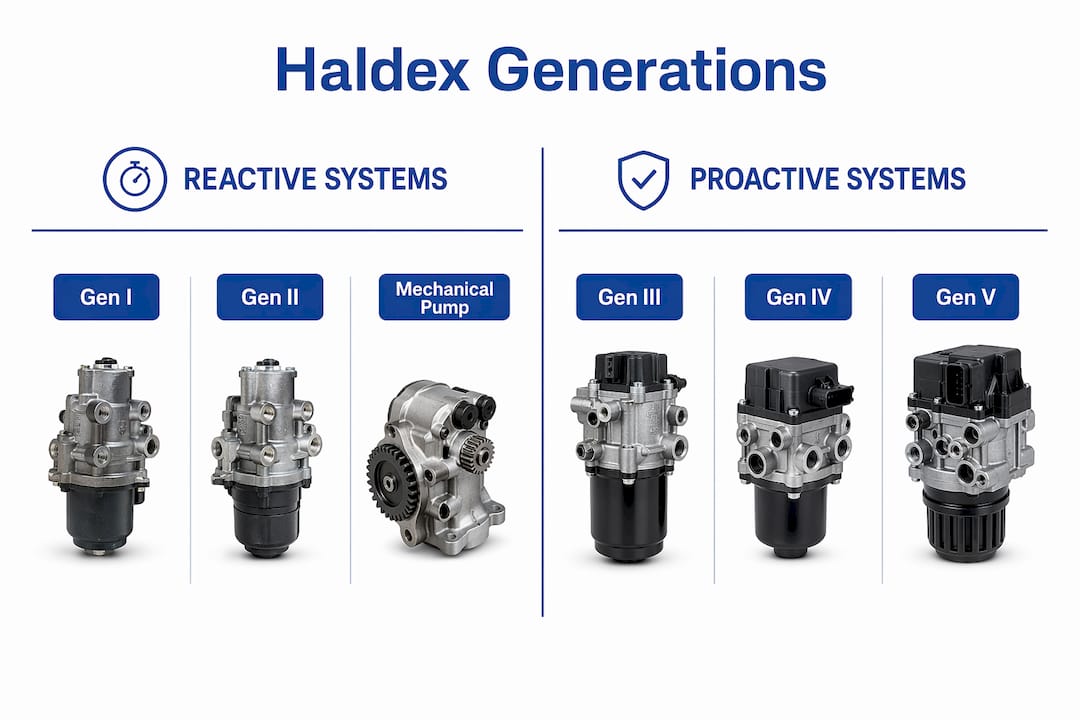
Generation III introduced the ability to pre-tension the clutch before slip occurs. This was a significant shift. The system could now use sensor data to anticipate traction demand and partially engage the clutch in advance. Generations IV and V refined this further, replacing the mechanical pump with an electric pump for faster response and more precise valve control.
| Generation | Pump type | Operation mode | Key improvement |
|---|---|---|---|
| Gen I / II | Mechanical | Reactive only | Basic slip response |
| Gen III | Mechanical/Electric | Proactive pre-tension | Anticipates slip |
| Gen IV | Electric | Proactive | Faster response, better control |
| Gen V | Electric | Fully proactive | Highest precision, software integration |
The Freelander 2 used Generation III and IV systems. The Discovery Sport and Range Rover Evoque, built on the Land Rover EMA platform, use Generation IV and V units. The shift to electric pumps in later generations means the system can engage the rear axle even before the wheels have moved, using predictive data from the ECM. That is a fundamentally different capability from the original reactive design.
The proactive clutch pre-tensioning in Gen III through V significantly improves both off-road control and on-road safety. On a wet roundabout or a loose gravel track, the rear axle is already partially engaged before you need it.
What maintenance does the Haldex system require?
Haldex maintenance is the single most neglected aspect of Land Rover AWD ownership. The system relies on clean, correctly specified fluid to maintain hydraulic pressure and protect the clutch pack. Neglect here does not just reduce performance. It causes permanent damage.
Fluid changes and filter servicing are required at intervals that vary by generation and vehicle model, typically every 3 years or between 20,000 and 40,000 miles. Generation-specific procedures matter. Some generations require filter cleaning or replacement alongside the fluid change. Others have screens that must be inspected. Using the wrong fluid specification, or skipping the filter service, impairs system performance even if the fluid itself is fresh.
- Drain the old Haldex fluid completely. Partial drains leave contaminated fluid in the system.
- Clean or replace the filter or screen according to the generation-specific procedure.
- Refill with the correct fluid specification for your generation and vehicle model.
- Check for leaks at the drain plug, filter housing, and coupling seals.
- Clear any stored fault codes and verify system operation with a diagnostic tool.
Incorrect fluid or missed filter cleaning leads to premature wear and driveline issues even after a service is completed. This is not a theoretical risk. Workshops regularly see vehicles where a previous owner used generic differential oil instead of the specified Haldex fluid, resulting in clutch pack degradation that no fluid change can reverse.
Pro Tip: When buying a used Land Rover with Haldex AWD, always ask for documented service history that specifies the fluid used and the procedure followed. A generic “diff oil change” entry is a red flag, not reassurance.
Signs of Haldex system problems include vibration or noise from the rear under acceleration, fault codes relating to the AWD coupling, and reduced traction on low-grip surfaces. Symptoms attributed to a worn clutch may also stem from hydraulic pressure issues caused by a failing pump, solenoid fault, or contaminated fluid. Diagnosis must consider all components, not just the clutch pack.
What are the real-world benefits and limitations of Haldex AWD?
The Haldex system delivers genuine traction advantages without the fuel consumption penalty of permanent four-wheel drive. Running primarily as front-wheel drive under normal conditions means the rear drivetrain components are not constantly spinning, which reduces mechanical drag and improves efficiency.
Haldex AWD is an on-demand system, not permanent four-wheel drive. This is the most common misconception among owners. A Land Rover Freelander 2 or Discovery Sport does not have power going to all four wheels at all times. The rear axle engages only when the system determines it is needed. Owners who believe otherwise may be surprised by the vehicle’s behaviour on very slippery surfaces if the system is not properly maintained.
Real-world benefits of the Haldex coupling mechanism include:
- Better fuel economy compared to permanent AWD systems, due to reduced drivetrain drag in normal driving.
- Progressive torque transfer that improves stability without the abrupt engagement of older mechanical systems.
- Compact packaging that suits the transverse engine layouts used in the Freelander 2, Discovery Sport, and Evoque.
- Proactive engagement in later generations that provides genuine off-road and adverse-weather capability.
- Continuous modulation by the ECM, which allows the system to respond to changing conditions mid-corner or mid-acceleration.
The limitations are equally worth knowing. The system cannot match the sustained traction of a permanent mechanical AWD system in extreme off-road conditions. On prolonged steep climbs or deep mud, the clutch pack can overheat if the rear wheels are spinning continuously. The Haldex system is best suited to mixed-road driving, light off-road use, and adverse weather rather than serious green-laning or rock crawling.
How does the Haldex system fit within Land Rover’s drivetrain?
The Haldex coupling in transverse drivetrains uses a bevel box to redirect power from the transversely mounted engine rearward to the Haldex unit. This is a compact and weight-efficient solution that suits the smaller Land Rover models built on car-derived platforms. The bevel box sits between the gearbox and the propshaft, converting the rotational direction to send drive toward the rear axle.
Compared to a mechanical centre differential like a Torsen unit, the Haldex coupling is fundamentally different in character. A Torsen differential distributes torque mechanically and continuously, with no electronic control. The Haldex system uses software and sensor integration to manage torque actively, which gives engineers far more control over vehicle dynamics. The trade-off is that the system depends on electronics and hydraulics functioning correctly.
| Feature | Haldex system | Torsen differential |
|---|---|---|
| Control method | Electronic and hydraulic | Purely mechanical |
| Default operation | Front-wheel drive biased | Continuous torque split |
| Packaging | Compact, suits transverse layouts | Larger, suits longitudinal layouts |
| Maintenance | Fluid and filter service required | Minimal service requirement |
| Tunability | High, via software calibration | Limited |
The weight and packaging advantages of the Haldex design are significant for Land Rover’s smaller models. The Discovery Sport and Range Rover Evoque are built on platforms shared with Volvo and Ford, where a traditional transfer case and permanent AWD system would add weight and complexity that conflicts with the car’s road-biased character. You can read more about Haldex parts by vehicle brand to understand how the system varies across manufacturers using the same core technology.
Key takeaways
The Land Rover Haldex system is an on-demand AWD coupling that requires correct fluid, generation-specific servicing, and realistic expectations to deliver the traction and reliability it was designed for.
| Point | Details |
|---|---|
| On-demand, not permanent AWD | The rear axle only engages when slip or traction demand is detected by the ECM. |
| Generational improvements matter | Gen IV and V units use electric pumps and proactive pre-tensioning for faster, safer response. |
| Maintenance is non-negotiable | Fluid and filter service every 3 years or 20,000–40,000 miles prevents clutch and pump damage. |
| Diagnosis requires a full system view | Clutch symptoms often originate from pump, solenoid, or fluid issues rather than the clutch pack itself. |
| Packaging suits Land Rover’s platforms | The bevel box and Haldex coupling fit transverse drivetrains without the bulk of a traditional transfer case. |
Why most Land Rover buyers underestimate the Haldex system
I have spoken to a lot of Land Rover owners over the years, and the pattern is consistent. They buy a Discovery Sport or a Freelander 2 partly because of the AWD badge, and then they drive it for three years without ever servicing the Haldex unit. When it starts making noise or throwing fault codes, they are genuinely surprised.
The Haldex system is not fragile. It is actually well-engineered for the role it plays. But it is hydraulic and electronic, which means it depends on clean fluid and functioning sensors to do its job. Treat it like a sealed unit that never needs attention, and you will eventually pay for a coupling replacement that costs far more than a handful of fluid changes would have.
What I find most interesting about the generational evolution is how much the shift to proactive operation changed the real-world character of these vehicles. A Gen III or IV Haldex-equipped Evoque on a wet road genuinely feels more planted than an older Freelander 2 with a reactive Gen II unit. The physics are the same. The difference is timing.
If you are buying used, check the Haldex service history carefully. A vehicle with documented, correct-spec fluid changes is worth more than one with a vague service record, even if the asking prices are similar. The hidden cost of a neglected Haldex system is real, and it shows up at the worst possible moment.
— Mindaugas
Genuine Haldex parts for Land Rover, sourced correctly
Keeping a Land Rover Haldex system in good condition starts with using the right components for the right generation.
Haldexparts stocks OEM-grade Haldex service kits tailored specifically for Land Rover models, including the Freelander 2, Discovery Sport, and Range Rover Evoque. Each kit is matched to the correct generation, so you get the right fluid specification, filter, and hardware without guesswork. Haldexparts also carries Haldex hydraulic pumps and correct-spec Haldex oils for every generation. Orders over £150 qualify for free shipping. Whether you are servicing your own vehicle or sourcing parts for a customer’s Land Rover, Haldexparts delivers the correct components quickly and at competitive prices.
FAQ
What is the Land Rover Haldex system?
The Land Rover Haldex system is an electronically controlled, on-demand AWD coupling that uses a wet multi-plate clutch to engage the rear axle when traction is needed. It normally operates as front-wheel drive and transfers torque rearward only when the ECM detects wheel slip or anticipates traction demand.
Is Land Rover Haldex AWD the same as permanent four-wheel drive?
No. The Haldex system is on-demand, not permanent four-wheel drive. The rear axle is only engaged when additional traction is required, which improves fuel efficiency but means the vehicle is not always in four-wheel drive.
How often should the Haldex system be serviced on a Land Rover?
Haldex fluid and filter service is typically required every 3 years or between 20,000 and 40,000 miles, depending on the generation and model. Using the correct fluid specification and following the generation-specific procedure is critical for system reliability.
Which Land Rover models use the Haldex system?
The Freelander 2, Discovery Sport, and Range Rover Evoque all use Haldex AWD technology. These models are built on transverse-engine platforms where the Haldex coupling and bevel box provide a compact AWD solution suited to their road-biased character.
What are the signs of Haldex system failure on a Land Rover?
Common signs include vibration or noise from the rear under acceleration, AWD-related fault codes, and reduced traction on wet or loose surfaces. Symptoms can originate from the clutch pack, hydraulic pump, solenoid valve, or contaminated fluid, so a full system diagnosis is needed rather than assuming the clutch is at fault.