
The Haldex parts quality assurance process is a multi-step validation system integrating Production Part Approval Process (PPAP) approval, ISO 9001:2015 certification, and software-controlled quality governance to guarantee part reliability for automotive repairs. For technicians working on all-wheel-drive systems in vehicles like Audi, VW, Ford, and Land Rover, understanding this process is not optional. It is the difference between a repair that holds and one that returns to your bay within months. This article breaks down the key quality management systems, inspection checkpoints, and firmware controls that define how Haldex parts reach you, and what you should verify when they do.
What are the essential quality standards in the Haldex parts quality assurance process?
Haldex parts quality assurance rests on two recognised frameworks: PPAP and ISO 9001:2015. Each plays a distinct role in ensuring the components you install meet validated quality requirements.
The role of PPAP in parts validation
PPAP acts as the evidence package proving that a supplier can produce a specific part design consistently under real production conditions. It is not a single document. PPAP comprises up to 18 separate records, including design drawings, process flow charts, measurement system analyses, and the Part Submission Warrant (PSW). The PSW is a legal declaration signed by both supplier and customer quality managers, confirming that the production process meets required quality levels before mass production begins. For technicians, this matters because every part revision carries its own PPAP approval. Installing a part from a non-approved revision creates a compatibility risk that no amount of physical inspection will catch.
ISO 9001:2015 and what it means for traceability
Some Haldex manufacturing facilities operate under ISO 9001:2015 certified quality management systems. This certification requires documented process controls, regular audits, and full traceability from raw material to finished component. Traceability is the practical benefit you care about. It means that if a batch of valves or filters shows a defect in the field, the manufacturer can trace affected parts back to a specific production run within hours. That speed of containment protects you from repeat failures and simplifies warranty claims.
- PPAP approval confirms process capability before any part ships to service channels.
- ISO 9001:2015 certification mandates documented controls and audit trails throughout manufacturing.
- Traceability links each part to its production test results, lot number, and process records.
- Both frameworks together mean the part on your workbench has a documented quality history before you touch it.
Pro Tip: When ordering Haldex replacement kits, check that the supplier references OEM part numbers tied to current PPAP-approved revisions. A mismatch in revision level is one of the most common causes of fitment issues that look like installation errors but originate upstream.
How does Haldex integrate PPAP within its quality control workflow?
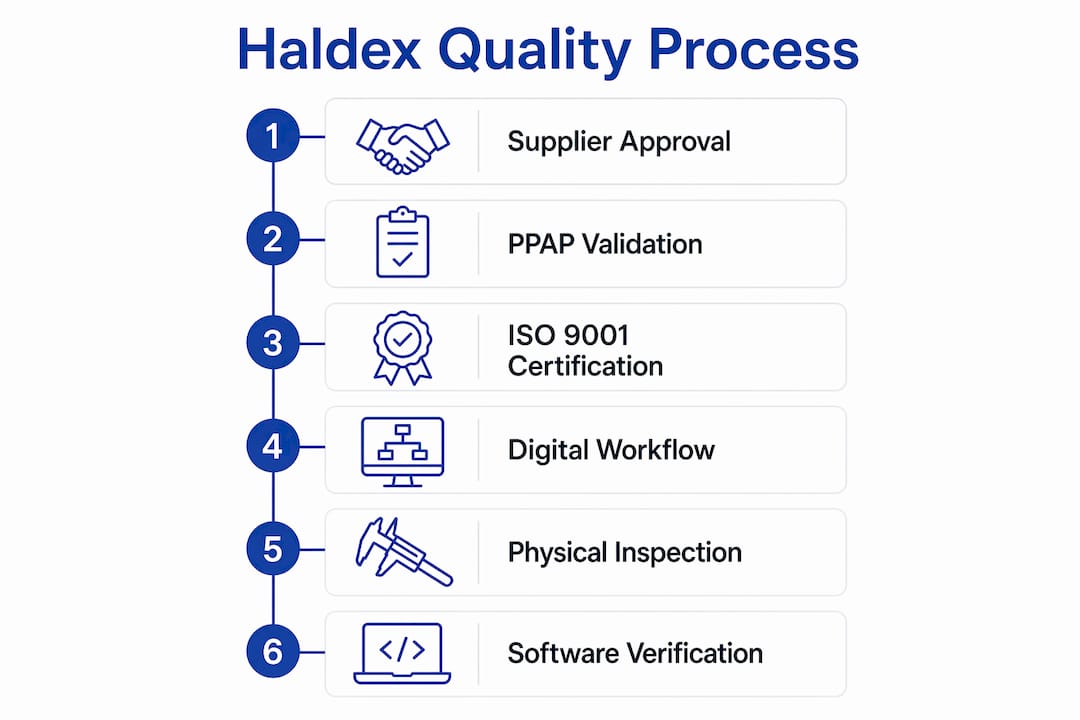
PPAP does not sit in isolation at Haldex. It is embedded directly into the digital change management workflow, functioning as a mandatory gate that prevents any component from entering production without prior approval.

Haldex integrates PPAP as a mandatory gate preventing component release without prior approval. Once an engineering change clears PPAP, tasks are auto-generated and distributed in real time to all relevant production sites. This eliminates manual hand-offs, which are historically the point where revision errors occur. The result is that every production site works from the same approved revision simultaneously.
The workflow follows a clear sequence:
- An engineering change is proposed and documented within the PLM system.
- The change triggers a PPAP submission requirement before any production release.
- Quality managers from both supplier and customer sides review and sign the PSW.
- Upon approval, the PLM system auto-generates tasks and pushes the updated revision to all production sites in real time.
- The ERP system records the change, creating a traceable link between the approved design and the physical parts entering the supply chain.
Integrated PLM and ERP systems enable Haldex to track engineering changes in real time, reducing handoff errors and ensuring technicians receive up-to-date parts with controlled revisions and official retrofit campaigns. This connected system means the part you receive is not just physically inspected at the factory. It carries a digital quality record that traces back to an approved engineering state.
“PPAP integration inside Haldex’s digital change workflow means technicians’ quality assurance depends on correct revision and process control upstream, not just visible inspection at repair time.”
For technicians, this has a direct implication. If you receive a part and its revision number does not match your service manual, the issue is not cosmetic. It signals a break in the PPAP chain that warrants a call to your supplier before installation.
Which inspection steps should technicians perform on receipt of Haldex parts?
Physical inspection at the point of receipt is the last line of defence in the quality management process. The upstream controls are thorough, but your verification step closes the loop.
| Inspection step | What to check | Why it matters |
|---|---|---|
| Part number verification | Match the part number and revision level against your service manual | Revision mismatches indicate a non-approved change |
| Traceability data | Confirm lot number and serial number are present on packaging or label | Required for warranty claims and defect containment |
| Physical condition | Inspect for damage, corrosion, or compromised seals | Packaging damage can indicate storage or transit failures |
| Supplier documentation | Check for a certificate of conformance or PPAP reference | Confirms the part ships from an approved production run |
| Service documentation cross-reference | Verify against official retrofit campaign notes if applicable | Retrofit campaigns correlate with controlled quality releases |
Traceability allows rapid containment if defects occur by linking affected parts back to production test results and process records. Technicians should retain installation records with lot and serial numbers to aid warranty and field failure investigations. This is not bureaucracy. It is the practical mechanism that gets a warranty resolved in days rather than weeks.
Checking official retrofit campaign notes is equally important. These campaigns correlate with controlled quality releases rather than ad hoc part revisions. If a campaign exists for the vehicle you are servicing, the associated parts carry a specific revision that must match.
Pro Tip: Keep a simple log in your workshop for every Haldex component installed. Record the vehicle VIN, part number, revision level, and lot number. This takes under two minutes and can save hours during a warranty dispute or field failure investigation.
For guidance on matching the right kit to a specific vehicle, the AWD service kit bundles guide covers how to validate part numbers and revisions across common Haldex applications.
How do software controls complement physical inspection in Haldex systems?
Physical part quality is only half the picture for modern Haldex systems. Electronic brake and AWD components carry firmware, and that firmware is subject to its own quality assurance process.
Haldex employs a Software Update Management System (SUMS) to manage software-controlled vehicle systems reliably and in compliance with performance requirements. SUMS supports transparency and efficient servicing of electronic brake components and firmware updates. The practical implication is that a mechanically perfect installation can still produce system faults if the firmware version on the new component does not match the vehicle’s control unit expectations.
Key considerations for technicians working with software-governed Haldex components:
- Verify the firmware version on any replacement electronic component before installation using your diagnostic tool.
- Check whether a SUMS-governed update is required after fitting a new pump motor or electronic control unit.
- Firmware compliance affects brake and AWD system performance and is managed by an embedded software update control system. A mismatch here produces fault codes that mimic mechanical failures.
- Cross-reference the vehicle manufacturer’s service information for any pending software campaigns that apply to the component you are replacing.
- Confirm that your diagnostic software is current. Outdated diagnostic tools may not recognise the firmware state of newer Haldex component revisions.
Quality assurance must consider software updates via SUMS as integral. Firmware mismatches can degrade system performance even when the mechanical installation is correct. This is the most common source of post-repair faults that technicians attribute to a faulty part when the part itself is fine. The role of quality auto parts in vehicle performance extends beyond physical condition to include the software layer that governs how components communicate.
For vehicles where traceability systems help prevent incorrect parts from being used, the Haldex parts demand by vehicle brand article explains how demand patterns and part fitment vary across Audi, VW, Ford, Volvo, and Land Rover applications.
Key takeaways
The Haldex parts quality assurance process combines PPAP approval, ISO 9001:2015 certification, real-time PLM-ERP integration, and SUMS firmware governance to deliver validated, traceable components to technicians.
| Point | Details |
|---|---|
| PPAP is a mandatory gate | No Haldex component enters production without a signed Part Submission Warrant confirming process capability. |
| ISO 9001:2015 ensures traceability | Certification mandates documented controls linking every part to its production run, lot number, and test records. |
| Real-time PLM-ERP integration | Approved engineering changes push instantly to all production sites, eliminating revision errors before parts ship. |
| Receipt inspection closes the loop | Verify part number, revision level, lot number, and supplier documentation before every installation. |
| Firmware must match mechanical quality | SUMS governs software updates; a firmware mismatch produces system faults even when the physical part is correct. |
Why I think most technicians underestimate the upstream quality chain
After years of working with Haldex AWD systems across Audi, VW, and Land Rover platforms, the pattern I see most often is this: a technician installs a part that looks correct, fits correctly, and comes from a reputable supplier, yet the system faults within weeks. Nine times out of ten, the root cause is either a revision mismatch or a firmware version that was never updated after fitting.
The upstream quality controls that Haldex has built through PPAP and ISO 9001:2015 are genuinely thorough. The weak point is almost always the handoff between that upstream process and what happens in the workshop. Technicians who understand that every part carries a revision history tied to a PPAP approval stop treating part numbers as interchangeable. They check the revision. They log the lot number. They run the firmware check before closing the job.
The other thing I have learned is that retrofit campaign notes are underused. When Haldex issues a controlled quality release tied to a campaign, that campaign note tells you exactly which revision to fit and whether a software update is required. Ignoring it is not a time-saving shortcut. It is a guaranteed callback. Build the documentation check into your standard workflow and you will spend less time diagnosing repeat faults and more time on productive work.
— Mindaugas
Sourcing quality-assured Haldex service kits for professional repairs
Knowing the quality process is only useful if the parts you purchase actually come from it. Buying from suppliers who stock OEM-grade components tied to current PPAP-approved revisions is the only way to maintain that chain of quality assurance from factory to fitment.
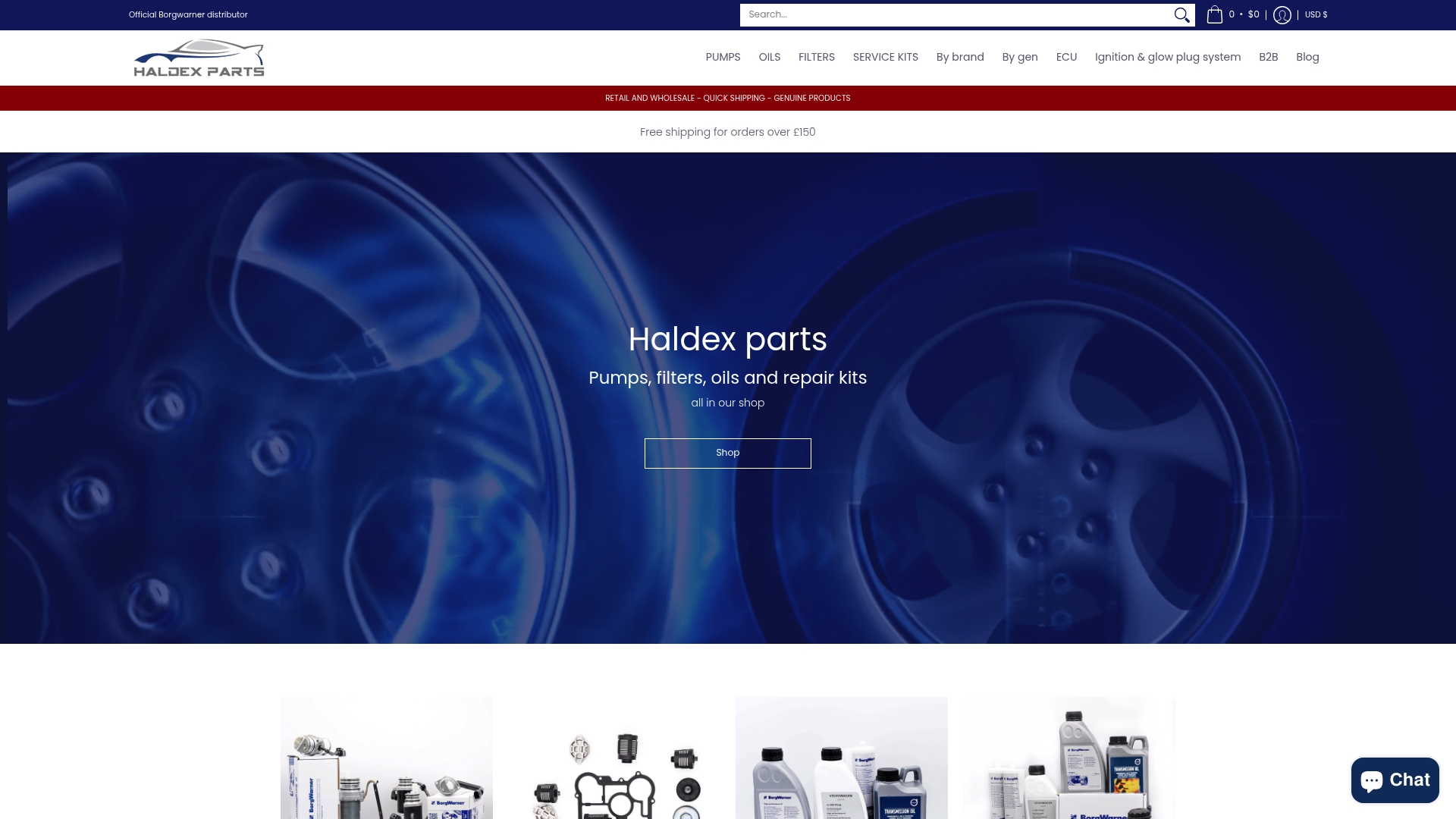
Haldexparts stocks a full range of OEM-grade Haldex service kits covering pumps, oils, and filters for Audi, VW, Ford, Land Rover, Volvo, and more. Every kit is sourced to match current approved specifications, giving you the traceability data and revision confidence the quality management process demands. Orders over £150 qualify for free shipping, and the product listings include the vehicle-specific fitment information you need to verify compatibility before purchase. For technicians who need to reduce turnaround time without compromising on part quality, the repair turnaround guide explains how correct part selection from the outset cuts diagnostic time on repeat visits.
FAQ
What is PPAP and why does it matter for Haldex parts?
PPAP is the Production Part Approval Process, a quality gate requiring suppliers to prove they can produce a specific part revision consistently before mass production begins. For Haldex components, it means every part you receive carries a documented approval history tied to a signed Part Submission Warrant.
How does ISO 9001:2015 affect the quality of Haldex components?
ISO 9001:2015 certification requires documented process controls and full traceability throughout manufacturing. It means Haldex facilities operating under this standard can link any component back to its production run, test results, and lot data, which speeds up defect containment and warranty resolution.
What should I check when Haldex parts arrive at my workshop?
Verify the part number and revision level against your service manual, confirm lot and serial numbers are present, inspect packaging condition, and check for a certificate of conformance or PPAP reference from the supplier.
Can a firmware mismatch cause faults even if the part is mechanically correct?
Yes. Haldex’s SUMS governs firmware on electronic brake and AWD components. A firmware version mismatch between a replacement part and the vehicle’s control unit produces fault codes that mimic mechanical failures, even when the physical installation is correct.
Where can I find Haldex parts that match current approved revisions?
Haldexparts supplies OEM-grade Haldex service kits, pumps, oils, and filters with vehicle-specific fitment information to help technicians confirm compatibility and revision accuracy before purchase.